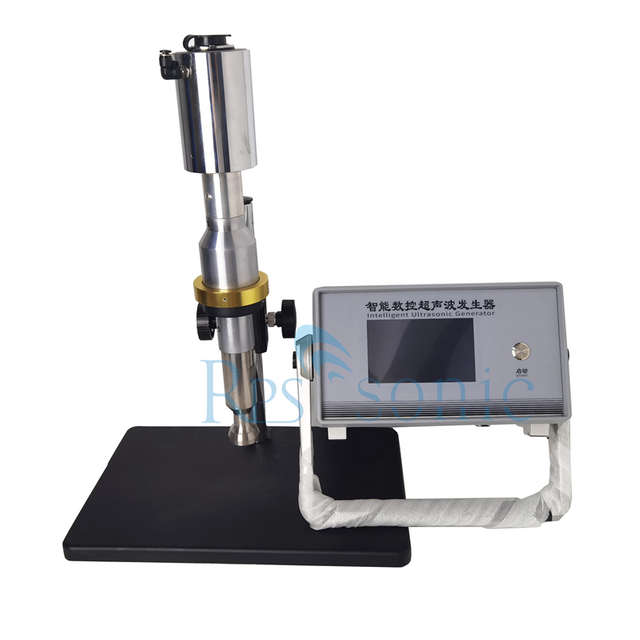
How To Prepare Biodiesel Using Ultrasonic Equipment?
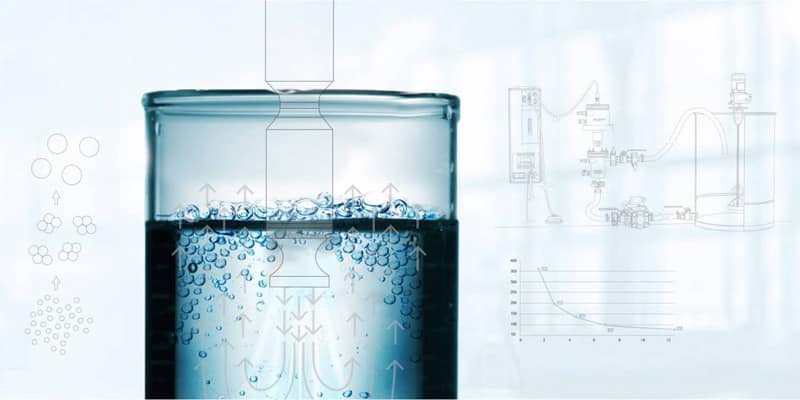
I. Technical Principles The core of ultrasonic treatment in biodiesel production lies in its cavitation effect. When ultrasound propagates in a liquid, it generates alternating high and low pressure cycles, inducing the formation, growth, and violent collapse of microbubbles. The instantaneous bursting of these bubbles generates extremely high temperatures and pressures locally (up to thousands of Kelvin and thousands of atmospheres), accompanied by intense microjets and shock waves.
In biodiesel production, this cavitation effect plays a dual role:
1. Physical mixing: Intense microturbulence effectively emulsifies the originally immiscible oil phase (soybean oil/waste oil) and alcohol phase (such as methanol), greatly increasing the contact surface area between the phases;
2. Enhanced chemical reaction: Local extreme conditions provide additional activation energy for transesterification/esterification reactions, accelerating the chemical reaction process.
Compared to traditional mechanical stirring, ultrasound can achieve more efficient mass transfer and reaction transformation in a much shorter time. Research data shows that, in terms of overall performance, ultrasound-assisted stirring has a significant advantage over traditional stirring. For example, one study indicated that the energy efficiency of ultrasound is 1.5 times that of traditional stirring, and the conversion rate can be significantly increased from approximately 52% to over 95% within the same reaction time, fully demonstrating its value in "process intensification."
II. Key Process Parameters and Optimization The efficiency of ultrasonic-assisted biodiesel production is affected by multiple factors. The main process parameters are as follows:
process parameters | Typical case of soybean oil | Typical Case of Waste Cooking Oil (WCO) |
alcohol-oil molar ratio | 5:1 ~ 6:1 | 6:1 |
Catalyst type and dosage | KOH,1.3% | Homogeneous base catalyst (e.g., NaOH) 1.0 wt.% |
Ultrasonic power/power density | 54.7 W/L | Amplitude 75% (duty cycle 0.7) |
reaction temperature | 34℃ | Room temperature or optimized temperature |
Reaction time | 5 ~ 50mins | 5 ~ 6mins |
Product Quality and Application Performance Ultrasonic-produced biodiesel boasts not only high yield but also reliable quality:
Standard Compliance: The produced biodiesel meets the specifications of ASTM International (American Society for Testing and Materials) Standard-11;
Engine Emissions: In diesel engine bench tests, B100 (pure biodiesel) exhibits superior emission reduction characteristics compared to traditional B0 petroleum diesel: CO is reduced by 42.9%, HC by 29.9%, and smoke opacity by 42.1%. B40 (a blend of 40% biodiesel and 60% petroleum diesel) further reduces NOx emissions by 4.94%.
Reactor Design and Scale-up: The key to industrialization lies in reactor design. Major technological pathways include:
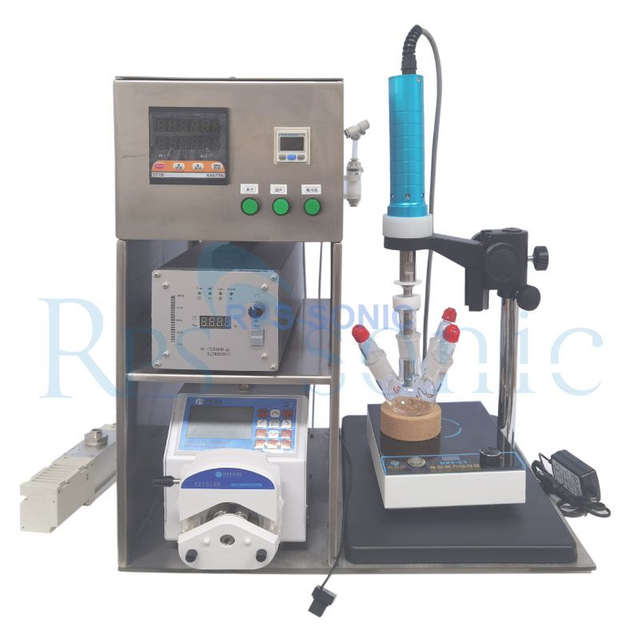
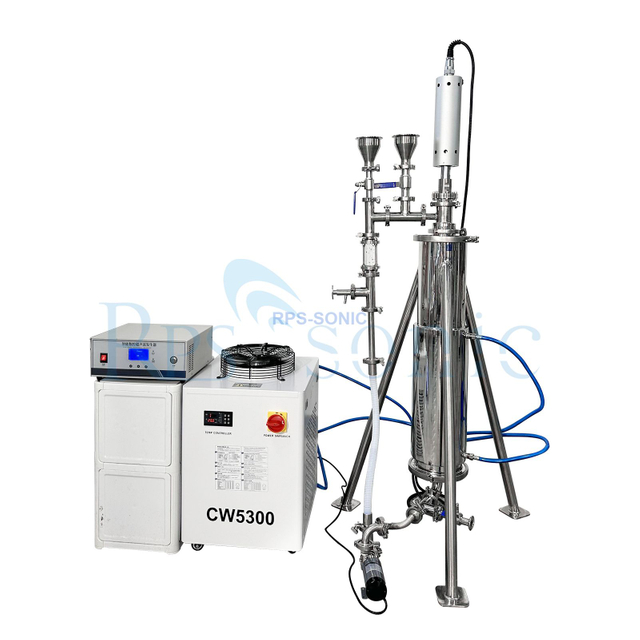
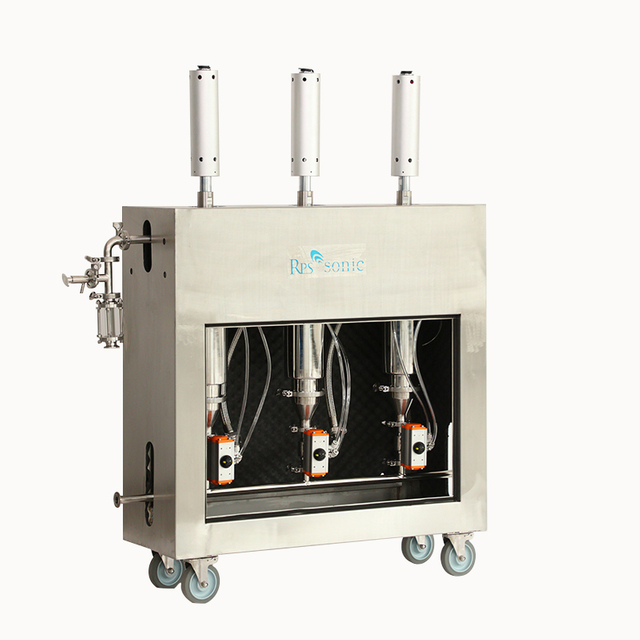
Continuous-flow ultrasonic reactors: Traditional batch processing is gradually being replaced by continuous-flow systems, which allow for continuous feed of reactants and continuous output of products, offering better scalability, automated control, and process stability.
Scale-up challenges: Despite the promising prospects, scaling up from small-scale laboratory equipment to industrial-scale production still presents technical and cost challenges, including long-term transducer stability, uniform sound field distribution, and energy consumption control.
Economics: A recent review clearly indicates that ultrasonic-assisted transesterification is the most energy-efficient method for biodiesel production. Studies have confirmed that ultrasonic treatment has significant benefits in reducing reaction time and lowering production costs.
Multi-technology Coupling
Synergistic Reactor Design: Innovative designs such as Ultrasonic-Assisted Integrated Dual-Column Reactive Distillation (UAIDCRD) couple esterification and transesterification steps, further improving overall efficiency;
Nano-Pretreatment Coupling: Utilizing magnetic nanoparticles (20-50nm silane-modified Fe₃O₄) for ultrasonic-assisted adsorption pretreatment achieves impurity removal rates exceeding 95%, creating favorable conditions for subsequent reactions.
Advantages and Disadvantages Summary
Advantages
Extremely high yield (typically > 96%, up to 99.7%);
Extremely short reaction time (5-50 minutes, significantly shorter than traditional several hours);
Significantly reduced energy consumption (approximately 1.5 times more energy-efficient than traditional stirring);
Capable of low-temperature reactions (30-45℃), reducing heat energy consumption and side reactions;
High adaptability: Suitable for various raw materials such as soybean oil, waste edible oil, and frying waste oil;
The continuous flow system has good scalability, which is beneficial for industrialization.
Challenges: High-free fatty acid (FFA) feedstocks require two-stage pretreatment (pre-esterification + alkaline catalysis), increasing process complexity. Transducer stability remains a technical challenge under long-term operation at high temperature and pressure. Scale-up costs are high due to the underdeveloped design and manufacturing of industrial-grade reactors. Feedstock pretreatment requirements are stringent due to the high water and solid impurity content of waste cooking oil, potentially impacting equipment lifespan.
Ultrasonic-assisted technology is a revolutionary enhancement for soybean oil and waste cooking oil biodiesel production. The extreme microenvironment created by cavitation significantly improves reaction rates, shortens production cycles, and reduces energy consumption, while maintaining or even improving biodiesel quality standards and emissions.
Future research will focus on: Developing lower-cost, more stable catalyst systems (especially heterogeneous and waste-based catalysts); Optimizing ultrasonic reactor geometry for industrial-scale production; Integrating ultrasonic technology with microwave and acid catalytic pretreatment technologies to form an integrated process; Further reducing total production costs to enhance its competitiveness against petrochemical diesel in the energy market.