Can Ultrasonic Technology Be Used To Treat Strong Acid Or Strong Alkali Solutions?
Views: 57 Author: Site Editor Publish Time: 2026-07-24 Origin: Site
Can Ultrasonic Technology Be Used To Treat Strong Acid Or Strong Alkali Solutions?
The answer is yes, but only if specially designed corrosion-resistant equipment is used; otherwise, the equipment will be quickly damaged.
Components of ordinary ultrasonic equipment (titanium alloy probes) are not corrosion-resistant. Strong acids (pH<3) or strong alkalis (pH>10) will severely corrode them, reducing equipment lifespan by more than 50%. Therefore, specialized solutions are needed to handle such solutions.
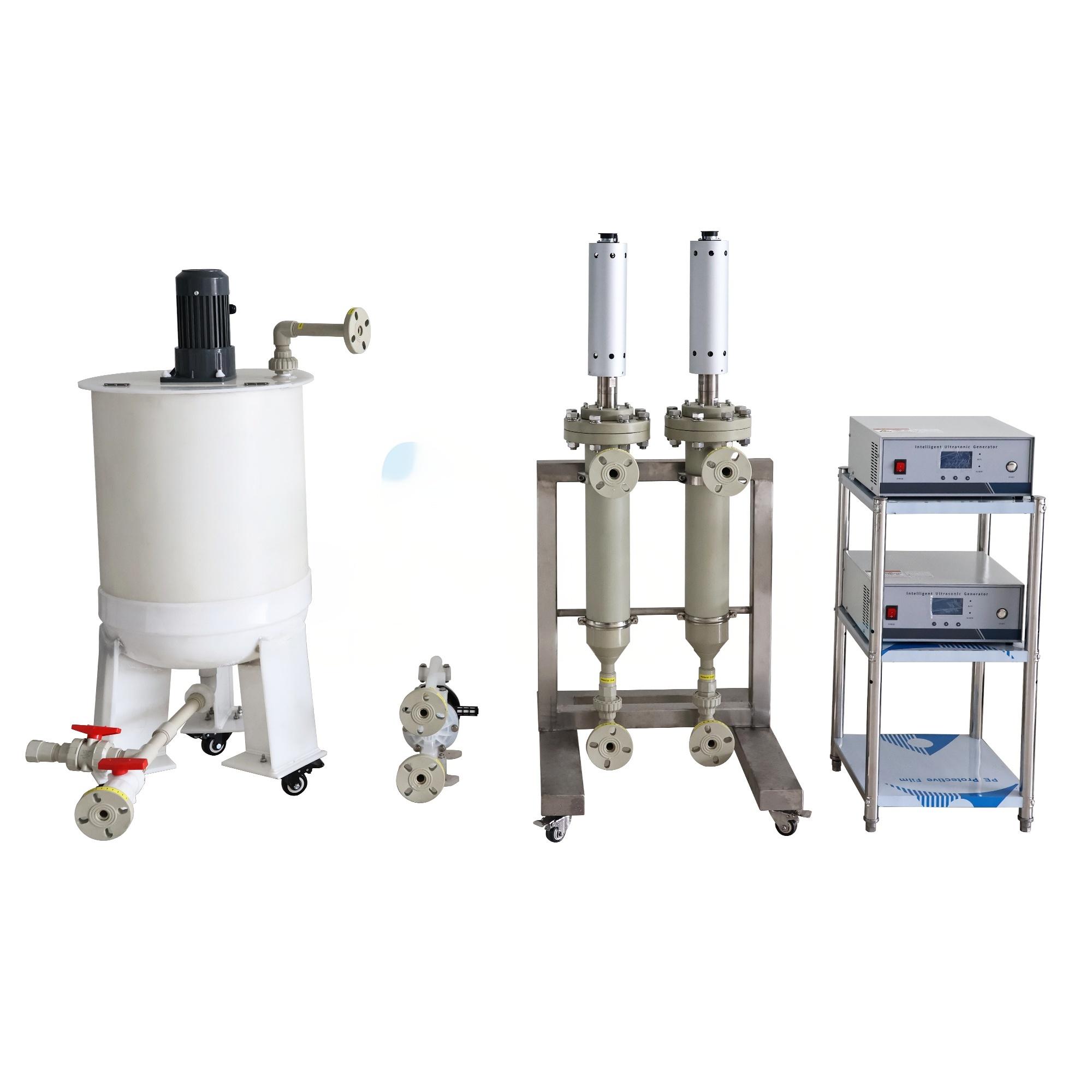
The key to applying ultrasound in strong acid/alkali environments is that the parts of the equipment in contact with the solution must be corrosion-resistant.
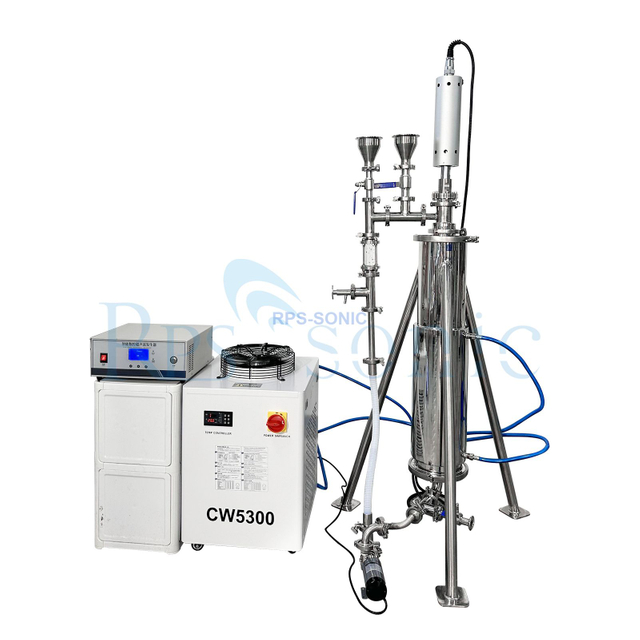
Corrosion-resistant materials: Key components of the equipment will use special materials or structures. For example, nickel-based alloys (such as HC276) will be used in the structure. The required reaction vessels and flow cells will be made of materials such as glass or polyethylene, sealed with PTFE.
Feasible application examples: The combination of ultrasound and acid/alkali solutions has been applied in some specific industrial and research scenarios:
Enhanced chemical cleaning: In industries such as semiconductors, acid ultrasonic cleaning and alkali ultrasonic cleaning processes are used to clean components with extremely high requirements, achieving very clean results.
Accelerated chemical reactions: Ultrasound can significantly increase the rate of chemical reactions. For example, in sulfuric acid solutions, ultrasound can increase the dissolution rate of certain metals by 14–16%.
Removal of stubborn dirt: It can be used as an alternative to traditional strong acid etching processes to remove rust and scale from carbon steel surfaces.
Specific material treatment: For example, using NaOH (sodium hydroxide) solution and ultrasound at a frequency of 45 kHz, polarizers on discarded liquid crystal displays can be efficiently stripped.
Even with specialized equipment, the following risks should be noted during operation:
Chemical reaction risk: The cavitation effect of ultrasound may exacerbate certain chemical reactions. For example, in hydrochloric acid solutions, ultrasound may cause acid decomposition.
Accelerated corrosion: Ultrasonic cavitation itself can cause cavitation on material surfaces, which, combined with chemical corrosion, may significantly accelerate the corrosion rate.
Safety and emissions: There is a risk of residue when using strong acids/alkalis; thorough neutralization and rinsing are necessary after use. Care should also be taken to avoid mixing different chemical reagents to prevent the generation of toxic gases.
In summary, ultrasound can treat strong acid or alkali solutions, but this is not a standard application; it's a specialized technology requiring customized solutions.
If you have this need, the safest approach is to contact us directly, a professional ultrasonic equipment manufacturer. Provide detailed information about your solution composition (acid/alkali type and concentration), operating temperature, and treatment purpose so we can design and provide the most suitable corrosion-resistant equipment for you.