Application of Ultrasonic Technology in Essential Oil Extraction
Ultrasonic technology utilizes the cavitation effect in essential oil extraction. High-frequency vibrations disrupt plant cell walls, accelerating essential oil release and enabling efficient, time-saving extraction at room temperature and pressure. This improves yield and better preserves heat-sensitive components, making it widely used in the food, cosmetics, and pharmaceutical industries. It is a green and sustainable extraction technology.
Ultrasonic technology is a highly efficient, environmentally friendly, and increasingly popular enhancement technology in essential oil extraction. It is often used in conjunction with traditional methods (such as steam distillation and solvent extraction) to significantly improve extraction efficiency and essential oil quality.
The following is a comprehensive analysis of the application of ultrasonic technology in essential oil extraction:
I. Core Technology Principle The core of ultrasonic extraction is the utilization of the "cavitation effect."
Cavitation Effect: When ultrasound (typically with a frequency of 20-100 kHz) propagates in a liquid medium, it generates countless tiny bubbles (cavitation bubbles). These bubbles rapidly form, grow, and violently collapse under the influence of sound pressure, generating instantaneous extreme temperatures (thousands of Kelvin), high pressures (hundreds of atmospheres), and high shear forces locally.
Effects on Plant Cells:
Mechanical Disruption: Powerful shock waves and microjets effectively break down plant cell walls and membranes, rapidly releasing essential oil components into the solvent.
Thermal Effect: Localized heating helps reduce solvent viscosity, increasing component solubility and diffusion rate.
Enhanced Mass Transfer: Continuous ultrasonic disturbance breaks down the concentration boundary layer between the solvent and plant material, significantly accelerating the mass transfer process.
II. Main Advantages
Compared to traditional methods, ultrasound-assisted extraction has significant advantages:
High Efficiency: Extraction time can typically be reduced by 50%-70%, from several hours to tens of minutes.
High Yield: More thorough cell disruption and enhanced mass transfer increase the yield of target components in the essential oil.
Low-Temperature Operation: The entire process can be carried out at lower temperatures (usually below 50°C), effectively protecting heat-sensitive components (such as certain esters and aldehydes) and preventing aroma distortion and component degradation.
Energy Saving and Environmental Protection: Shorter time and lower temperature mean significantly reduced energy consumption. When combined with water, the use of organic solvents can be reduced.
Solvent-friendly: Compatible with various solvents, including water, ethanol, and vegetable oils, enabling "green extraction."
Improved quality: Rapid, low-temperature extraction helps obtain essential oils with aroma profiles closer to the natural plants.
III. Typical Application Process
**Raw Material Pretreatment:** Plant materials (flowers, leaves, peels, etc.) are dried and pulverized to increase surface area.
Loading and Immersion: The raw material and a suitable solvent (usually water, used for pre-immersion in steam distillation; or directly ethanol/oil, etc.) are added to the ultrasonic extraction vessel.
Ultrasonic Treatment:
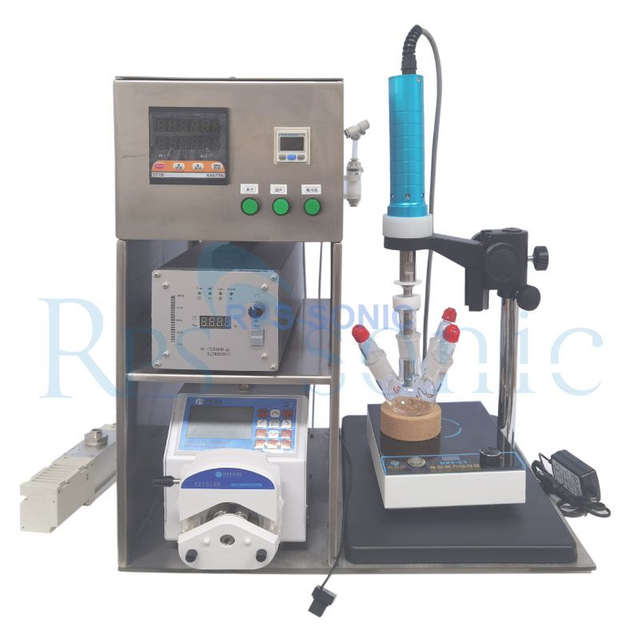
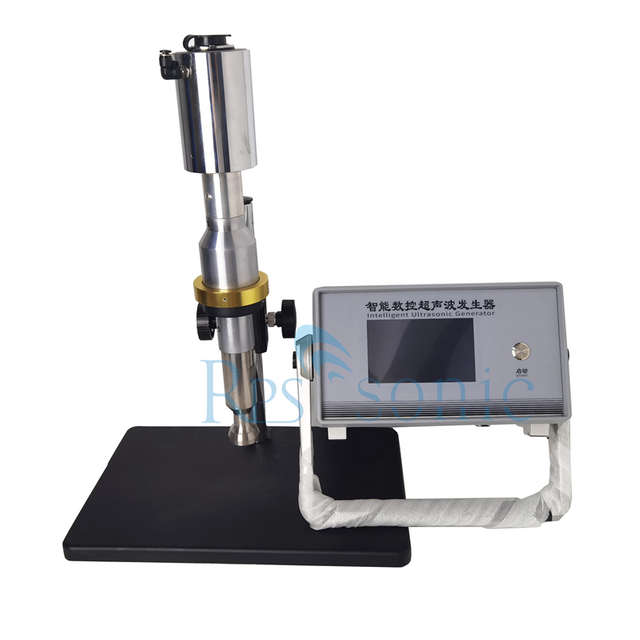
Probe-type Ultrasonic Treatment: High power, directly inserted into the mixture, extremely efficient, suitable for laboratory and small-scale production.
Ultrasonic Bath: The container is placed in an ultrasonic cleaning tank; lower power, suitable for gentle extraction or small samples.
Irradiation is performed at the set temperature, ultrasonic power, frequency, and treatment time.
Post-processing: After ultrasonic treatment, the mixture is then subjected to steam distillation (if water is used as the medium) to separate the essential oil, or by filtration and concentration (if solvent extraction) to obtain the essential oil or extract.
IV. Key Influencing Parameters
Optimizing the following parameters is crucial for extraction efficiency:
Ultrasonic power/intensity: Higher intensity results in stronger cavitation, but excessive intensity may lead to degradation of essential oil components.
Ultrasonic frequency: Low frequencies (20-40 kHz) produce strong cavitation, which is beneficial for physical breakdown; high frequencies (>100 kHz) generate more free radicals, which may affect the chemistry of essential oils.
Processing time: There is an optimal time; excessive time may lead to heat accumulation and component oxidation.
Temperature: Requires precise control to balance extraction efficiency with protection against heat sensitivity.
Raw material characteristics and particle size: Smaller particle size generally results in higher extraction efficiency.
Solvent type and solid-liquid ratio: Selecting an appropriate solvent ratio is essential.
V. Application Examples
This technology has been successfully applied to the extraction or enhanced extraction of various essential oils:
Lavender essential oil: Significantly shortens distillation time, increases ester content (such as linalyl acetate), and results in a richer aroma.
Rose essential oil: Low-temperature operation protects precious rose wax and sensitive aroma molecules.
Citrus essential oils (such as sweet orange and lemon): Can be efficiently extracted from the peel, preserving a fresh terpene aroma.
Rosemary and thyme essential oils: Increases the yield of phenolic compounds (such as thymol and carawayol).
Sandalwood and patchouli essential oils: Used to accelerate the pretreatment process of difficult-to-extract wood or root raw materials.
VI. Challenges and Limitations
Equipment scaling costs: High initial investment in industrial-grade high-power ultrasonic generators and reactors.
Standardization and process optimization: Systematic research is needed to determine optimal parameters and achieve process standardization for different raw materials.
Potential Degradation: If parameters are not properly controlled, intense cavitation can damage delicate aroma molecules or trigger oxidation.
Noise and Safety: High-frequency ultrasound generates noise, requiring equipment maintenance.
VII. Future Development Trends
Combined with Other Technologies: Synergistic effects can be achieved by combining with microwave extraction, supercritical CO₂ extraction, and enzymatic pretreatment.
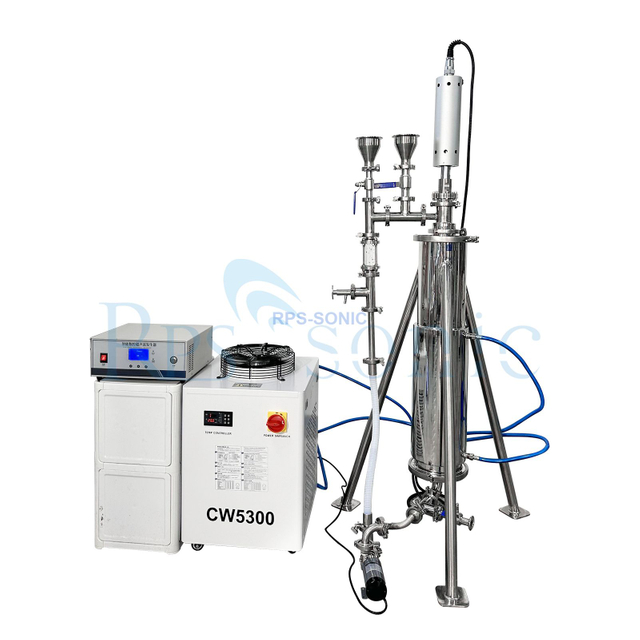
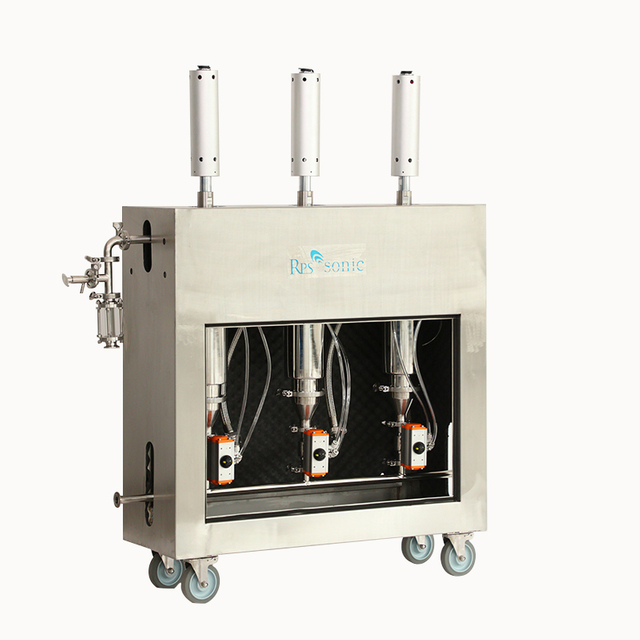
Continuous Ultrasonic Extraction Systems: Developing industrial systems with continuous feed and discharge to improve production efficiency.
Process Monitoring and Intelligence: Integrating sensors and AI models to monitor and automatically optimize ultrasound parameters in real time.
Focusing on High-Value Essential Oils: Greater application potential in the production of essential oils for high-end cosmetics, aromatherapy, and pharmaceuticals.
Summary: Ultrasonic technology has brought revolutionary improvements to the field of essential oil extraction. Through its unique physical effects, it achieves an excellent balance between efficiency, yield, energy saving, and product quality. Despite challenges in scaling up, with technological advancements and cost reductions, it is rapidly moving from the laboratory to industrial production, becoming an indispensable green enhancement technology in modern plant extraction processes. For essential oil manufacturers seeking high-quality, high-efficiency, and sustainable production, ultrasonic-assisted extraction is a highly attractive option.