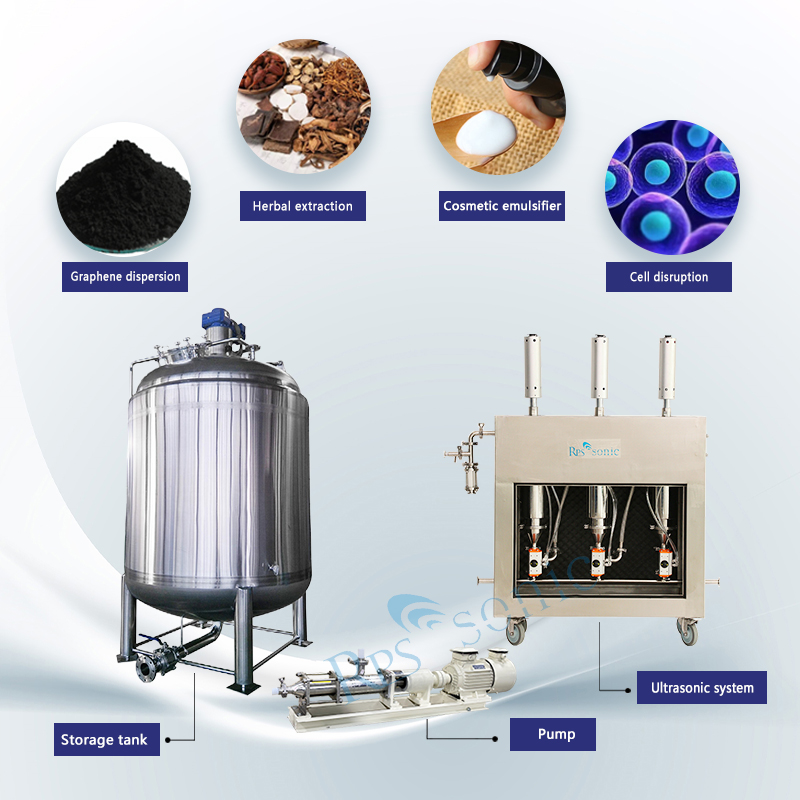
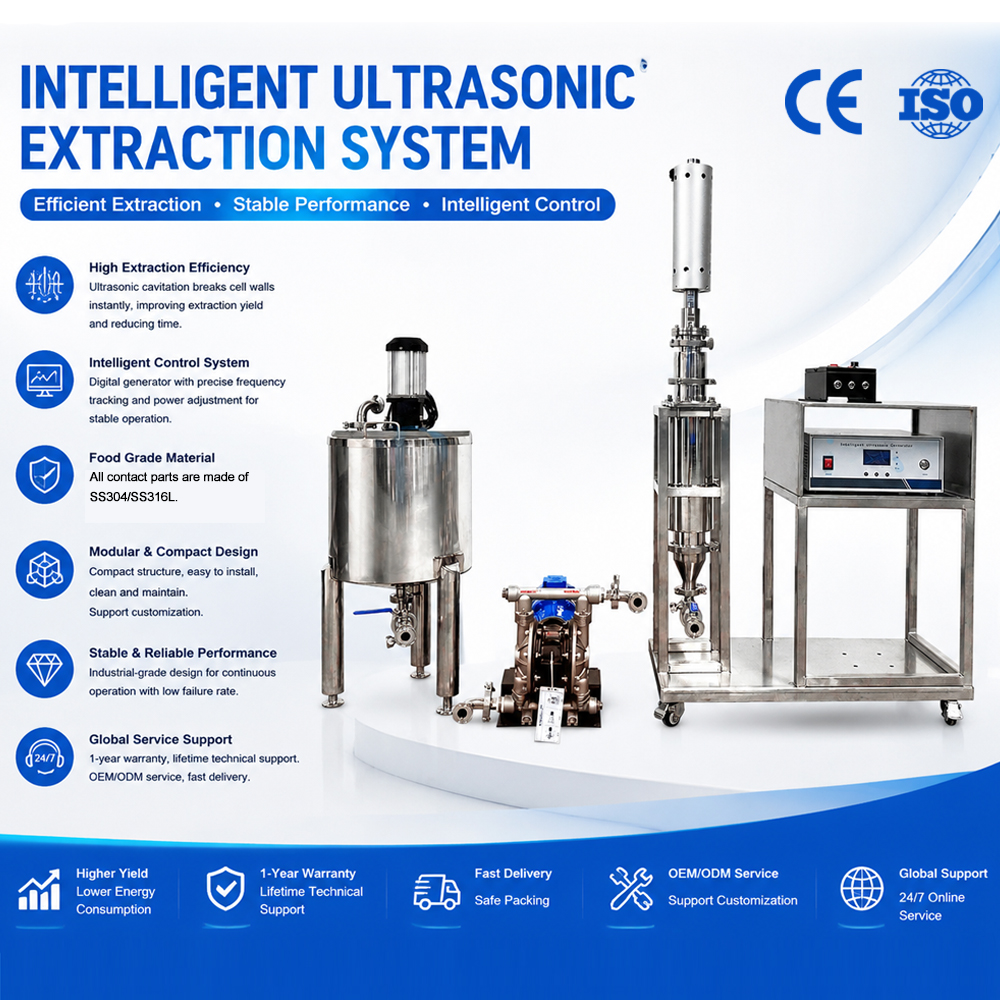
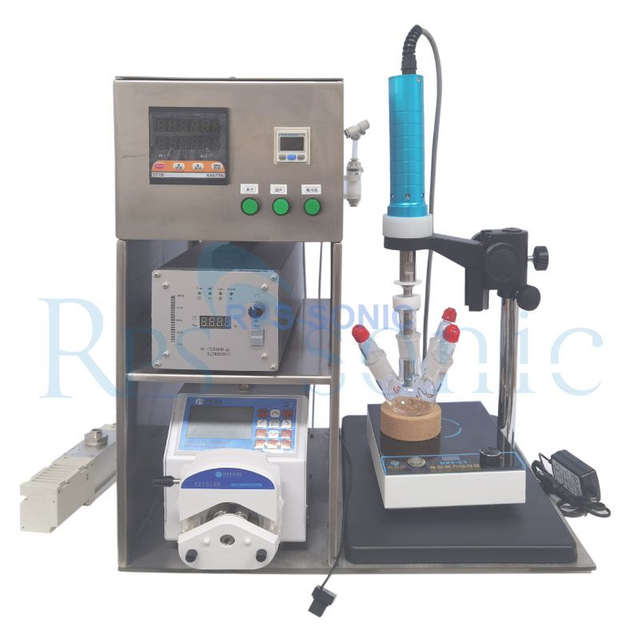
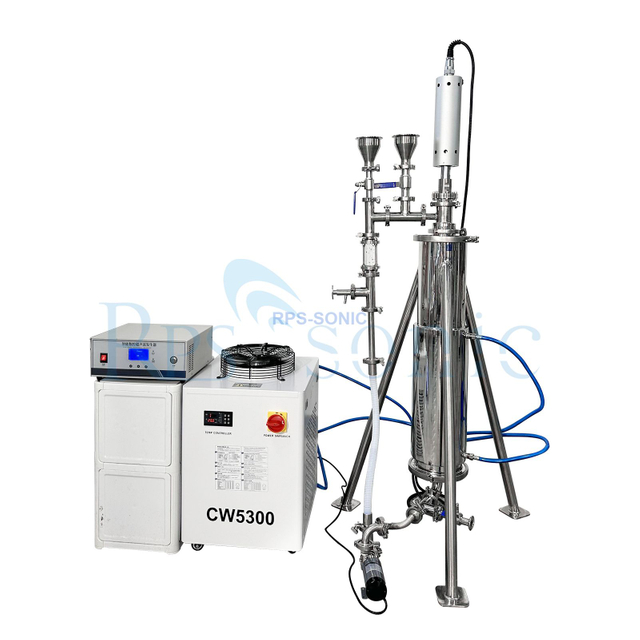
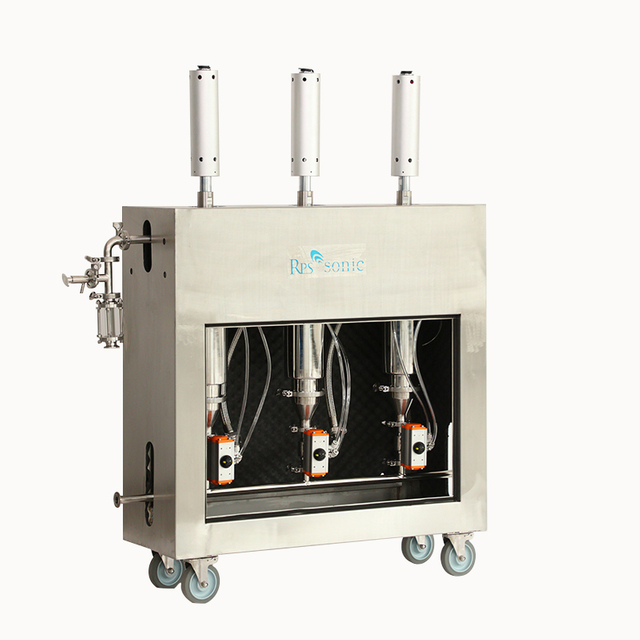
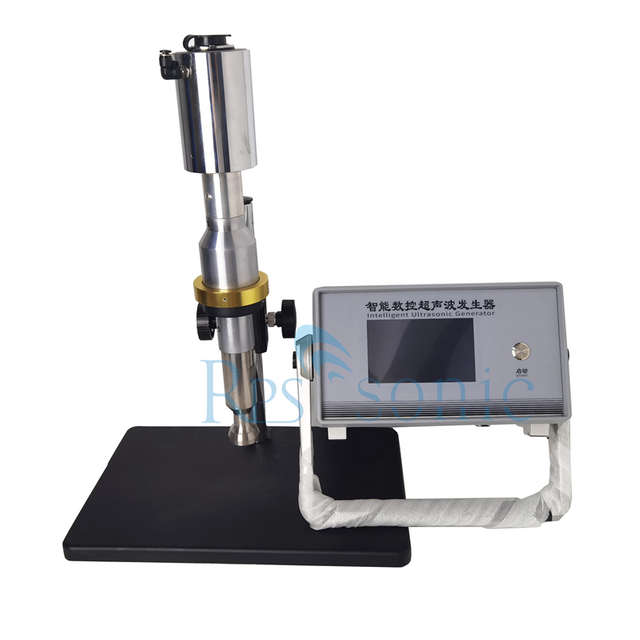
What Is Ultrasonic Seaweed Oil Extraction Technology
With the escalating global energy crisis and heightened environmental awareness, finding renewable, low-carbon biofuel alternatives has become a focus of attention for countries worldwide. Microalgae, as a raw material for third-generation biodiesel, has attracted considerable attention due to its advantages such as rapid growth, high oil content, and lack of arable land occupation. However, the tough cell wall structure of microalgae has made efficient and economical release of oil from the cells a key technological bottleneck restricting industrialization.
The emergence of ultrasound-assisted extraction technology has provided an effective solution to this problem. Numerous studies have shown that ultrasound can effectively break down microalgae cell walls, significantly improving oil extraction rates. In recent years, research on the ultrasonic extraction mechanism, process optimization, and equipment design has deepened, propelling this technology from the laboratory to industrial applications.
The Core Principle of Ultrasonic Extraction The high efficiency of ultrasound-assisted extraction of algal oil mainly relies on three physical effects generated when sound waves propagate in a liquid medium:
(I) Cavitation Effect. When ultrasound propagates in a liquid, it generates periodic compression and rarefaction regions, forming tiny bubbles (cavitation bubbles) in the liquid. These bubbles grow and oscillate under the influence of the acoustic field, eventually collapsing in a very short time, releasing enormous energy and generating localized high temperatures (up to thousands of degrees Celsius) and high pressures (up to hundreds of atmospheres). This intense shock wave and microjets can directly disrupt the cellulose and pectin layers of the microalgal cell wall, allowing intracellular lipids to be released.
(II) Mechanical Effects. The mechanical shear force generated by ultrasonic vibration itself can exert physical damage on the cell wall. Studies have shown that by establishing a mass transfer dynamics model based on acoustic shock and radiation forces, the effect of ultrasound on microalgal cells can be quantitatively described.
(III) Thermal Effects. When ultrasound propagates in a medium, some of its energy is converted into heat. Appropriate heating can reduce solvent viscosity and increase the diffusion coefficient, thereby promoting lipid dissolution. However, excessively high temperatures may affect lipid quality, thus requiring precise control.
The synergistic effect of these three effects makes ultrasound a highly efficient extraction method that combines cell wall disruption and enhanced mass transfer.
Typical Process Flow
The process flow for ultrasound-assisted extraction of algal oil typically includes the following steps:
1. Algal Sludge Pretreatment: The harvested microalgae are washed with deionized water to obtain algal sludge for later use. In some processes, the algal sludge also requires low-temperature freezing to further weaken the cell wall structure.
2. Ultrasonic Enhanced Extraction: The pretreated algal sludge is mixed with an extraction solvent in a certain ratio and extracted using an ultrasonic device. Taking Chlorella as an example, typical process conditions are: hexane as solvent, liquid-to-solid ratio (1~3):1, temperature 25~50℃, extraction at 25kHz, 300W ultrasound for 20~60 minutes. After extraction, the supernatant is collected by centrifugation (e.g., 3500r/min, 10 minutes).
3. Oil Recovery: The supernatant is evaporated to dryness using a rotary evaporator, and the resulting algal oil is dried to constant weight -4 at approximately 50℃.
It is worth noting that in recent years, researchers have also coupled ultrasound with other technologies to develop a variety of innovative processes. For example, ultrasound-enhanced supercritical fluid extraction (USFE) technology can improve the extraction rates of EPA and DHA while reducing extraction temperature, pressure, and CO₂ flow rate; ultrasound-assisted ionic liquid extraction combines the excellent solubility of ionic liquids with the cell-wall-breaking effect of ultrasound; and other studies combine ultrasonic pretreatment with enzymatic hydrolysis, using compound enzymes (such as Viscozyme and Celluclast) to synergistically break down cells, further improving extraction efficiency.
Influence of Key Process Parameters
The effectiveness of ultrasonic extraction is influenced by a combination of process parameters, and systematically optimizing these parameters is key to achieving high extraction rates.
Ultrasonic Power and Frequency. Power directly affects the intensity of cavitation. Studies have found that ultrasonic vibration is most effective at disrupting microalgal cells at 225W power and a longitudinal vibration frequency of 25kHz. However, some studies have shown that ultrasonic power has no significant effect on the lipid yield of certain algal species, and the order of influence of each factor is: temperature > liquid-to-solid ratio > extraction time. Regarding frequency, the optimal frequency may differ for different algal species, requiring targeted optimization.
Extraction Temperature and Time. Appropriately increasing the extraction temperature is beneficial for improving the extraction rates of DHA and EPA, but excessively high temperatures may lead to the oxidation of unsaturated fatty acids. Taking Chlorella as an example, the optimized parameters are: ultrasonic time 20 minutes, solvent-to-biomass ratio 3:1, extraction temperature 50℃, and total extraction time 90 minutes. Another study achieved good results with the tool head immersed to half the depth of the microalgae solution and an extraction time of 30 minutes.
Solvent selection and ratio. The type of solvent significantly affects the extraction rate. Studies have shown that using a mixed solvent of chloroform and isopropanol (volume ratio 3:3) can obtain a 12.3% bio-oil yield from Chlorella, which is superior to a single solvent system. Furthermore, a mixed solvent of n-hexane:ethanol = 10:3 has also been proven to be an effective extraction system.
Ultrasonic transducer structure. The geometry of the ultrasonic transducer directly affects the sound field distribution and cell disruption efficiency. Recent research systematically compared the performance differences between conical and horn-shaped ultrasonic transducers, finding that horn-shaped transducers can achieve more uniform sound pressure amplification and more significant cell disruption, making them more suitable for industrial production.
Technical Advantages and Application Prospects
Ultrasonic-assisted extraction of algal oil has significant advantages over traditional methods:
High extraction efficiency. Studies have shown that ultrasonic pretreatment can increase the oil yield of *Scenedesmus* sp. from 18.45% to 26.78%. Using ultrasonic-assisted extraction, the oil extraction rate of *Chlorella* can reach 19%. Another process has achieved an oil extraction efficiency of 18.91%, with a cell wall disruption efficiency as high as 90.19%.
Short extraction time. The mechanical shear force generated by ultrasonic cavitation can significantly shorten the extraction time—one study reduced the oil extraction time from 24 hours to 2 hours. Ultrasonic-assisted extraction can also shorten the reaction time by more than 50%.
Green and environmentally friendly. Ultrasonic technology can reduce solvent usage and energy consumption. The "solvent-free" ultrasonic-assisted extraction process developed in recent years can directly extract oil from fresh microalgal cells, further improving the greenness of the process.
Wide range of applications. In the biodiesel industry, ultrasonic extraction of *Nannochloropsis oculata* yields a 23.07% oil yield with a free fatty acid content of only 1.79%, making it highly suitable for biodiesel production. In the field of functional oils, ultrasonic-assisted extraction has been successfully applied to the extraction of oils from *Nannochloropsis oculata* rich in EPA and *Schizochytrium* rich in DHA. Furthermore, ultrasound can also be used as a growth stimulus to increase the lipid content of microalgae.