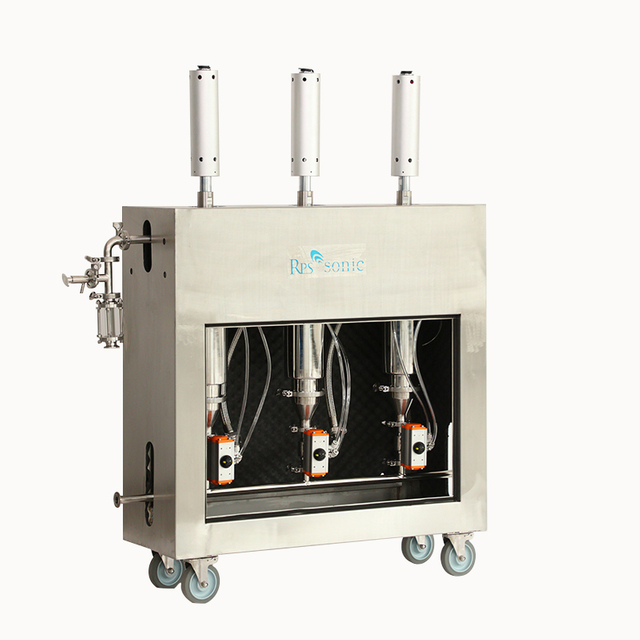
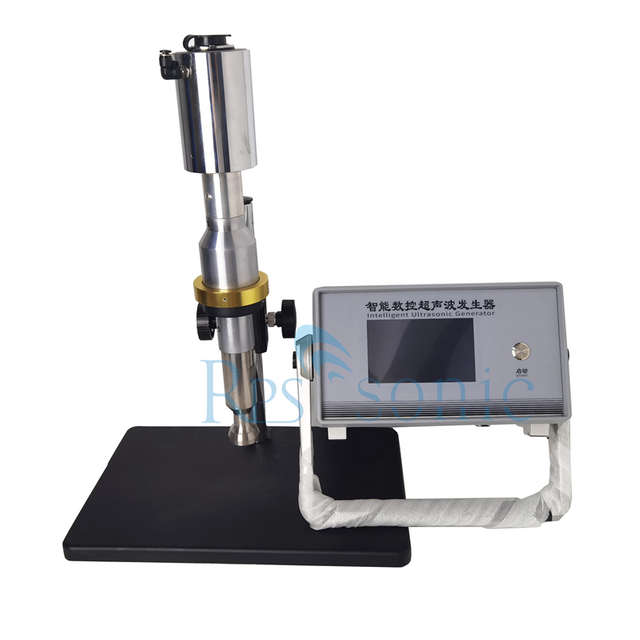
What Is Ultrasonic Plant Oil Extraction?
Ultrasonic vegetable oil extraction is an advanced extraction technology that utilizes the "cavitation effect" generated by ultrasound in liquids to efficiently break down plant cell walls, allowing the oil to be rapidly released and dissolved in the solvent.
Compared to traditional pressing or solvent extraction methods, its core advantages are speed and cost-effectiveness, significantly shortening extraction time, increasing yield, and better preserving the heat-sensitive active ingredients in the oil. Core Principle: The Revolutionary "Sonic Hammer"
The core of this technology is still the "cavitation effect" we mentioned in the previous two rounds of popular science explanations.
Imagine traditional extraction is like slowly soaking a walnut in its shell in warm water, requiring a long time for the flavor to seep out. Ultrasonic extraction, on the other hand, is like using a precise "sonic hammer" to instantly break the shell, releasing the contents immediately.
Specifically, the cavitation effect acts on vegetable oil extraction mainly through the following two methods:
Cell-level disruption: When high-intensity ultrasound propagates in a liquid, it generates countless tiny vacuum bubbles. When these bubbles burst rapidly, they create an extreme environment with instantaneous temperatures reaching 1000°C and pressures of 500 atmospheres. This powerful shockwave can directly "blast" through the cell walls of oilseeds, releasing the internal oils.
Enhanced Mass Transfer: After the cell walls are broken down, ultrasound can accelerate the diffusion and dissolution of oil molecules in the solvent, allowing them to mix more quickly and significantly improving extraction efficiency.
Main Extraction Modes: Depending on whether chemical solvents are used and the processing method, ultrasound technology can be flexibly combined with various extraction methods:
Ultrasound-Assisted Solvent Extraction (UAE): This is the most common form, directly introducing ultrasound into the traditional organic solvent (such as n-hexane) extraction process to accelerate oil dissolution.
Advantages: Compared to traditional methods, it can shorten the extraction time by several to tens of times and significantly increase the yield. For example, a study on chickpeas showed that the yield of ultrasound-assisted dynamic extraction was 10.45% higher than that of traditional solvent extraction.
Applications: Widely used in common oilseeds such as soybeans, peanuts, and sesame, and also suitable for scenarios requiring the extraction of specialty plant oils such as camellia seeds.
Ultrasound-Assisted Aqueous Enzymatic Extraction (UAEE)
This is a green and environmentally friendly extraction method that uses water instead of organic solvents and utilizes enzymes (such as cellulase) to break down cell walls.
Advantages: The cavitation effect of ultrasound can disrupt oilseed cells, improve enzyme activity, and help break emulsions, solving the problems of long extraction times and large enzyme usage in traditional aqueous enzymatic methods.
Applications: Commonly used for extracting high-quality or functional oils such as pine nut oil, blackcurrant seed oil, and peanut oil.
Ultrasound-Assisted Supercritical Fluid Extraction (UAE-SFE)
Combines ultrasound with green solvents such as supercritical CO₂.
Advantages: Utilizing the strong dissolving power of supercritical CO₂ and the mass transfer enhancement effect of ultrasound, it achieves highly efficient extraction with no organic solvent residue, especially suitable for heat-sensitive and easily oxidized substances.
Applications: Used for extracting high-value-added functional oils, such as sea buckthorn seed oil and eucommia seed oil.
Technical Advantages Summary
High Efficiency, Time Saving: Significantly reduces extraction time from several hours using traditional methods to tens of minutes, or even just a few minutes.
High Quality, Preservation of Activity: Can be carried out at lower temperatures, avoiding the destruction of heat-sensitive active ingredients such as unsaturated fatty acids and vitamin E in the oil by high temperatures, resulting in better quality oils.
High Yield, Increased Efficiency: By fully disrupting cell walls, the oil yield can be increased. For example, compared with traditional wet oil extraction, high-frequency ultrasound can increase the yield of fish oil by 10.55%.
More Environmentally Friendly, Reduced Pollution: Reduces or even eliminates the use of organic solvents and lowers energy consumption and pollution in subsequent separation and purification, making it an environmentally friendly technology.
Integrable and versatile: It can be flexibly combined with various extraction processes (solvent method, aqueous enzymatic method, supercritical method, etc.) to achieve synergistic effects.
Main Application Areas:
Food Industry: Extracting edible oils from soybeans, peanuts, sesame seeds, flaxseeds, camellia seeds, etc.; extracting flavor substances and aromatic oils from coffee beans and tea leaves.
Olecochemicals: Used in the production of specialty oils and biodiesel.
Natural Products: Extracting fat-soluble active ingredients from traditional Chinese medicine.
Functional Foods: Preparing functional oils rich in specific active ingredients.