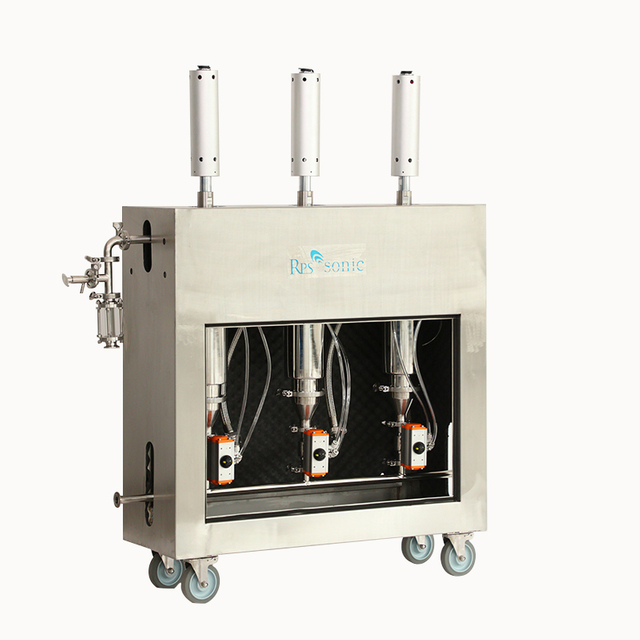
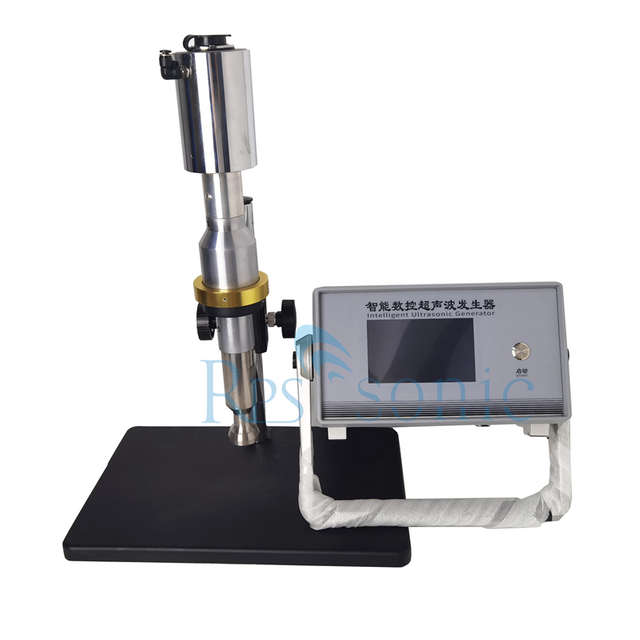
What Is Ultrasonic Paint Dispersion?
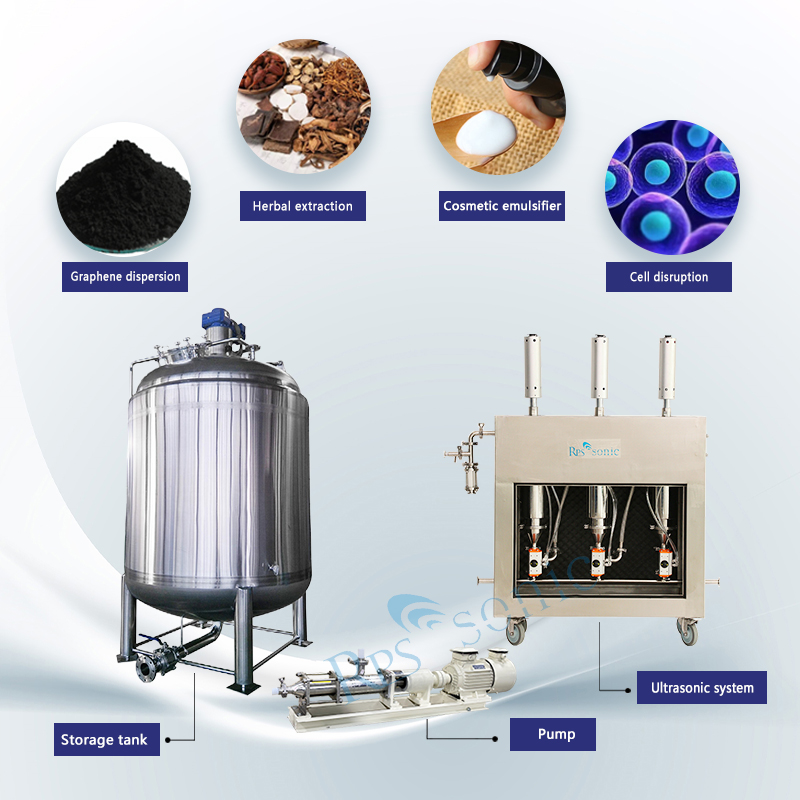
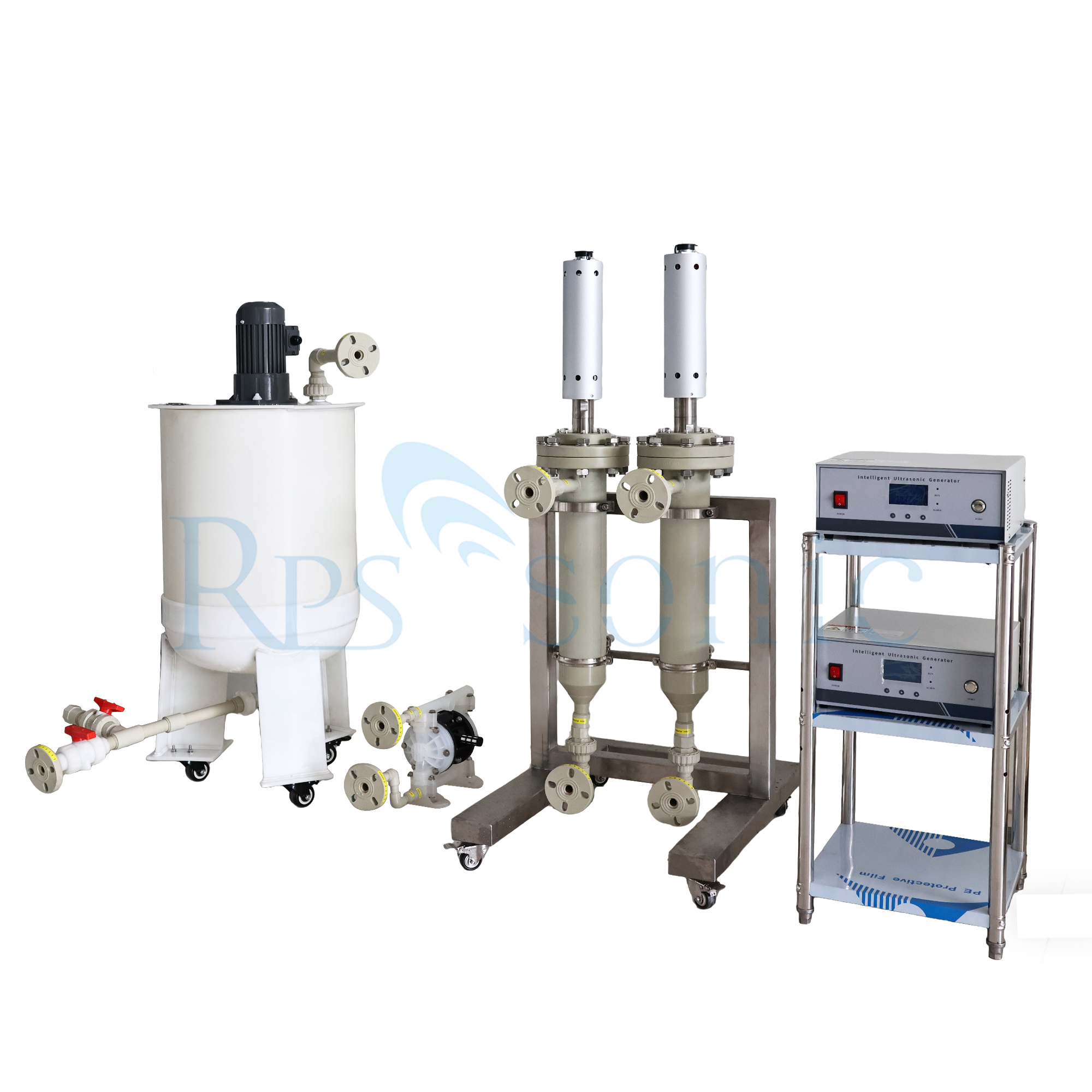
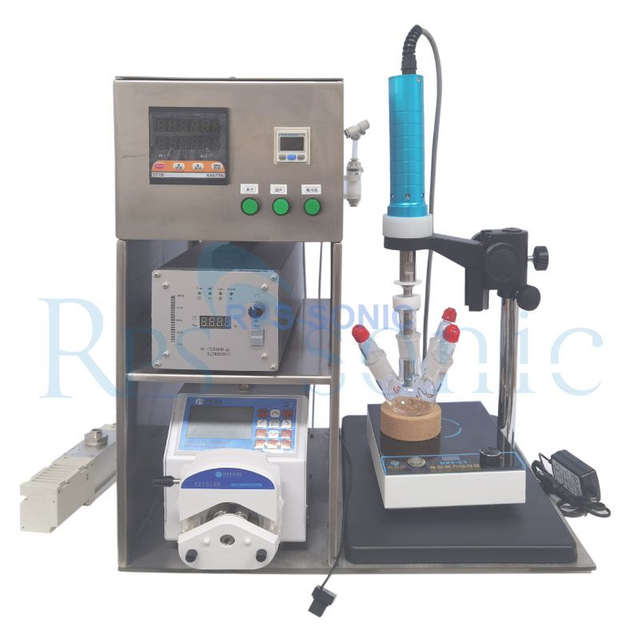
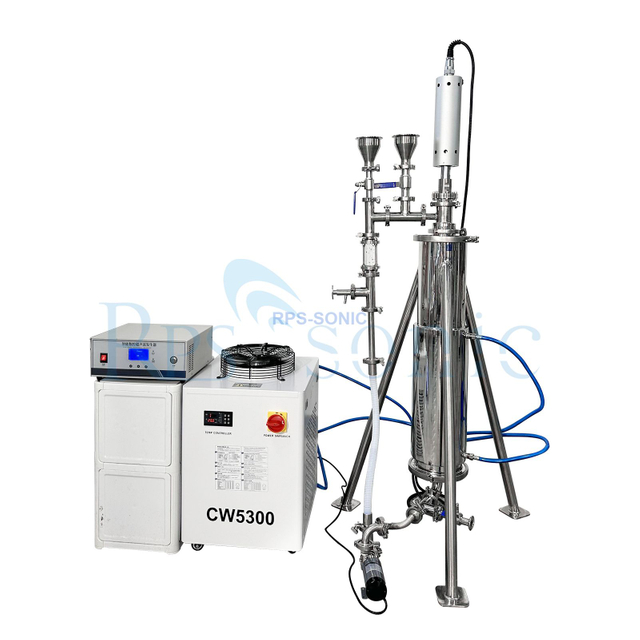
Ultrasonic paint dispersion, simply put, is a technique that uses the "cavitation effect" generated by ultrasound in a liquid to break down, deagglomerate, and uniformly distribute solid particles (such as pigments and fillers) in the coating.
1. Core Principle: Cavitation Effect
When high-frequency ultrasound (typically above 20kHz) is transmitted into a liquid through a horn immersed in the coating, it generates alternating compression and rarefaction sound waves within the liquid. During the rarefaction phase, tiny vacuum bubbles (cavitation bubbles) form within the liquid. These bubbles then collapse rapidly during the subsequent compression phase, instantly generating shock waves with localized temperatures reaching thousands of degrees Celsius and pressures exceeding thousands of atmospheres.
This extreme physical energy can effectively:
disperse soft agglomerates between pigment and filler particles.
break large particles into finer particle sizes (typically reaching micrometer or even nanometer scales).
powerfully and uniformly disperse solid particles within the resin and solvent system.
2. Comparison with Traditional Dispersion Methods
Traditional coating dispersion primarily relies on mechanical force, such as:
High-speed dispersers: Utilize shear force, suitable for pre-dispersion, but have limited effectiveness for nanoscale or easily agglomerated powders.
Sand mills/bead mills: Utilize the impact and shearing of grinding media (beads), currently the mainstream method, with high efficiency but suffers from media wear, and is cumbersome to clean and change colors.
The unique advantages of ultrasonic dispersion are:
* No media contamination: Eliminates the need for grinding beads, avoiding the risk of media debris contaminating the coating, especially suitable for coatings requiring high purity (such as electronic coatings and high-end automotive paints).
*Fineer particle size and narrower particle size distribution: For nanomaterials (such as nano-silica, nano-titanium dioxide, graphene, etc.), ultrasound can effectively overcome the extremely high surface energy of nanoparticles, preventing secondary agglomeration and achieving true "nanoscale dispersion."
*High efficiency: Dispersion time is typically only a few minutes to tens of minutes, much faster than ball milling which takes several hours.
Good stability: Through the cavitation effect, not only are the particles dispersed, but free radicals may also be generated on the particle surface or wettability may be improved, making the dispersion system more stable and less prone to sedimentation.
3. Main Application Scenarios
Nanocoatings: Dispersing carbon nanotubes, graphene, nano-ceramic powders, etc., to prepare coatings with special functions such as conductivity, antibacterial properties, and high wear resistance.
Color Paste Preparation: Producing high-concentration, high-fineness organic or inorganic color pastes to improve color development and tinting strength.
Waterborne Coatings: Helping to solve the problems of poor compatibility and easy stratification between resins and pigments/fillers in waterborne systems.
Lithium-ion Battery Positive and Negative Electrode Slurries: Although belonging to the battery field, the principle is similar; ultrasound ensures highly uniform mixing of active materials, conductive agents, and binders.
Limitations to Consider:
While ultrasonic dispersion is powerful, it has limitations in practical production:
*Scaling Difficulty: Laboratory-level (a few liters) dispersion is easily achieved, but large-scale industrial production (tons) requires complex ultrasonic flow reaction chambers, resulting in high equipment costs. Furthermore, ultrasonic waves attenuate rapidly with distance.
*Thermal Effects:Ultrasonic waves generate heat during operation. For heat-sensitive coatings (such as certain water-based resin systems), a cooling system is necessary; otherwise, resin gelation or reactions may occur.
*Unsuitable for High Viscosities: For solvent-free or high-solids coatings with extremely high viscosity, the ultrasonic cavitation effect is difficult to transmit effectively, usually requiring prior dilution or mechanical stirring.
*Suitable for High Viscosities: Ultrasonic coating dispersion utilizes high-energy physical means generated by acoustic cavitation to achieve ultrafine, uniform, and stable powder distribution in a liquid phase. It demonstrates significant advantages in developing high-end functional coatings, processing nanomaterials, and solving the contamination problems of traditional grinding processes. However, large-scale production requires careful consideration of equipment investment and process adaptability.
If you are considering introducing this process, it is recommended that you first clarify the viscosity, throughput, and specific requirements for powder particle size of your coating system. This will allow you to more accurately determine whether it is suitable for your application.