What Is Ultrasonic Nanodispersion Technology?
Ultrasonic nanodispersion technology, simply put, uses the energy of high-frequency sound waves to "disperse" aggregated nanoparticles in a liquid, allowing them to suspend uniformly and stably.
Because nanoparticles are extremely small and have high surface energy, they are very prone to agglomeration. Ultrasonic technology provides an efficient and controllable physical means to solve this problem.
Core Principle: Powerful "Cavitation Effect"
The core of this technology lies in the "cavitation effect" of ultrasound. The entire process is roughly as follows:
Generating Ultrasound: The device converts electrical energy into high-frequency mechanical vibrations, typically between 20 kHz and 100 kHz.
Forming Cavitation Bubbles: When sufficiently strong ultrasound waves are transmitted into the liquid, they generate intense alternating positive and negative pressure changes. In the negative pressure phase, the liquid is "torn apart," forming numerous tiny vacuum bubbles (cavitation bubbles).
Bubble Collapse: In the subsequent positive pressure phase, these bubbles rapidly contract and collapse, a process that occurs within a very short time.
Releasing Enormous Energy: The instant the bubbles collapse, a shock wave with a pressure of thousands of atmospheres and localized high temperatures are generated locally. This extreme physical force generates powerful microjets and shear forces, sufficient to effectively peel away and disperse clustered nanoparticles.
Main Application Areas
This technology has a wide range of applications; it's practically ubiquitous wherever nanomaterial dispersion is needed.
New Energy: Used to prepare positive and negative electrode slurries for lithium batteries, improving battery performance.
Electronics and Materials: Used to prepare highly conductive nano-inks, disperse carbon nanotubes, graphene, and other advanced materials.
Biomedicine: Used to prepare nano-drug carriers, liposomes, etc., to improve drug absorption and targeting.
Cosmetics and Inks: Used to disperse nano-pigments and fillers, resulting in more uniform coatings and superior performance.
Cosmetics: Used to prepare nanoemulsions, making creams, serums, and other products have a finer texture and easier absorption of active ingredients.
Core Equipment Components
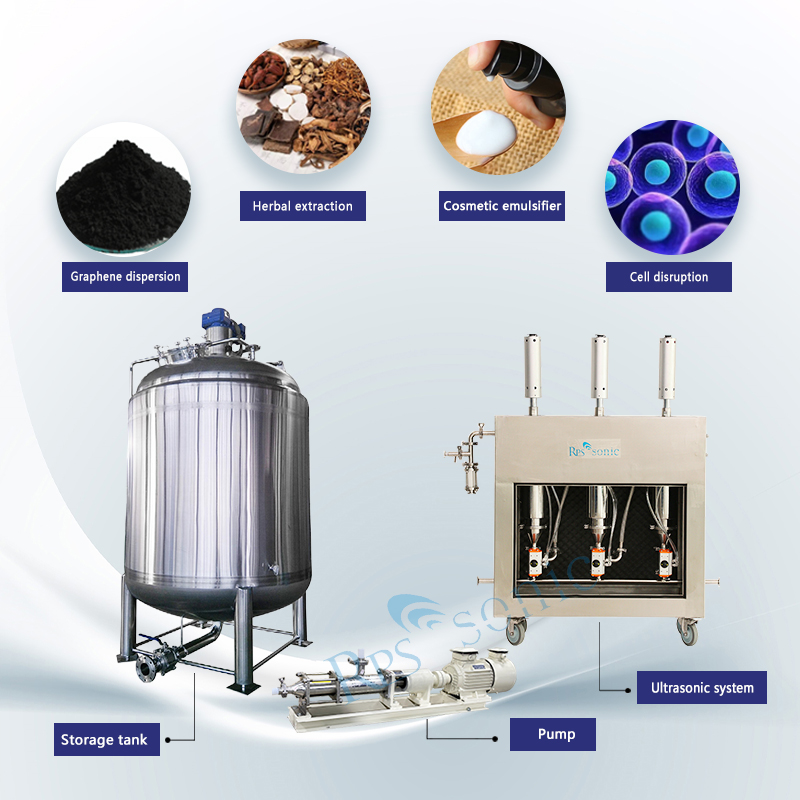
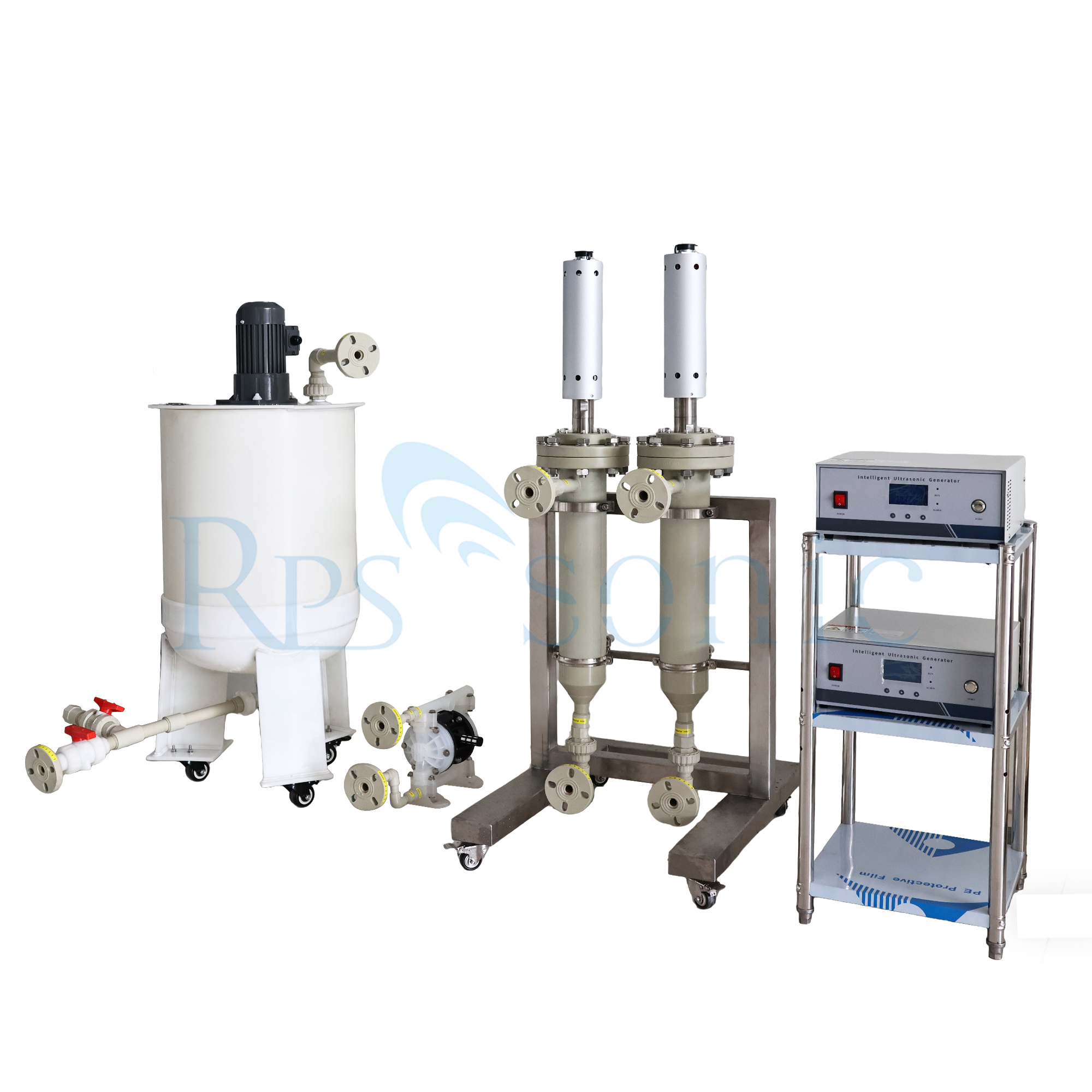
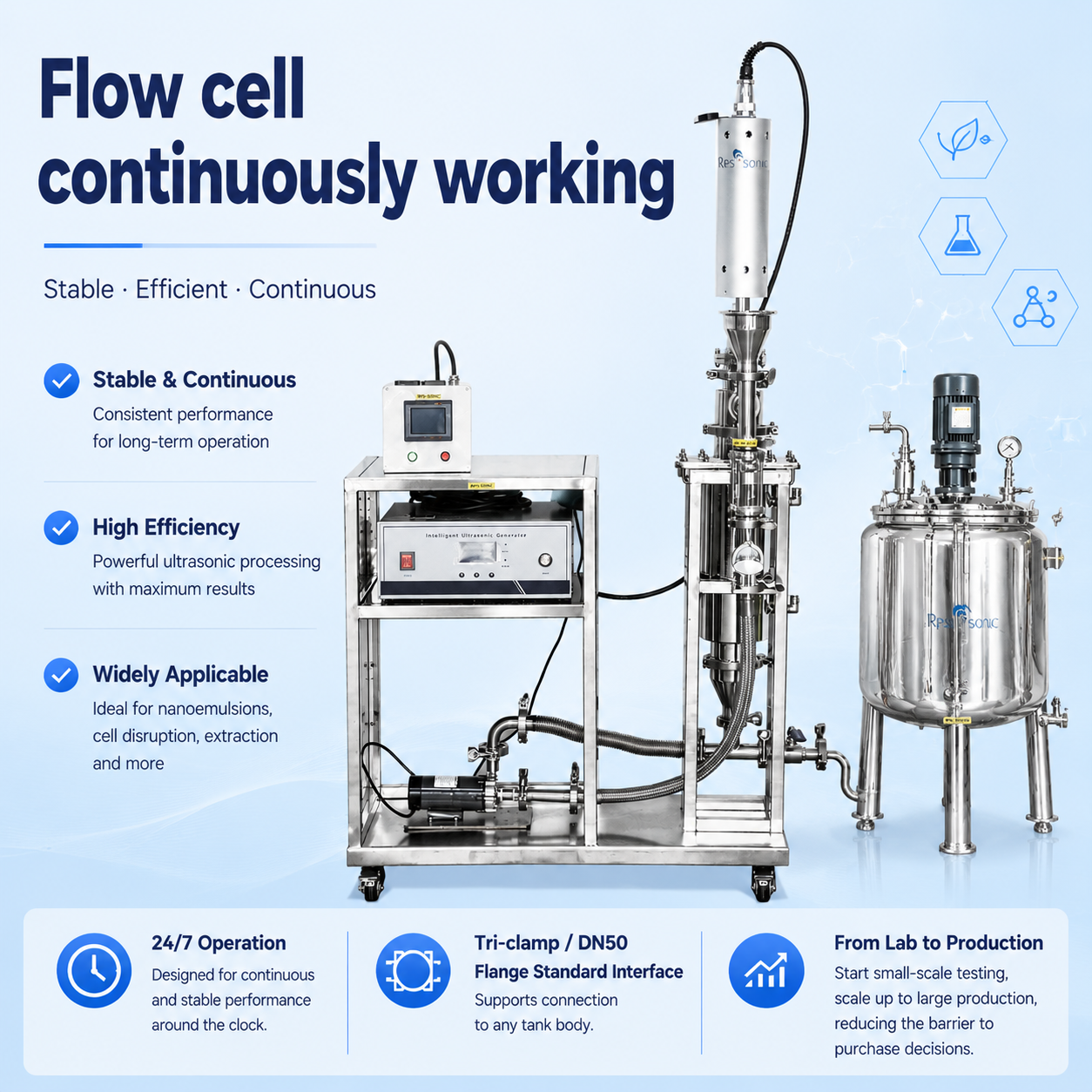
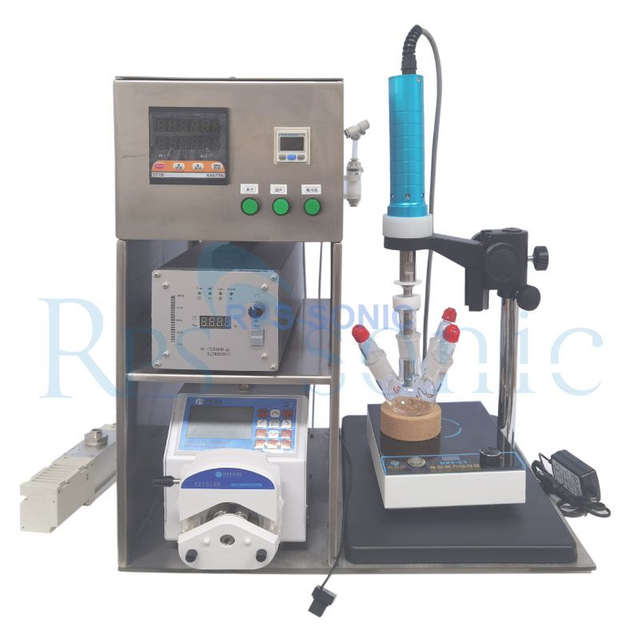
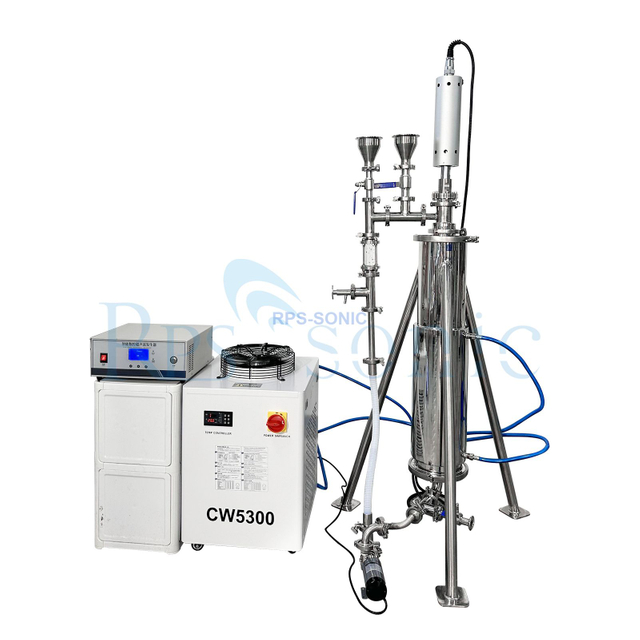
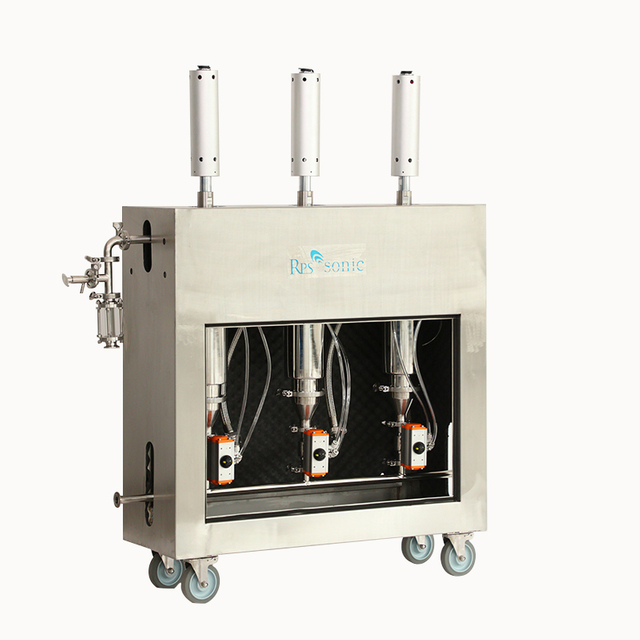
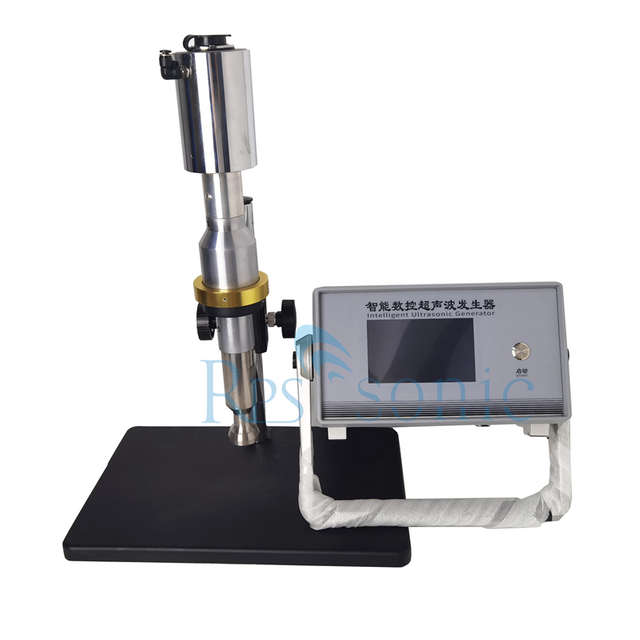
A typical ultrasonic nano-dispersion system mainly consists of the following three parts:
Ultrasonic Generator (Power Supply): Converts ordinary mains power into high-frequency alternating current signals.
Ultrasonic transducer: Converts the electrical energy output from the generator into high-frequency mechanical vibration.
Amplifier rod and tool head (probe): Amplifies the minute vibration amplitude of the transducer and transmits powerful ultrasonic energy into the liquid through the tool head (probe) immersed in the liquid.
Key Parameters and Advantages
To achieve optimal dispersion, several key parameters need to be optimized:
Power: Too low power results in insufficient cavitation effect; too high power may generate excessive heat, damaging heat-sensitive materials.
Time: Dispersion generally improves and stabilizes over time. However, excessive time may cause particle re-agglomeration or probe wear.
Temperature: The ultrasonic process itself generates heat. For heat-sensitive samples, ice bath cooling or a pulse mode (working for a few seconds, pausing for a few seconds) is usually required to control the temperature.
Compared to traditional mechanical stirring or grinding, the main advantages of ultrasonic dispersion are:
Higher efficiency: Achieves nanoscale dispersion, with particle sizes ranging from 100-300 nanometers.
High efficiency: Short processing time, quickly breaks up particle agglomerates.
Wide applicability: Can handle the dispersion of various systems, including liquid-liquid, solid-liquid, and gas-liquid systems.
Low pollution: As a purely physical method, it effectively avoids pollution caused by chemical dispersants.
Summary:
Ultrasonic nanodispersion technology is a key technology that utilizes the powerful "cavitation effect" to achieve efficient and uniform dispersion of nanomaterials. It effectively overcomes the inherent weakness of nanoparticles' tendency to agglomerate and has become an important tool for promoting nanotechnology from the laboratory to industrial applications.