Views: 84 Author: Site Editor Publish Time: 2026-04-09 Origin: Site
What Is Ultrasonic Graphene Dispersion?
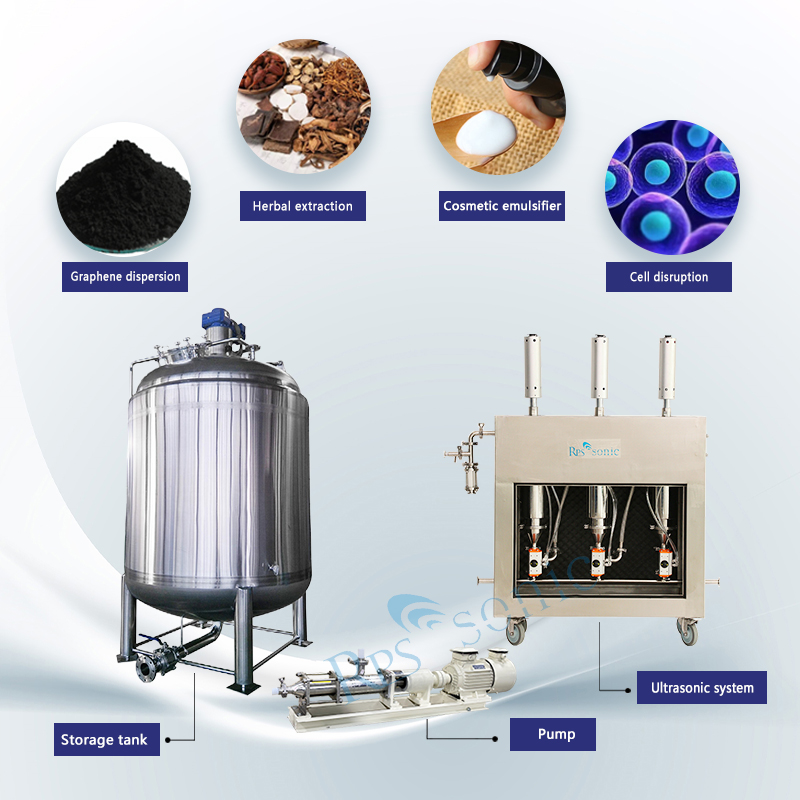
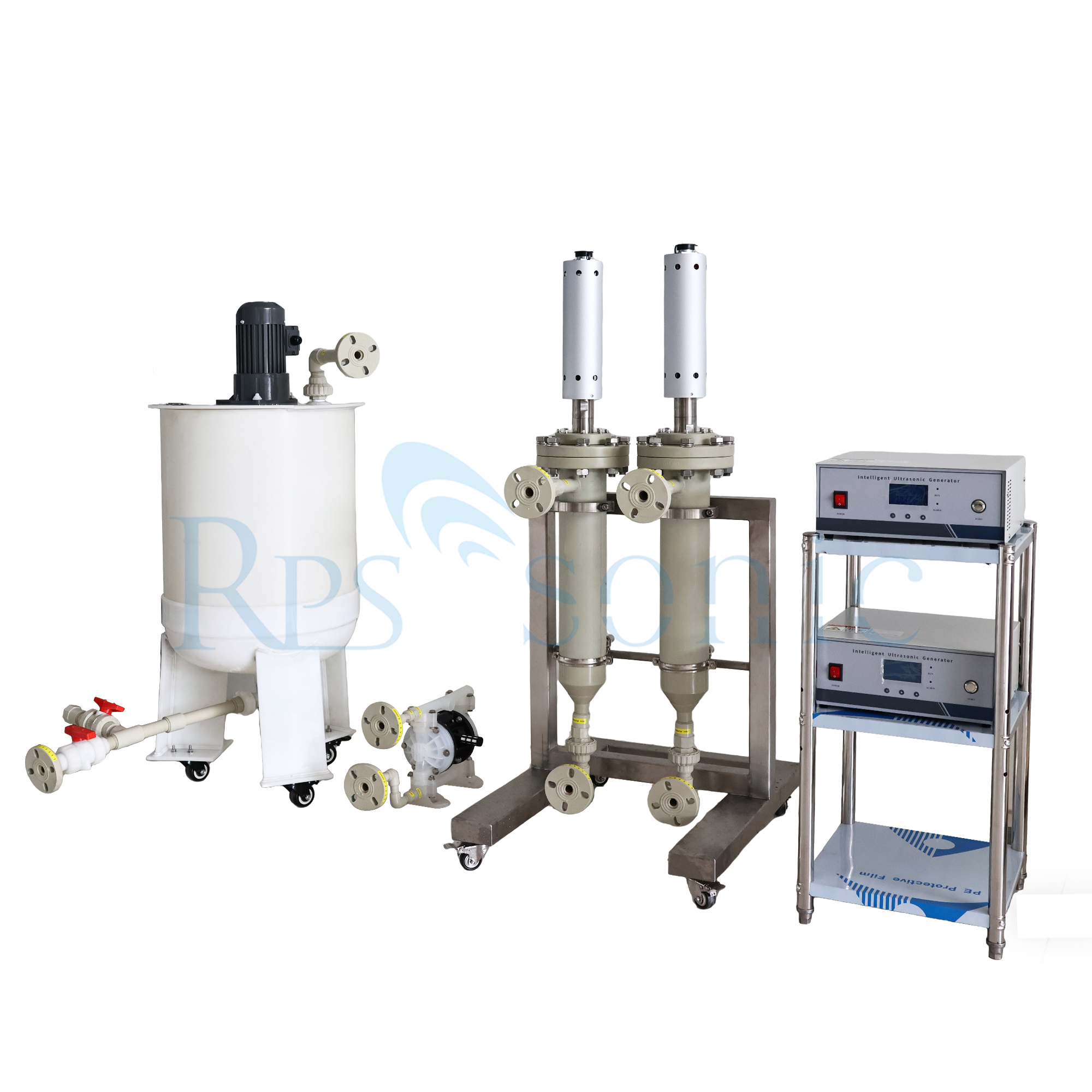
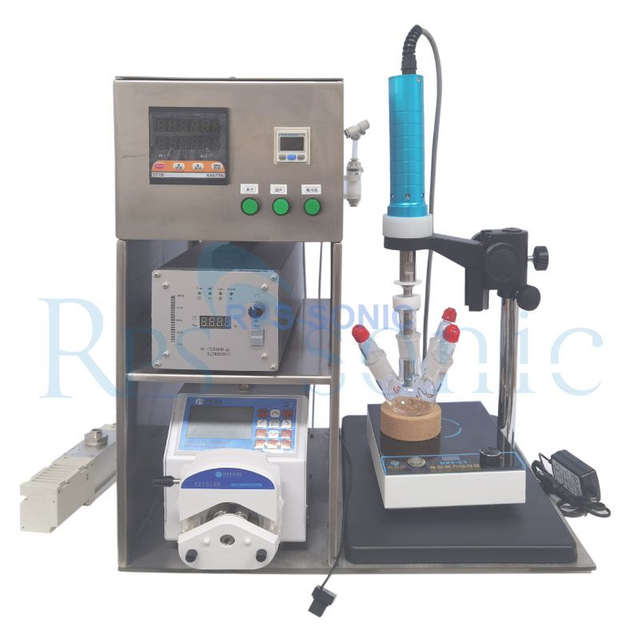
Ultrasonic graphene dispersion utilizes the cavitation effect generated by ultrasound in a liquid to break the van der Waals forces between graphene sheets, thereby uniformly and stably dispersing them into a solvent.
Core Principle: The Amazing Cavitation Effect
Violent Implosion of Bubbles: When high-intensity ultrasound propagates in a liquid, it generates alternating high and low pressure cycles. In the low-pressure phase, numerous tiny vacuum bubbles (cavitation bubbles) form in the liquid. With continuous input of sound energy, these bubbles grow until they burst violently and implode-like during the high-pressure phase.
Extreme and Tiny Energy Release: The rupture of each cavitation bubble is a moment of highly concentrated energy. This process generates extreme conditions at the microscopic scale:
Local instantaneous high temperatures can reach over 1000°C.
Local instantaneous high pressures can reach 500 atm (approximately 50 MPa).
It generates microjets with speeds up to 1000 km/h and powerful shock waves.
Breaking up graphene aggregation: Van der Waals forces naturally exist between graphene sheets, making them extremely prone to aggregation. Ultrasonic dispersion utilizes the powerful mechanical force generated by the aforementioned cavitation effect to "shake" apart the aggregated graphene particles, overcome the van der Waals forces, and redisperse them into independent monolayers.
Advantages of Ultrasonic Dispersion
High Quality and Efficiency: As a physical exfoliation method, ultrasonic dispersion avoids the strong acids and oxidants used in traditional redox methods, better protecting the original lattice structure and excellent intrinsic conductivity of graphene.
High Controllability: By precisely adjusting parameters such as ultrasonic power, frequency, time, and temperature, the dispersion effect can be accurately controlled to adapt to the needs of different scenarios.
Green and Environmentally Friendly: The entire dispersion process requires no or only a small amount of chemical reagents, making it an environmentally friendly technology.
Key Process Parameters
Ultrasonic Power: Power directly determines the intensity of the cavitation effect. Increasing the power within a certain range can improve the dispersion effect, but if the power is too high, it may damage the graphene sheets while exfoliating them. In laboratory operations, it is often recommended to gradually increase the power from 30% to 60% to observe the effect.
Ultrasonic Time: Extending the ultrasonic time is beneficial for the full exfoliation and dispersion of graphene. However, excessively long processing times can also introduce edge defects and even cause more serious structural damage. One study indicated that at a power of 960 W, ultrasonication for 4 hours achieved a good dispersion effect. Ultrasonic Frequency: Graphene dispersion typically uses industrial or laboratory ultrasonic equipment with frequencies in the range of 19-26 kHz.
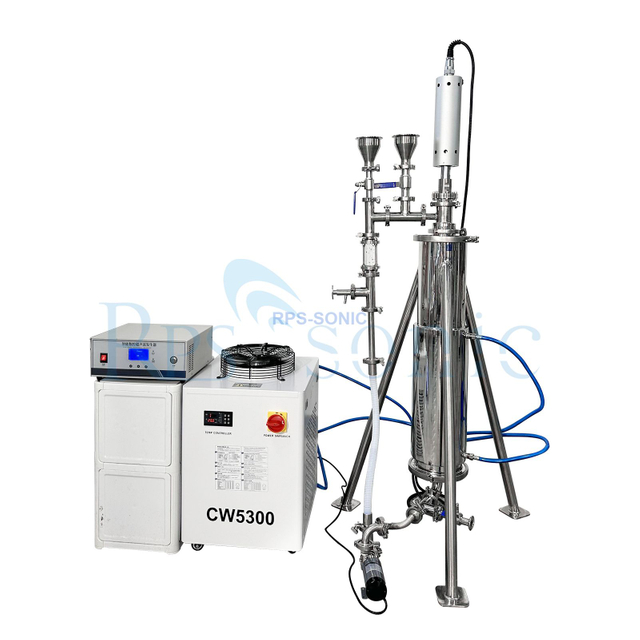
Temperature Control: Cavitation generates heat, and excessively high temperatures can affect dispersion and even damage heat-sensitive solvents or additives. Therefore, a cooling system is often required in practice to control the sample temperature within a suitable range.
Main Application Areas: Ultrasonic graphene dispersion technology has important applications in several cutting-edge fields.
Materials Science: Used to prepare high-performance graphene composite materials. For example, uniformly dispersing graphene in polymer matrices such as rubber and plastics can significantly improve the electrical conductivity, thermal conductivity, and mechanical properties of the materials.
Energy: In energy storage devices such as lithium-ion batteries and supercapacitors, uniformly dispersed graphene can serve as a conductive additive, constructing a highly efficient conductive network, thereby improving the battery's charge/discharge speed and cycle life.
Biomedicine: Used to prepare graphene-based drug carriers. Ultrasonic dispersion technology can achieve efficient drug loading and controlled release. In addition, ultrasound itself is often used for cell disruption to extract intracellular biomolecules such as proteins and DNA.
Environmental Science: The cavitation effect generated by ultrasound can not only disperse materials, but the high temperature and pressure generated during its disruption can also directly decompose organic pollutants in water. Therefore, it also shows potential in environmental governance fields such as wastewater treatment and soil remediation.
Ultrasonic graphene dispersion technology is a key technology that is efficient, controllable, and relatively environmentally friendly. Through strong physical interactions at the microscale, it successfully solves the core problem of graphene's tendency to aggregate. Although challenges such as large-scale production remain, it is undoubtedly a significant force driving graphene from the laboratory to wider applications.