Views: 102 Author: Site Editor Publish Time: 2026-04-09 Origin: Site
What Is Ultrasonic Descaling?
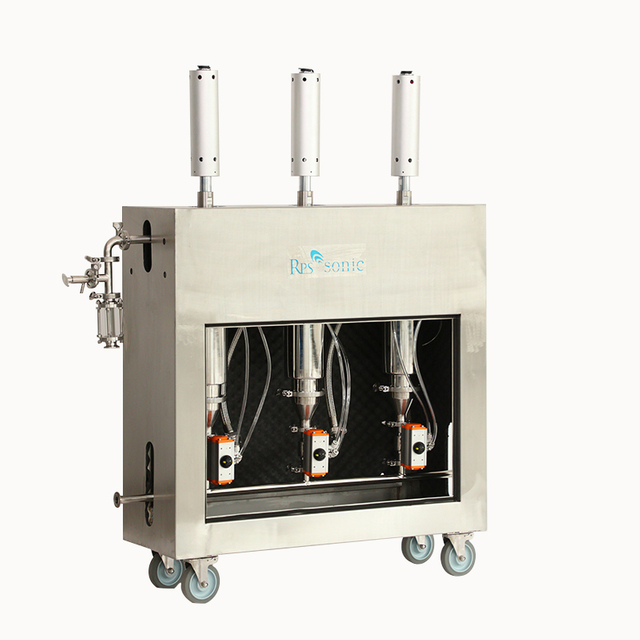
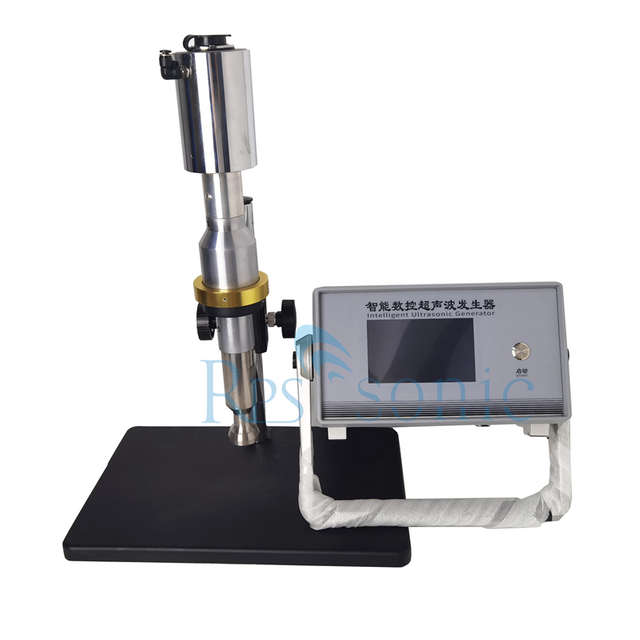
Ultrasonic descaling is a green and environmentally friendly technology that utilizes the powerful physical energy generated by high-frequency sound waves (i.e., ultrasound) in liquids to remove or prevent scale (such as calcium carbonate scale) from the inner walls of pipes, containers, and other equipment. It is particularly suitable for industrial equipment such as heat exchangers and boilers, and is an "online" treatment technology that requires no downtime or equipment disassembly.
Core Principle: Microscopic Impact of the "Cavitation Effect"
Ultrasonic descaling mainly relies on the following combined effects:
Cavitation Effect: This is the most important effect. Ultrasonic waves generate high-frequency pressure waves in the liquid, forming countless tiny vacuum bubbles (cavitation bubbles). When these bubbles burst rapidly, they instantly generate powerful shock waves and local pressures of up to thousands of atmospheres. This force can break down and peel off the hard scale adhering to the pipe wall.
Shear Effect: The high-frequency vibrations caused by ultrasound cause asynchronous vibrations among the scale layer, the metal pipe wall, and the water within. This difference in velocity generates strong shear forces at the interface between the scale and the pipe wall, causing the scale to loosen and detach due to fatigue.
Activation and inhibition effects: Ultrasound can also increase the activity of scale-forming substances in liquids, change their physicochemical properties, and inhibit the nucleation and growth of scale ions on metal surfaces, thereby effectively slowing down the formation of new scale.
Technical Advantages
Compared to traditional descaling methods (such as acid washing or manual/mechanical methods),
True Online Cleaning: Cleaning can be performed without stopping equipment operation, avoiding production losses caused by downtime.
Environmentally Friendly and Pollution-Free: This is a purely physical process that does not use any chemical agents, therefore it does not produce harmful wastewater or exhaust gases, making it environmentally friendly.
Equipment Protection: It is a non-contact cleaning method that does not damage the internal walls of equipment like mechanical scraping or chemical corrosion, helping to extend equipment life.
High Efficiency and Energy Saving: By removing scale, heat exchange efficiency can be significantly improved, achieving energy savings. Data shows that its average energy saving effect can reach over 30% -5, and it can improve the heat transfer coefficient of equipment by approximately 10%.
Main Application Areas
This technology has a wide range of applications, covering almost all industrial and civil fields requiring liquid heat exchange or transportation:
Energy and Power: Used for descaling water-cooled walls and condensers in thermal power plant boilers, effectively improving heat exchange efficiency by 15%-30%.
Petrochemical Industry: Cleaning various scale buildups in oil refining units, reactors, and oil pipelines.
Metallurgical Manufacturing: Used in cooling systems and hot rolling equipment in steel plants.
Food and Pharmaceutical Industry: Cleaning UHT sterilization pipelines in dairy processing, beverage bottling lines, and pharmaceutical water circulation systems.
Marine and Marine Engineering: Treating scale and shellfish deposits caused by seawater corrosion in ship ballast water systems and seawater pipelines.
HVAC: Removing biological slime and rust products from central air conditioning chilled water circulation systems, extending equipment lifespan.
Limitations: Despite its significant advantages, this technology also has some limitations: Limited effectiveness on soft scale: For softer, stickier scale (such as biological slime), its removal effect is not as significant as for hard scale (such as calcium carbonate).
Limited by the medium: If the liquid in the pipeline has too high viscosity, extremely high flow rate, or contains a large number of air bubbles, it may weaken the energy transmission effect of the ultrasound. Limited range of action: The effective radius of a single transducer is limited. For large-diameter pipes or equipment with extremely complex structures, multiple transducers may need to be combined.
In summary, ultrasonic descaling is a technology that uses physical methods to continuously remove and prevent scale while the equipment is running. It is an effective way to achieve green industrial production and energy conservation.