What Is Ultrasonic Aluminum Molten Metal Treatment?
Views: 87 Author: Site Editor Publish Time: 2026-04-25 Origin: Site
What Is Ultrasonic Aluminum Molten Metal Treatment?
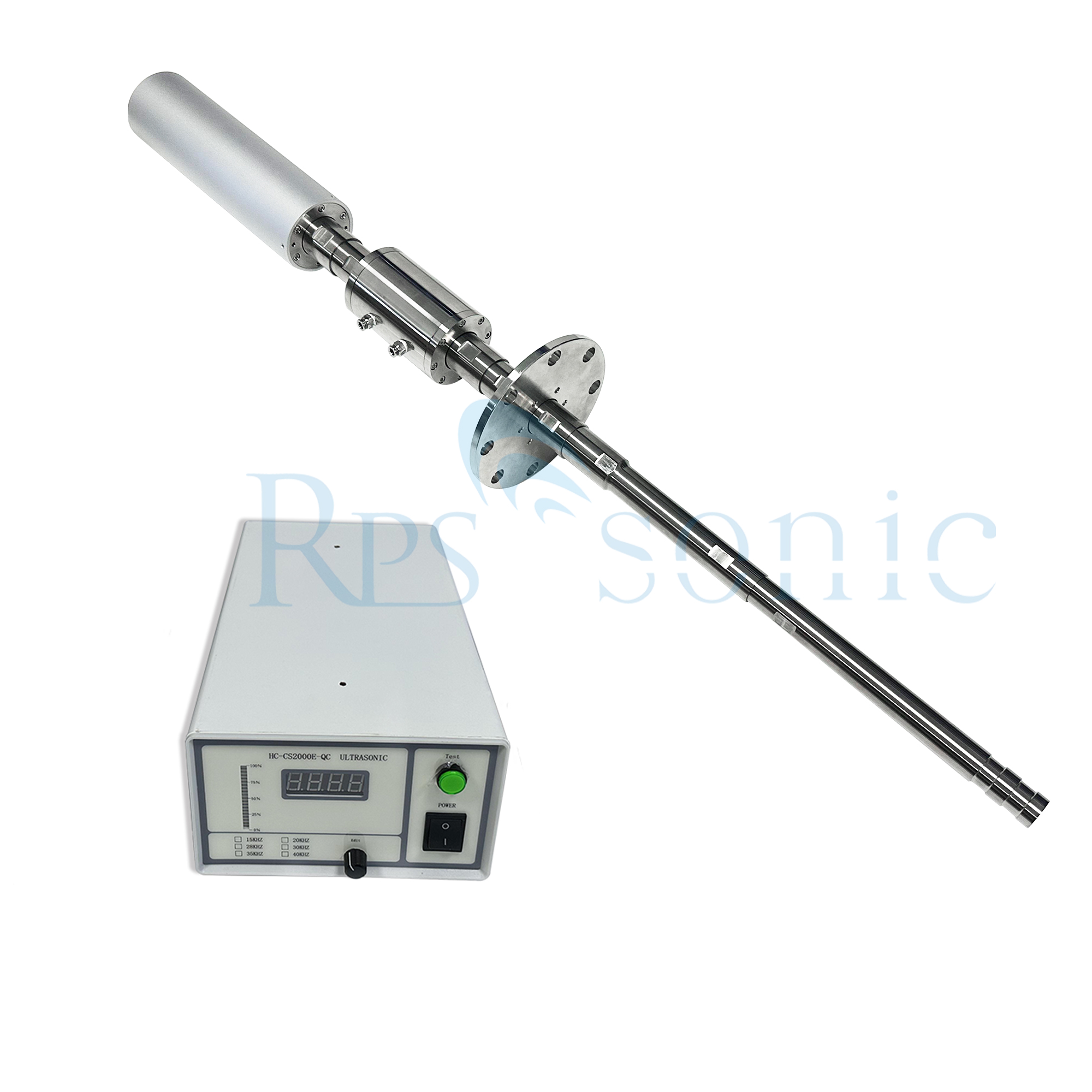
Ultrasonic aluminum molten metal treatment, simply put, involves introducing high-power ultrasonic waves into molten aluminum during the smelting and casting process of aluminum and aluminum alloys. The resulting physical effects significantly improve the metallurgical quality and final properties of the aluminum material.
This technology can achieve multiple effects simultaneously and has been proven to be a highly efficient and clean melt treatment method.
Core Principles: The core of ultrasonic treatment lies in two key physical effects that fundamentally alter the microstructure of solidified aluminum:
Acoustic Cavitation Effect: This is the most important mechanism. High-power ultrasonic waves propagate in molten aluminum, generating countless tiny bubble nuclei. These nuclei grow violently, oscillate, and even collapse instantaneously under alternating positive and negative pressure from the sound waves. This process removes hydrogen from the molten aluminum (the bubbles carry hydrogen out of the molten aluminum and allow it to float to the surface), while the powerful shock waves break up growing dendrites, increasing nucleation sites and significantly refining the grain size.
Acoustic Flow Effect: The propagation of ultrasonic waves creates macroscopic stirring and flow within the molten aluminum. This stirring action can homogenize the alloy composition, prevent segregation, and make the temperature and composition distribution more uniform. At the same time, it helps to drive non-metallic inclusions (such as oxides) to the surface of the melt for easy removal.
functional classification
Specific functions
Description and Effects
1.Grain refinement
Significantly refine the grains
This is one of the most important functions. The cavitation-generated shock waves and the increased nucleation points can effectively refine the grains, reducing the grain size from 200-500 micrometers to 20-50 micrometers, with a refinement rate of over 60%.
2. Decarbonization (de-gassing)
Efficient removal of hydrogen
Hydrogen in the aluminum liquid is the main cause of pores and porosity. Ultrasonic treatment can effectively remove hydrogen, reduce the porosity rate and increase the density of the castings.
3. Dust removal (purification)
Remove oxide inclusions
The acoustic flow effect can drive small inclusions to the surface of the molten metal to form a slag layer, thereby purifying the aluminum liquid. The combined treatment process can increase the cleanliness of the aluminum melt to below 0.1 mL/100g Al.
4. Component homogenization
Reduce segregation and improve uniformity
The stirring effect accelerates the diffusion of solute atoms, reduces component segregation, and improves the uniformity of the structure.
5. Reduce shrinkage cavities
Prevent macroscopic and microscopic porosity
By integrating the effects of refinement, degassing and secondary solidification, it can significantly reduce the porosity defects in the ingot and improve the density.
6. Improve the second phase
Refine and evenly distribute the second phase
Make the second phase (mesh-like or block-like) in the alloy finer, more dispersed, and evenly distributed, thereby enhancing the mechanical properties.
7. Improve mechanical properties
Enhance strength and plasticity
Fine-graining and defect reduction directly enhance mechanical properties. After treatment, the tensile strength can be increased by 15% to 30%, and the elongation can be increased by up to 28%.
8. Improve casting properties
Enhance liquidity and contraction capabilities
The treated aluminum liquid has better fluidity, which enables it to fill complex cavities more effectively; its secondary pouring capacity is also enhanced, which helps to reduce defects such as shrinkage cavities and porosity.
9. going green and environmental protection
Reduce chemical additives
It can replace or reduce the use of traditional chemical refining agents (such as Al-Ti-B), reduce the amount of slag and toxic gas emissions, and is a clean production technology.
Core advantages and performance enhancements
Significant improvement in comprehensive performance: The grain refinement rate can exceed 60% - 46%, and the tensile strength has significantly increased by -8. Ultrasonic treatment is also a physical processing method that does not introduce new impurities and can improve the slag treatment process, making it an environmentally friendly aluminum processing technology.
Comparison with traditional methods: Compared with traditional chemical refining agents (such as Al-Ti-B), ultrasonic treatment is more environmentally friendly; compared with traditional degassing methods like rotary blowing, ultrasonic combined treatment can achieve higher cleanliness.
Equipment parameters and process influence (key factors)
The effect of ultrasonic treatment is not constant but is significantly influenced by the following equipment parameters and process conditions. It needs to be optimized according to specific requirements.
Parameter
influence
参考范围
Power
Determine the accuracy and processing depth
功The power ranges from 200W to over 2500W. For example, for 7050 aluminum alloy, the refinement effect is better at 200W, and the degassing efficiency is higher at 240W.
Frefuency
Affect the intensity of cavitation effect
Generally, the best results are achieved within the low-frequency range of 17-22 kHz, especially for the low-frequency and high-intensity ultrasonic waves in the 15-20 kHz range.
Process time
There exists an optimal value.
Too short a time will not achieve good results, while too long a time may lead to grain coarsening or a rebound in porosity. For example, the 7050 alloy works best when treated for 90 seconds.
Melt temperature
Affecting melt viscosity, hydrogen solubility and cavitation intensity
There is an optimal temperature range, and an appropriate medium temperature is conducive to improving the processing effect.
Melt volume
The power must be matched to the volume of the melt.
For large-scale molten materials, multiple probes or higher power may be required, or even non-contact ultrasonic technology may be employed to ensure the processing outcome.
Horn size / shape
Affecting the distribution of the ultrasonic field
Tools with smaller end areas (such as Φ10mm) have a better refinement effect.
Typical application scenarios:
Laboratory research: Conducted to study the mechanism of ultrasonic action and develop new type of aluminum alloy .
Industrial Online Continuous Casting (DC Casting): Install ultrasonic equipment on continuous casting lines such as hot top casting and air slide casting to process the molten aluminum in real time to obtain high-quality ingots .
Special casting technology: In the fields of semi-solid forming and aluminum-based composite material preparation, ultrasonic waves can effectively disperse reinforcing particles and refine the semi-solid structure.
Summary
Overall, ultrasonic aluminum solution treatment is a powerful and highly efficient multi-functional melt processing technology. Through the two core physical effects of acoustic cavitation and acoustic flow, it integrates grain refinement, degassing purification, and component homogenization, significantly enhancing the mechanical properties and metallurgical quality of aluminum materials. As a technology with both high performance and environmental-friendly features, it is becoming one of the important technical paths for the aluminum processing industry to achieve industrial upgrading. Especially in the fields of automotive lightweighting, aerospace, and high-end consumer electronics, it has broad application prospects.