What is the difference between an ultrasonic homogenizer and a high-shear homogenizer?
In the food, pharmaceutical, chemical, and biotechnology industries, homogenization is a crucial step in determining product quality. Ultrasonic homogenizers and high-shear homogenizers are two of the most common homogenization devices. Although they share a similar goal—refining, dispersing, and emulsifying materials—their working principles and applicable scenarios are drastically different. Simply put: high-shear homogenizers rely on "powerful cutting" and are suitable for large-scale production; ultrasonic homogenizers rely on "oscillating blasting" and are suitable for precision machining.
I. Working Principle: Mechanical Force vs. Acoustic Force
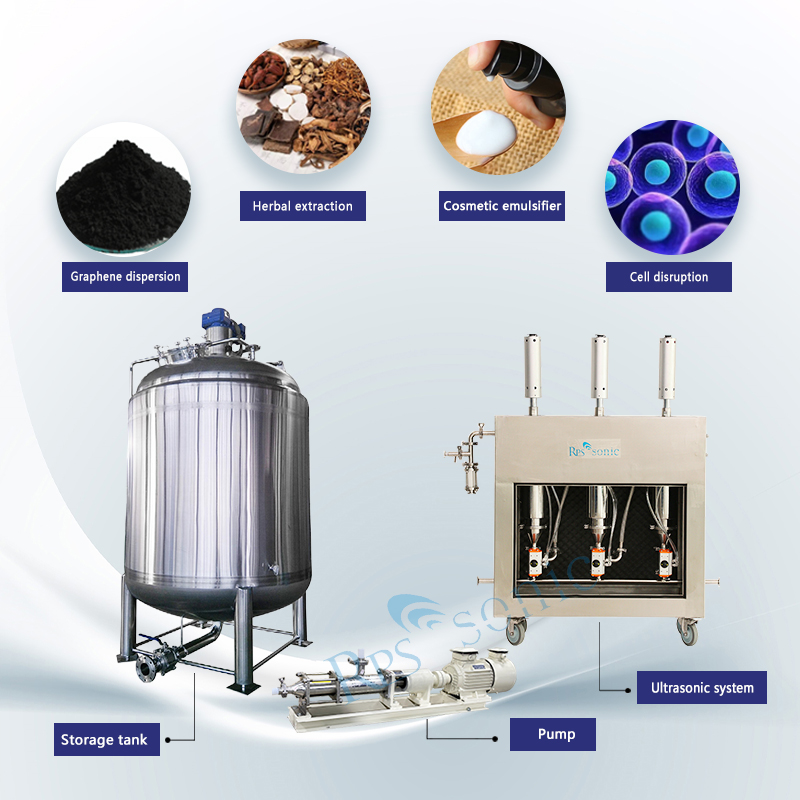
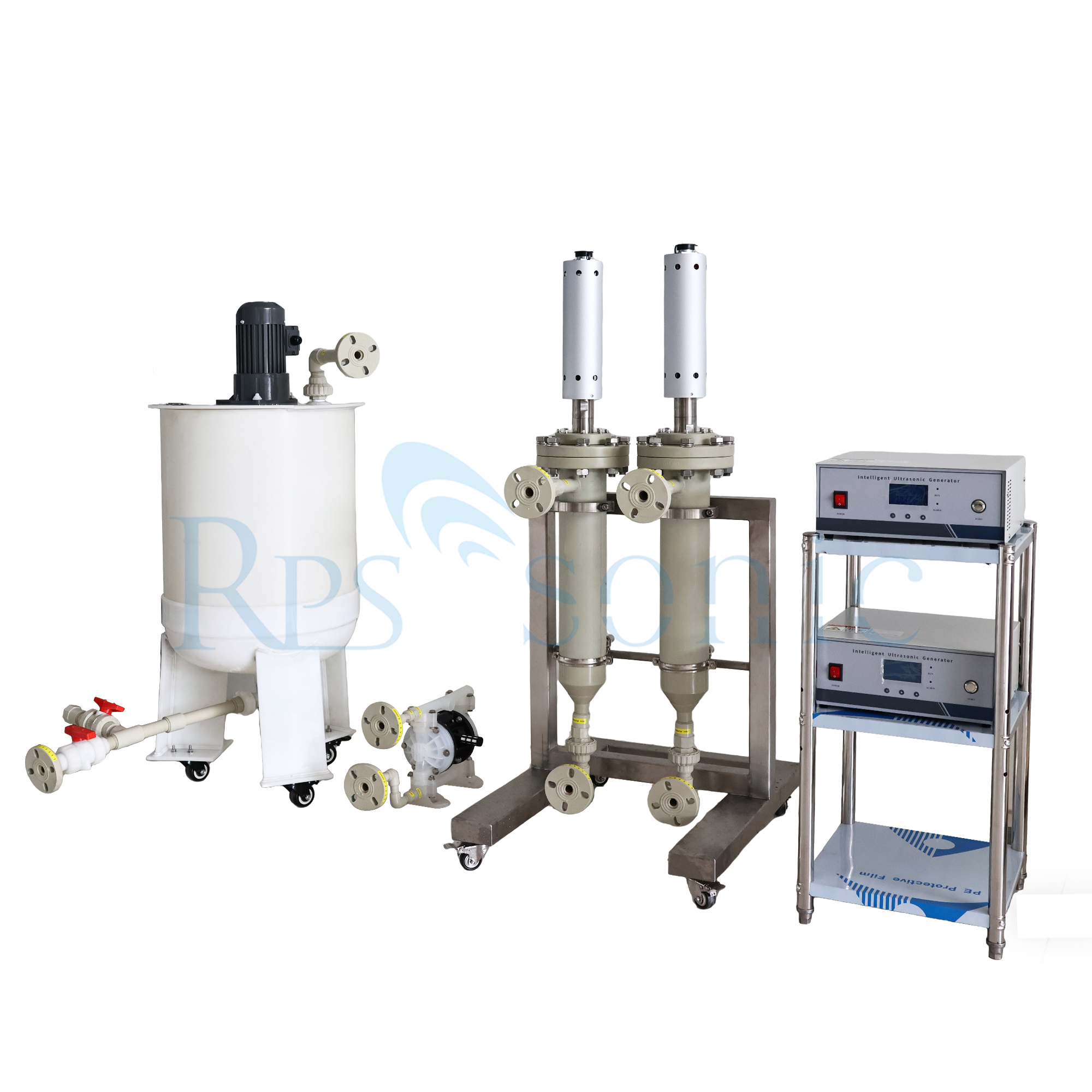
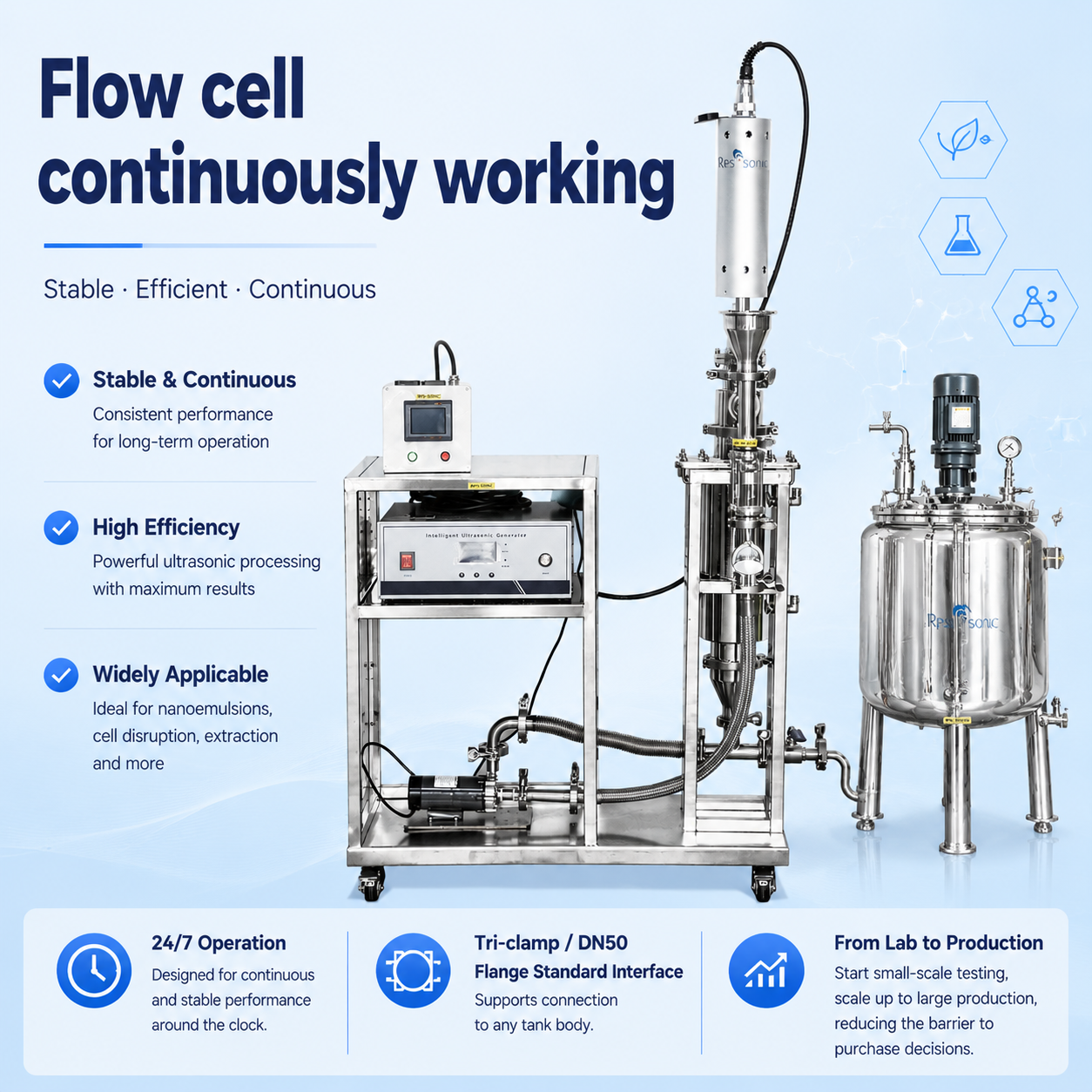
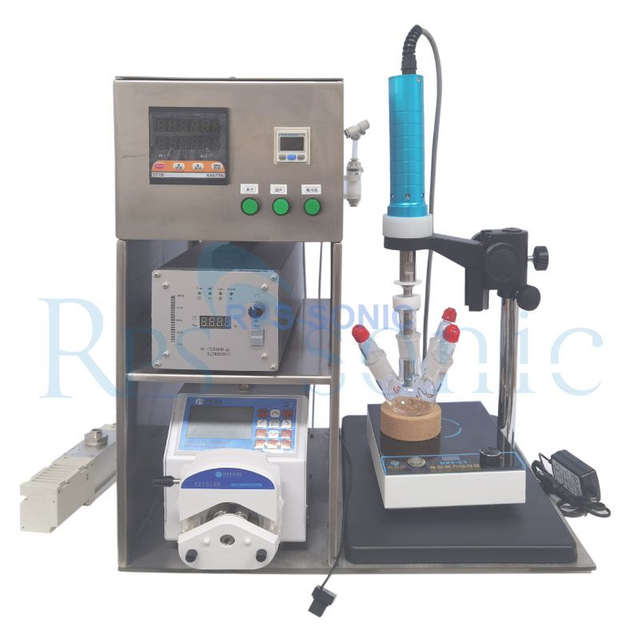
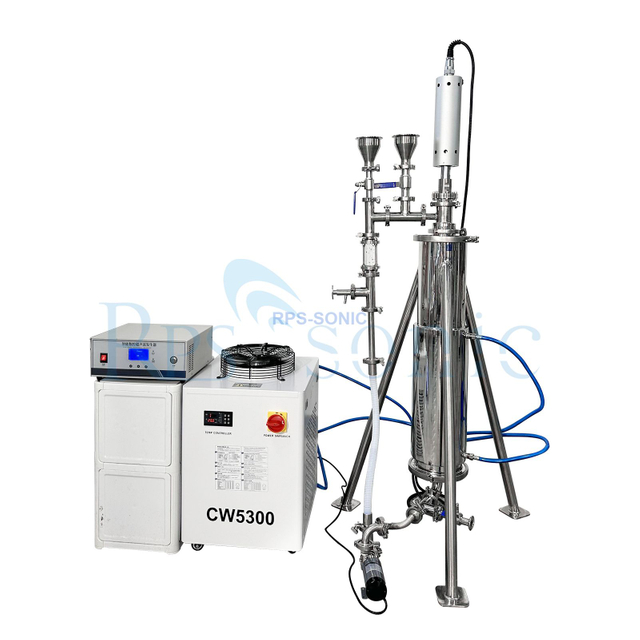
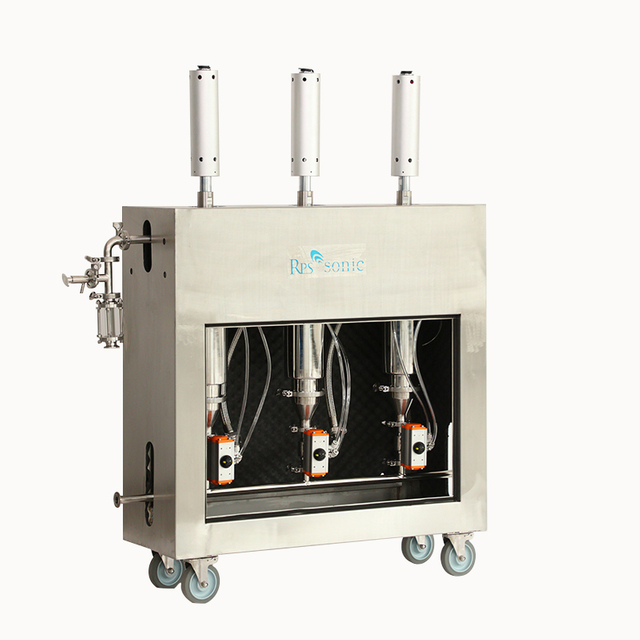
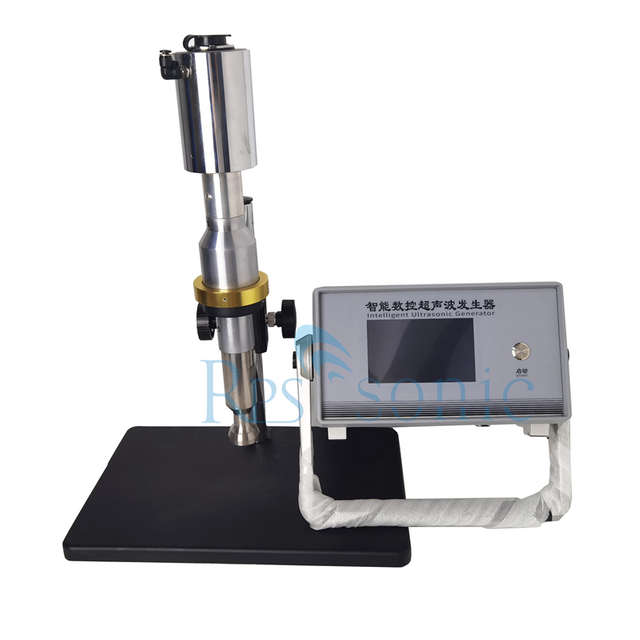
The core mechanism of an ultrasonic homogenizer is the ultrasonic cavitation effect. The equipment converts mains electricity into high-frequency electrical energy, which is then converted into high-frequency mechanical vibration by a transducer. This vibration is amplified by a titanium alloy probe and applied to the liquid. When high-intensity sound waves enter the liquid, the sudden change in local pressure generates countless tiny bubbles. These bubbles rapidly grow and violently implode within a very short time, instantly producing shock waves with pressures reaching thousands of atmospheres and local temperatures exceeding 5000K. This extreme physical environment is sufficient to tear cell membranes, break up nanoparticle clusters, and pulverize large droplets into stable submicron-sized dispersions.
High-shear homogenizers rely on mechanical shearing force. Their core working unit is the stator-rotor system. Driven by a motor, the rotor rotates at high speed (up to tens of thousands of revolutions per minute), and the material is drawn into the narrow gap between the rotor and stator, where it endures intense mechanical shearing, centrifugal compression, liquid friction, impact tearing, and turbulence. The material can withstand hundreds of thousands or even millions of high-speed shearing cycles per minute within the chamber.
II. Overview of Core Differences
Comparison Dimensions | Ultrasonic homogenizer | High shear homogenizer |
Energy source | Sound wave energy → cavitation effect | Mechanical rotation → rotor-stator shearing |
Mode of action | Local bubbles implode and the energy is highly concentrated | Continuous shearing and turbulence of bulk materials |
Homogeneity accuracy | Up to nanometer scale(<100 nm) | micron level(约2-5 μm) |
Processing scale | Laboratory to small batch production | From laboratory to large-scale continuous production |
Applicable viscosity | Limited (approximately 4,000 cP) | Wide range, suitable for medium to high viscosity. |
III. Advantages and Limitations of Each Instrument The advantage of an ultrasonic homogenizer lies in its extremely high precision, achieving nanoscale homogenization effects, making it particularly suitable for precision operations such as cell disruption and extraction of intracellular substances (e.g., DNA, proteins). It exerts relatively low shear force on the sample, better preserving sample integrity. Furthermore, ultrasonic homogenization requires no additional emulsifiers or stabilizers, aligning with green manufacturing trends. Operation is also relatively simple; different sample volumes can be processed by changing different probes.
Limitations are also apparent: small processing capacity, unsuitable for large-scale continuous production; certain limitations on material viscosity; inability to process multiple samples simultaneously, requiring probe replacement or cleaning for different samples, posing a risk of cross-contamination.
The advantage of a high-shear homogenizer lies in its large processing capacity and high efficiency, suitable for industrial continuous production. It can handle a wider viscosity range, including medium- to high-viscosity materials. When processing materials with high fibrous content, its performance is even superior to ultrasonic homogenizers. The equipment has lower operating costs and is easy to maintain.
Limitations include relatively low homogenization precision, generally remaining at the micron level; significant mechanical shear force on samples, potentially damaging heat-sensitive or fragile structures; and unsuitability for handling extremely high-viscosity materials.
IV. Application Scenarios: Each Has Its Strengths
Ultrasonic homogenizers are widely used in:
Biomedicine: Cell disruption, DNA/protein extraction
Nanomaterials: Dispersing carbon nanotubes, graphene, and other nanomaterials to prevent aggregation
Pharmaceutical industry: Preparation of nanoemulsions, drug suspensions
Food and cosmetics: Homogenization of plant protein beverages, efficient incorporation of active ingredients into the matrix
High-shear homogenizers are commonly used in:
Food industry: Large-scale homogenization and emulsification of dairy products and fruit juices
Chemical industry: Dispersion of coatings, paints, and adhesives
Cosmetics: Mass production of creams and emulsions
Fiber material processing: Crushing raw materials with high fiber content
V. How to Choose?
The choice of equipment depends on your specific needs:
If your goal is to process fibrous or medium-viscosity materials on a large scale and with high efficiency, a high-shear homogenizer is a more economical and efficient choice.
If your needs involve nanoscale precision machining, handling fragile biological samples, or the research and development of small-batch, high-value-added products, an ultrasonic homogenizer is more suitable.
In actual production, the two methods are sometimes used in combination: first, a high-shear homogenizer is used for rough processing, followed by an ultrasonic homogenizer for fine homogenization, to achieve the best results.
Conclusion: Ultrasonic homogenizers and high-shear homogenizers are not substitutes, but rather specialized tools for different needs. Ultrasonic homogenizers use "invisible sound waves" to reshape homogenize at the molecular scale, making them high-precision instruments; high-shear homogenizers use powerful mechanical forces to achieve rapid bulk-level processing, acting as "crushers" in industrial production. Understanding their fundamental differences is crucial for making the most appropriate choice in practical applications.