Ultrasonic-assisted Extraction of Tea Polyphenols From Green Tea
Green tea polyphenols, as important natural antioxidants, have broad application prospects in the food, pharmaceutical, and cosmetic industries. Ultrasonic-assisted extraction (UAE), with its unique advantages of cavitation effect disrupting cell structure and enhancing mass transfer processes, has become a green and efficient technology to replace traditional solvent extraction.
Studies have shown that by optimizing ultrasonic power (250-400 W), extraction temperature (45-72℃), extraction time (8-40 min), and solvent composition (50%-77.6% ethanol or novel green solvents), the extraction rate of tea polyphenols can reach 21.78-44.82 mg GAE/g dry tea. Future research will focus on process scale-up, development of nanodelivery systems, and life-cycle sustainability assessment.
Tea (Camellia sinensis) originated in China and is one of the most widely consumed beverages globally. Green tea is rich in polyphenolic compounds, accounting for 25%-40% of its dry weight, among which catechins and their derivatives (such as epigallocatechin gallate, EGCG) are the main bioactive components. These compounds possess various physiological functions, including antioxidant, anti-inflammatory, anti-cancer, and anti-obesity effects, and are widely used in functional foods, nutritional supplements, and cosmetics.
However, the complexity of plant matrices, the thermosensitivity of polyphenolic compounds, and the limitations of traditional extraction methods pose challenges to the efficient extraction of tea polyphenols. Traditional solvent extraction methods (such as maceration, reflux extraction, and Soxhlet extraction) suffer from high solvent consumption, high energy consumption, long extraction times, and the risk of degradation of active ingredients due to high temperatures. With the popularization of green chemistry concepts, the development of environmentally friendly, efficient, and energy-saving extraction technologies has become a research hotspot.
Ultrasonic-assisted extraction (UAE), as an emerging green extraction technology, utilizes the cavitation effect of ultrasound to generate localized high temperature, high pressure, and microjets, effectively disrupting plant cell walls and promoting mass transfer of intracellular target substances to the solvent. Compared to traditional methods, UAE can significantly shorten extraction time, reduce solvent consumption, increase extraction rate, and avoid degradation of thermosensitive components.
2. Principles and Advantages of Ultrasonic-Assisted Extraction Technology
2.1 Ultrasonic Cavitation Effect and its Mechanism of Action
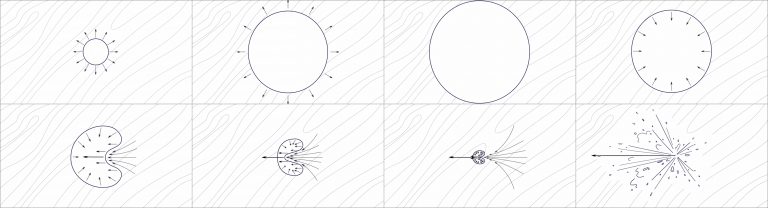
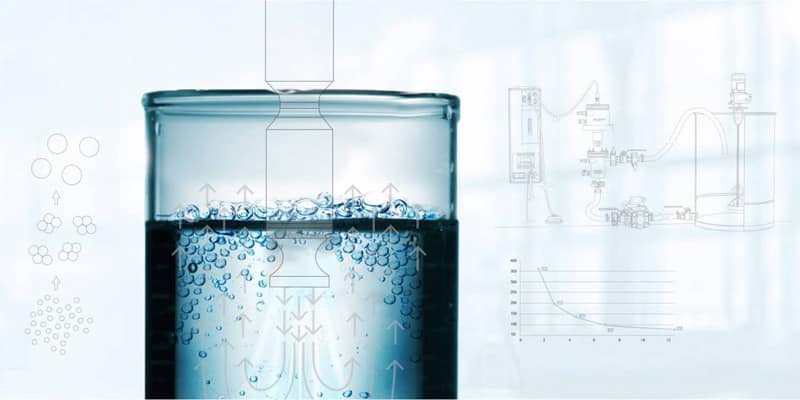
The core mechanism of ultrasonic-assisted extraction is the cavitation effect. When ultrasound propagates in a liquid medium, alternating compression and expansion waves generate tiny vacuum bubbles (cavitation bubbles). These bubbles form in the negative pressure phase of the sound waves and collapse rapidly in the positive pressure phase. The instantaneous collapse of these bubbles generates localized high temperatures (up to 5000 K) and high pressures (approximately 1000 atm), accompanied by intense microjets and shock waves. These physical effects have multiple impacts on plant cells:
Cell wall disruption: Microjets and shock waves physically disrupt the cell wall and cell membrane structure, reducing mass transfer resistance.
Particle size reduction: The mechanical energy of ultrasound refines plant particles, increasing specific surface area and promoting solvent penetration.
Enhanced mass transfer: Turbulence and micro-disturbances generated by the cavitation effect accelerate the diffusion of target compounds from the matrix to the solvent.
Studies have shown that ultrasound treatment significantly alters the microstructure of tea cells, causing pores and ruptures in the cell walls, which is beneficial for the dissolution of polyphenols.
2.2 Comparison with Traditional Extraction Methods
Several studies have systematically compared ultrasound-assisted extraction with traditional extraction methods. Using 50% ethanol-water as a solvent, ultrasonic-assisted extraction (UAE) yielded a total phenolic content of 21.52-36.42 mg GAE/g dry tea, significantly higher than the 18.43-32.29 mg GAE/g dry tea obtained by microwave-assisted extraction (MAE) and the 12.59-28.52 mg GAE/g dry tea obtained by traditional maceration. Scanning electron microscopy further confirmed that the cell structure of the tea samples treated with UAE was most thoroughly disrupted.
Regarding extraction efficiency, a study on Ziyang green tea showed that the optimized UAE process (solid-liquid ratio 1:35.8, ethanol volume fraction 77.6%, ultrasonic time 37.6 min, ultrasonic temperature 72.1℃, ultrasonic power 248.4 W) achieved a tea polyphenol extraction rate of 21.78%, which is 8.56% higher than the traditional ethanol maceration method, and the extraction time is significantly shortened.
2.3 Green Technology Advantages
From a sustainable development perspective, UAE technology offers multiple green advantages:
Reduced Energy Consumption: Advanced extraction technology can reduce energy consumption by 30%-50%.
Solvent Saving: Compared to traditional water extraction, UAE combined with deep eutectic solvent (DES) can reduce solvent consumption by 40%.
Reduce Carbon Emissions: The carbon emission intensity of the UAE+DES process (0.5 kg CO₂/kg product) is lower than that of traditional water extraction (0.8 kg CO₂/kg product).
Avoid Thermal Degradation: It can operate at lower temperatures, protecting the bioactivity of heat-sensitive catechins.
3 Key Process Parameters and Optimization Strategies
3.1 Main Influencing Factors
The effectiveness of ultrasound-assisted extraction is influenced by multiple process parameters, mainly including:
3.1.1 Solvent Type and Concentration
Solvent selection is a key factor affecting extraction efficiency. Since tea polyphenols are polar molecules, polar solvents such as water, ethanol, methanol, and their mixtures are commonly used choices. Studies have shown that a 50% ethanol-water mixed solvent yields the best extraction efficiency, with total phenolic content reaching 22.69-36.42 mg GAE/g dry tea; followed by 50% acetonitrile-water (18.47-33.49 mg GAE/g dry tea); pure water has the lowest extraction efficiency. Another study optimized the ethanol volume fraction to 77.6%.
In recent years, green solvent systems have received widespread attention. Deep eutectic solvents (DES), composed of hydrogen bond donors and acceptors, possess advantages such as biodegradability, low toxicity, and designability. One study used sodium acetate-glycerol DES to extract bioactive components from tea leaves, achieving a total phenolic content of 24.76 mg GAE/g dry weight under conditions of 90% ultrasonic amplitude, 10 min time, and a liquid-to-solid ratio of 30 mL/g. In contrast, the glycerol-water system (hydro-glycerol) exhibited higher extraction efficiency, achieving a total phenolic content of 90.68 mg GAE/g dry weight under conditions of 86% ultrasonic amplitude, 8 min time, and a liquid-to-solid ratio of 24 mL/g.
Another green innovation is the water-soluble growth promoter-assisted extraction. Using sodium subtilisate (NaCuS) as a water-soluble growth promoter, combined with ultrasound extraction of tea polyphenols in an aqueous medium, an extraction efficiency of 68.429% was achieved under conditions of a liquid-to-solid ratio of 0.05, an ultrasonic time of 3.2 h, and a temperature of 49.9℃.
3.1.2 Ultrasonic Power
Ultrasonic power directly affects the intensity of the cavitation effect. Too low a power results in insufficient cavitation; too high a power may lead to degradation of active ingredients. Studies have shown that the optimal ultrasonic power range is 250-400 W. One study using response surface methodology determined the optimal power to be 250 W; a study on the extraction of Jingshan green tea used 400 W, achieving an extraction rate of 33.81%; another optimization study found the optimal power to be 248.4 W.
3.1.3 Extraction Temperature
Temperature affects the solvent's diffusion coefficient, solubility, and the stability of the target compound. Tea polyphenols are heat-sensitive; excessively high temperatures can lead to degradation and isomerization. Studies show that the optimal extraction temperature range is 45-72℃. One study optimized the extraction to 72.1℃, while another study achieved a high extraction rate of 44.82 mg GAE/g dry tea at 45℃. For the glycerol-water system, lower temperatures (approximately 50℃) yield good results.
3.1.4 Extraction Time
Ultrasonic time needs to balance extraction efficiency and activity preservation. Too short a time results in incomplete extraction; too long a time may lead to accumulated heat effects and component degradation. Studies show that the optimal ultrasonic time ranges from 8 to 40 minutes. Extraction of Jingshan green tea requires 40 minutes; a glycerol-water system can achieve a high extraction rate in just 8 minutes.
3.1.5 Solid-Liquid Ratio The solid-liquid ratio affects the concentration gradient and mass transfer driving force. A ratio that is too low results in insufficient solvent and incomplete extraction; a ratio that is too high increases subsequent concentration costs and solvent consumption. Optimization studies show that the optimal solid-liquid ratio is concentrated in the range of 1:24-1:36 g/mL. One study determined an optimized value of 1:35.8; the optimized value for the glycerol-water system is 1:24.
Ultrasonic-assisted extraction, as a green and efficient technology, has shown significant advantages in the extraction of tea polyphenols from green tea. By optimizing key process parameters—ultrasonic power (250-400 W), extraction temperature (45-72℃), extraction time (8-40 min), and solvent composition—the extraction rate of tea polyphenols can reach 21.78-44.82 mg GAE/g dry tea. The development of green solvent systems (deep eutectic solvent, glycerol-water, water-soluble growth promoter) further improves the environmental friendliness of the process. Response surface methodology is currently the mainstream optimization tool, while artificial intelligence methods such as machine learning are becoming new research frontiers. The antioxidant, skin-care, and antibacterial functional activities of the extracts lay the foundation for their application in the food, cosmetics, and pharmaceutical industries. Future research should focus on process scale-up, standardization system construction, safety assessment, and life-cycle sustainability, promoting the industrial application of ultrasound-assisted extraction technology for tea polyphenols.