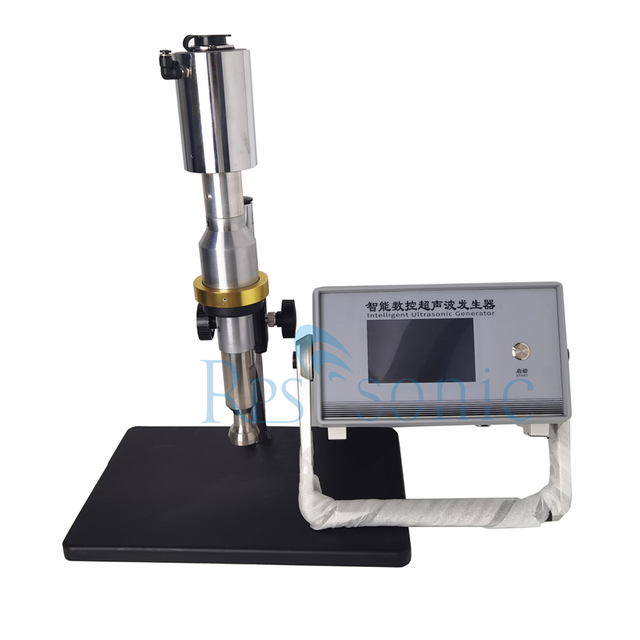
Ultrasonic Extraction System for Whisky/Brandy Using Oak Chips (100–500 L Capacity)
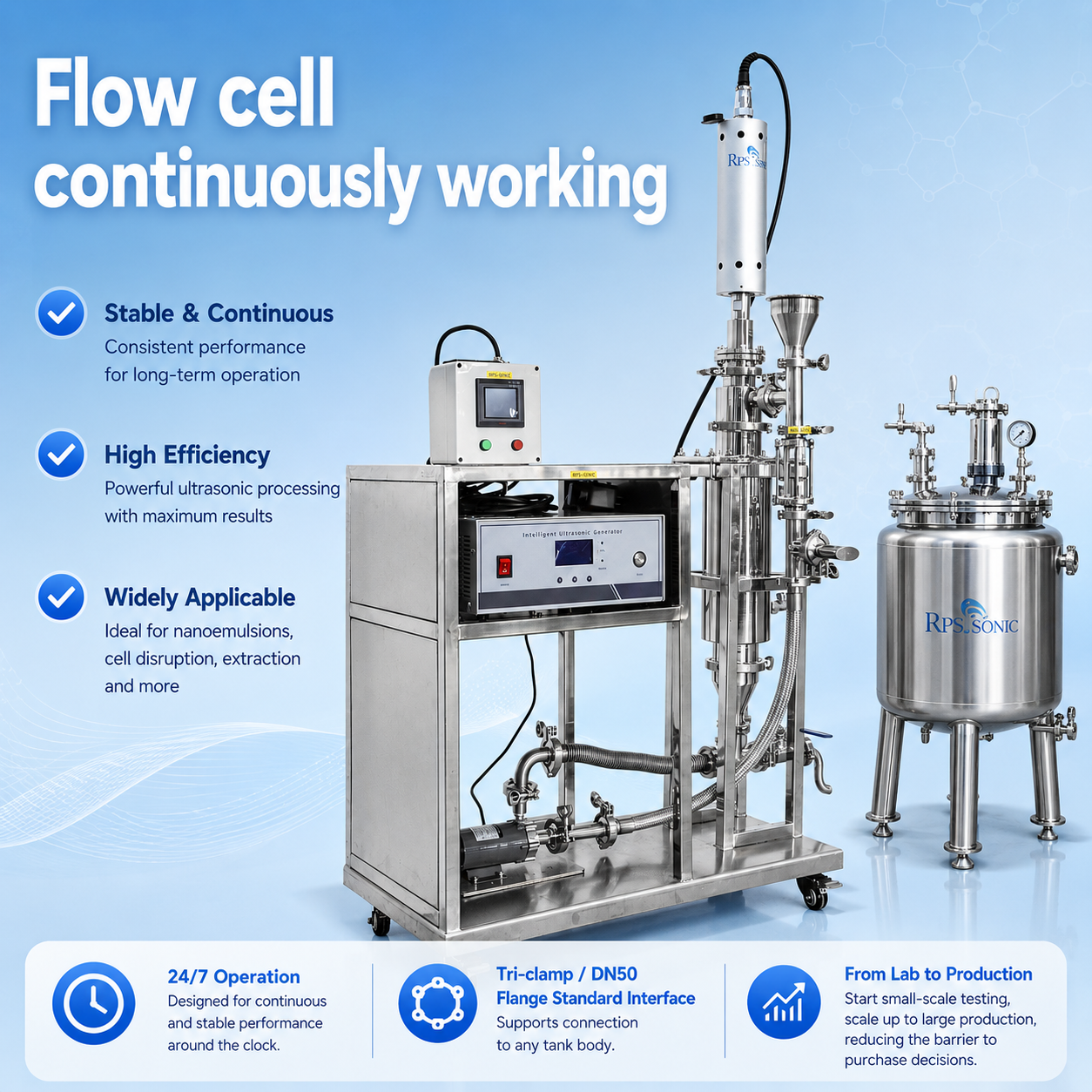
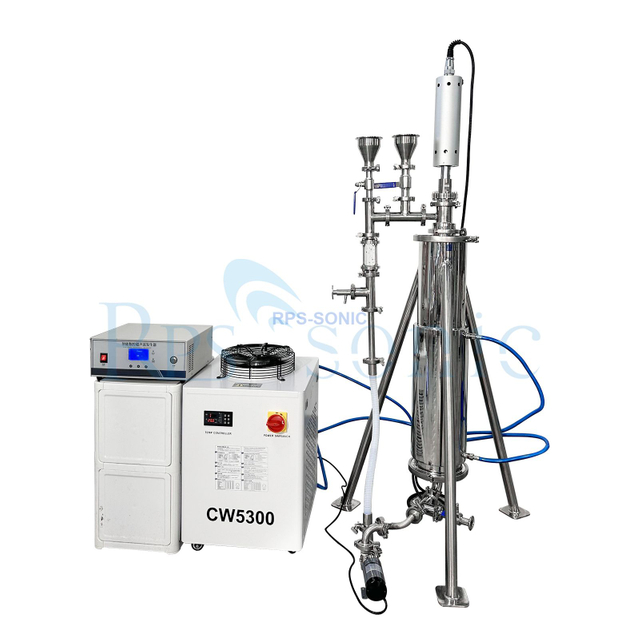
Based on your specific process requirements, I recommend a configuration featuring a fixed oak-chip filter basket, a closed-loop circulation system for the spirit, an external ultrasonic flow cell, and a temperature-control cooling system.
This design avoids placing oak chips directly into the ultrasonic flow cell, thereby minimizing issues such as clogging from wood particles, equipment wear, and cleaning difficulties. Simultaneously, the circulation mechanism ensures the spirit repeatedly passes through the ultrasonic treatment zone, enhancing mass transfer efficiency between the oak chips and the liquid.
A technical caveat must be noted: while ultrasound accelerates the release of oak compounds and their extraction into the spirit, it cannot fully replicate the long-term maturation process that occurs in traditional oak barrels. Consequently, it cannot guarantee the development of the exact same aroma, mouthfeel, and redox characteristics within a short timeframe.
Core Design Principles:
Oak chips are housed in a removable 316L stainless steel filter basket, ensuring they do not enter the circulation pump or the ultrasonic flow cell.
The spirit circulates through a sealed piping system, passing repeatedly through the ultrasonic treatment zone.
The ultrasonic energy acts primarily on the spirit within the flow cell, utilizing cavitation effects and fluid dynamics to intensify mass transfer.
An independent cooling circuit is integrated to regulate the temperature of the spirit, preventing excessive heating caused by prolonged ultrasonic exposure.
The entire system is engineered specifically for handling highly concentrated, flammable ethanolic liquids, rather than being designed for standard aqueous-phase extraction.
A Critical Note on Power Requirements:
Existing literature on the ultrasonic-assisted extraction of brandy—involving the circulation of the spirit through oak chips—indicates that an ultrasonic power density of approximately 40 W/L, combined with circulation, increased the extraction of phenolic compounds by about 33.94% over a 7-day trial. However, these experimental parameters cannot be directly applied as the sole basis for power selection in a 100–500 L industrial-scale system. Scaling up linearly at 40 W/L would result in a 20 kW power output for a 500 L volume, which would likely lead to significant temperature increases and the risk of over-extraction. It is recommended to conduct pilot-scale trials using lower power density and an intermittent (pulsed) mode.
Avoid continuous, full-power ultrasonic treatment for extended periods (i.e., several hours). A more prudent approach is to process the liquid in stages, determining the endpoint by monitoring changes in flavor profile.
For initial screening, consider the following intermittent ultrasonic operating parameters:
Ultrasonic activation: 1–6 minutes;
Pause (off-time): 4–24 minutes;
Adjust these settings based on observed changes in temperature, color, and flavor.
Existing research includes studies on the ultrasonic treatment of spirits with oak chips using a 6-minute-on/24-minute-off cycle, as well as studies on whisky using a 4-minute-on/6-minute-off cycle. While these can serve as references, they should not be assumed to be the optimal parameters for your specific industrial equipment.
Key parameters to monitor include:
Changes in color (chromaticity);
Total phenol or total polyphenol index;
Concentrations of representative flavor compounds, such as vanillin, oak lactones, and eugenol;
Alcohol content (ABV);
Bitterness, astringency, and "woody" character;
Sensory evaluation.
Excessive ultrasonic power or prolonged treatment duration may lead to over-extraction, resulting in increased tannin content and bitterness, or even the disruption of the original aromatic balance. Research also suggests that excessively high power density can reduce the equilibrium concentration of certain phenolic compounds.
Safety Design: This is the most critical aspect of the project.
For liquids with an alcohol content exceeding 40% ABV, the system must be designed in accordance with standards for flammable liquids.
Whisky and brandy contain high concentrations of ethanol, posing risks related to evaporation, the accumulation of flammable vapors, and ignition via static electricity. Standard ultrasonic equipment—even if capable of processing water or non-flammable liquids—is not suitable for this application.
Design considerations should include the following:
1. Explosion-proof electrical design
Whenever possible, install the ultrasonic generator in a non-hazardous area.
If components such as generators, pumps, motors, junction boxes, or sensors must be located within a hazardous area, they must be selected with an appropriate explosion-proof rating based on the site’s hazardous area classification.
Motors, junction boxes, cable glands, and field instrumentation must comply with relevant ATEX or IECEx standards (as determined by the regulations applicable to the project location). Do not use standard switches, motors, or non-explosion-proof electrical equipment in areas where liquid alcohol or alcohol vapors may be present.
2. Containment and Ventilation Design
Extraction tanks, piping, flow cells, and heat exchangers must feature a sealed (closed-system) design.
Install pressure/vacuum protection devices that meet process requirements.
Ensure effective ventilation around the equipment; install combustible gas detection systems where necessary.
Implement static grounding and equipotential bonding between pieces of equipment.
Prohibit open flames, sparks, and other potential ignition sources.
Opening tank lids—whether for sampling or adding oak chips—while the equipment is in operation is not recommended.