Ultrasonic Extraction Machine of Oak Chips
Ultrasonic technology can be employed to assist in the extraction of compounds from oak chips—a process particularly useful for imparting oak-derived characteristics to beverages such as wine, whiskey, brandy, and other spirits.
Traditional oak-chip extraction relies primarily on prolonged immersion and natural mass transfer between the liquid and the wood, allowing substances like vanillin, oak lactones, tannins, and other flavor compounds to gradually diffuse into the beverage. Depending on factors such as the type of oak, the level of toasting, the composition of the liquid, and the desired flavor profile, this process can take anywhere from several weeks to months.
Through cavitation effects and localized shear forces, ultrasonic-assisted extraction enhances the contact and mass transfer between the liquid and the oak chips. This approach offers the potential to shorten extraction times and improve the controllability of process parameters.
It should be noted, however, that while ultrasound accelerates the release of flavor compounds, it cannot fully replace the traditional aging process. Other essential maturation reactions—such as redox processes and esterification—must still be addressed separately.
I. What are the primary compounds extracted from oak chips?
Depending on the degree to which they are toasted, oak chips develop various flavor-active compounds. Key components to consider include the following:
Component | Primary Flavor Characteristics | Application Value |
Vanillin | Vanilla, sweet | Adds vanilla notes to the spirit |
Oak Lactones | Coconut, woody | Enhances oak-derived |
Eugenol | Clove, spicy | Adds aromatic complexity |
Furfural | Caramel, toasted | Adds toasted/roasted flavor notes |
Oak Tannins | Astringency, structure | Improves mouthfeel and structural integrity |
Phenolic compounds (e.g., Gallic acid) | Phenolic, astringent | Influences the phenolic composition of the spirit |
Different oak species and toast levels result in varying proportions of chemical compounds. Therefore, the goal of ultrasonic treatment should not merely be to maximize the total amount of extract, but rather to focus on flavor balance—avoiding the over-extraction of tannins or the development of an excessively woody character.
II. How does ultrasound facilitate extraction from oak chips?
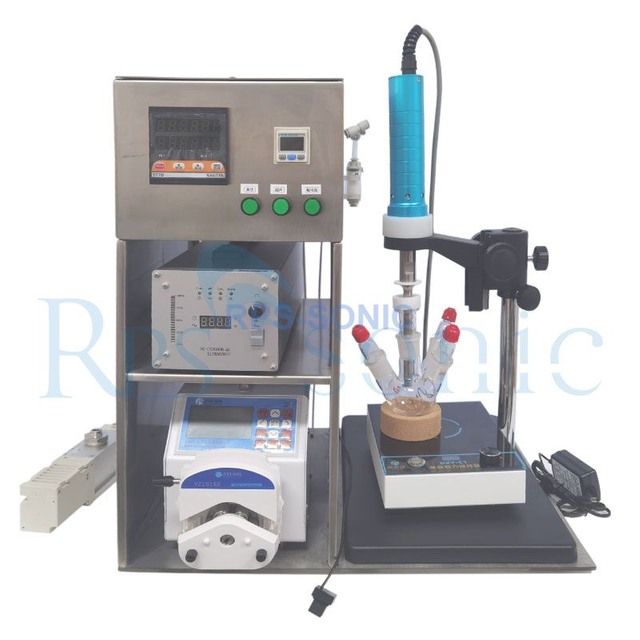
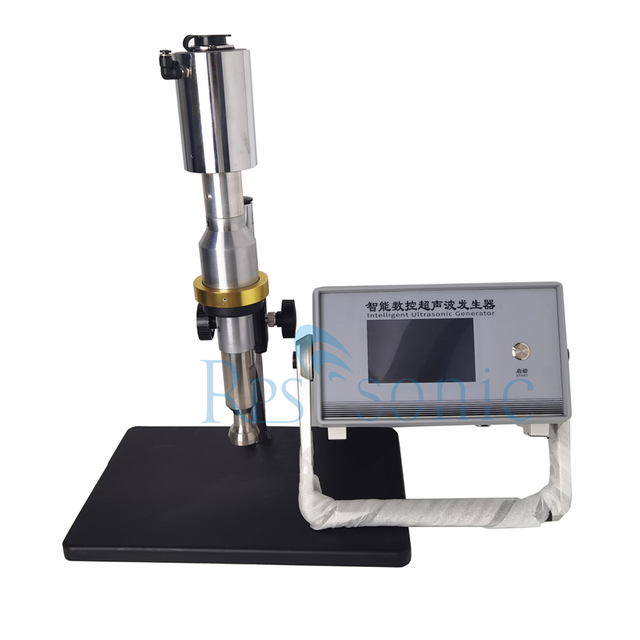
Ultrasonic equipment utilizes a transducer and a titanium-alloy probe to transmit high-frequency vibrations into the liquid (e.g., wine or spirits).
Within the liquid, ultrasound generates cavitation bubbles. As these bubbles rapidly collapse, they create micro-jets, localized shock waves, and shear forces, which intensify the contact between the liquid and the surface of the oak.
Key effects include:
**Promoting liquid penetration:** Facilitating the entry of the liquid into the pores and internal structures of the oak chips.
**Enhancing mass transfer:** Accelerating the migration of soluble flavor compounds from the wood into the liquid phase.
**Accelerating flavor release:** Increasing the rate at which compounds such as vanillin, oak lactones, and certain phenolics are released.
**Reducing processing time:** Under appropriate conditions, this can shorten the time required—compared to traditional soaking methods—to achieve the desired level of extraction.
It is essential to control ultrasonic intensity and temperature to avoid over-extraction, which could lead to bitterness, an overpowering woody character, or an imbalance in the aroma profile.
Recommended Ultrasonic Extraction Process for Oak Chips
Depending on specific production requirements, either a batch-processing or a circulation-based processing approach can be employed.
Option A: Batch-Style Ultrasonic Extraction
Suitable for small-scale and pilot-scale testing for wines, fruit wines, and spirits.
Process Flow:
Preparation of oak chips → Addition of liquid (wine/spirit) → Mechanical stirring → Ultrasonic treatment → Resting or continued maceration → Filtration → Flavor analysis.
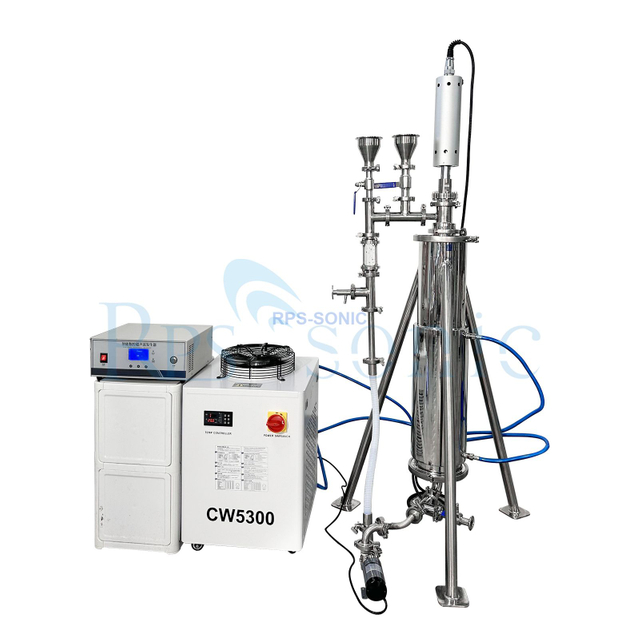
Option B: Ultrasonic Circulation Extraction System
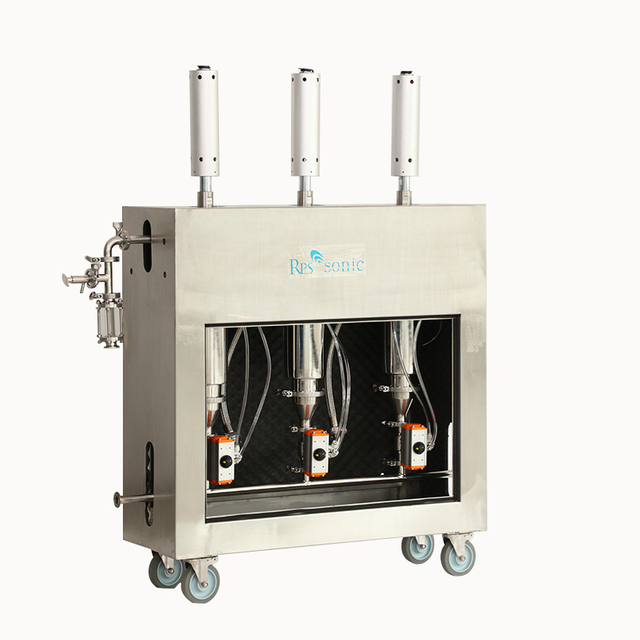
For larger processing volumes, a circulation system—comprising a storage tank, a circulation pump, and an ultrasonic flow-through cell—can be utilized.
Oak chips + liquid mixing tank (with mechanical stirring and temperature monitoring)
Circulation pump (for consistent fluid transport)
Ultrasonic flow-through cell (facilitating cavitation and enhanced mass transfer)
Return flow to the mixing tank
Filtration and flavor analysis (removal of wood particles and assessment of extracted compounds)
The advantage of this approach lies in the precise control over circulation flow rate, processing duration, and temperature. It also allows for seamless integration with existing liquid storage tanks and filtration systems.
Important Note: If oak chips are introduced directly into the circulation piping, there is a risk of clogging. A more robust design involves placing the oak chips within a removable, food-grade filter basket or a dedicated extraction vessel; the liquid is then circulated through the oak chips before passing into the ultrasonic treatment unit. This configuration minimizes the risk of wood particles entering the ultrasonic flow-through cell.
Safety Design in Ethanol and Alcoholic Beverage Production
When processing products such as wine, brandy, whiskey, or high-proof spirits, special attention must be paid to the flammability risks associated with ethanol vapors.
It is recommended to employ a closed processing system and to install explosion-proof electrical equipment, pumps, motors, grounding systems, and ventilation facilities that comply with the hazardous area classification of the site. Ultrasonic generators and electrical cabinets should be appropriately isolated from any hazardous areas where ethanol vapors might be present.
Furthermore, the temperature must be monitored during ultrasonic processing, and risks—such as exposure to oxygen, the loss of volatile aromatics, and the oxidation of the liquid—must be evaluated. While ultrasonic treatment can accelerate the release of compounds from wood, it cannot fully replicate the long-term maturation processes that occur during traditional aging in oak barrels.