Ultrasonic descaling and scale prevention technology: A revolutionary approach to industrial pipeline cleaning using the physical field of sound waves
Pipeline scaling has long been a persistent problem affecting system efficiency, increasing energy consumption, and shortening equipment lifespan in industrial production and daily life. Traditional chemical cleaning and mechanical descaling methods are not only cumbersome and costly, but can also cause environmental pollution and equipment damage. The emergence of ultrasonic descaling and anti-scaling technology provides a revolutionary solution to this problem—a green cleaning technology that requires no downtime, no chemical agents, and is continuously effective.
The Industrial Challenge of Scale Accumulation and the Rise of Ultrasonic Technology
During the transportation of water, oil, or other fluid media in pipeline systems, dissolved minerals (such as calcium carbonate and calcium sulfate) and impurities gradually deposit and adhere, forming a hard, poorly conductive scale layer. This scaling phenomenon leads to:
A 30%-50% decrease in heat transfer efficiency, significantly increasing energy consumption
A reduction in the effective flow cross-section of the pipeline, increasing pumping resistance
Intensified localized corrosion, shortening equipment lifespan
Increased system maintenance frequency and downtime losses
Ultrasonic descaling and anti-scaling technology, by introducing high-frequency mechanical vibration into the fluid medium, fundamentally changes the deposition behavior of scale-forming substances, achieving a shift from passive cleaning to proactive prevention.
Four Core Mechanisms of Ultrasonic Descaling
1. Cavitation Effect: The Power of Microscopic Explosion
When high-intensity ultrasound (typically 20-100kHz) propagates in a liquid, it generates alternating compression and rarefaction cycles. During the rarefaction phase, countless tiny vacuum bubbles form within the liquid; during the compression phase, these bubbles instantly collapse and implode, generating localized temperatures of thousands of degrees Celsius and pressures of hundreds of atmospheres, accompanied by powerful shock waves.
In descaling applications, this microscopic "explosion" effect can:
Directly impact and break up existing hard scale layers
Generate microjets at the scale-to-pipe wall interface, peeling off deposits
Disrupt the stability of newly formed microcrystals, preventing their growth and aggregation
2. Shear Effect: A Barrier to Crystal Nucleation Growth
The strong sound field generated by ultrasound in a fluid produces intense alternating sound pressure, giving fluid particles extremely high acceleration, thus creating a powerful shear force field in the near-wall region.
The anti-scaling mechanism of this effect includes: Strongly disturbing the boundary layer fluid, reducing the residence time of ions at the wall surface; Disrupting the concentration boundary layer, reducing ion supersaturation at the wall surface; Generating continuous "soft friction" on already deposited soft scale, preventing its hardening.
3. Chemical Effects: Altering Crystallization Kinetics
Ultrasonic fields can influence the physicochemical processes of scale-forming substances, including: Promoting the formation of more and smaller crystal nuclei from scale-forming ions, dispersing the scaling tendency; Altering the crystal morphology, promoting the formation of loose, easily detachable soft scale rather than hard scale; Under certain conditions, promoting the dispersion and activity of anti-scaling chemicals (such as scale inhibitors).
4. Inhibition Effect: Creating a Systemic Anti-Scale Environment
The continuous action of ultrasound can alter the scaling tendency of the entire fluid system:
Continuous disturbance makes it difficult for microcrystals to arrange themselves in an orderly manner to form a dense structure.
It changes the electrochemical properties of the scale surface, reducing its adhesion ability.
It inhibits microbial growth, reducing the basis for bioscale formation.
Technical Implementation: From Theory to Industrial Application
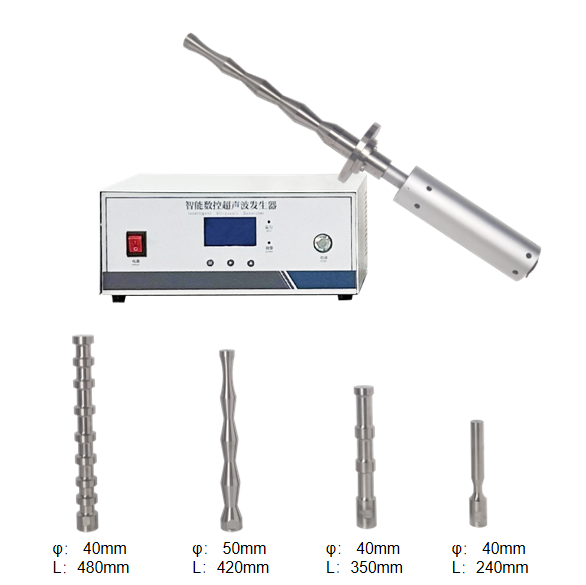
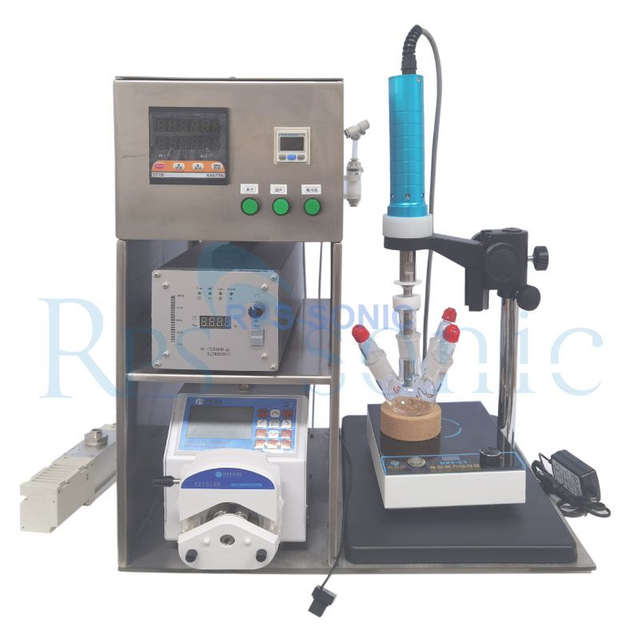
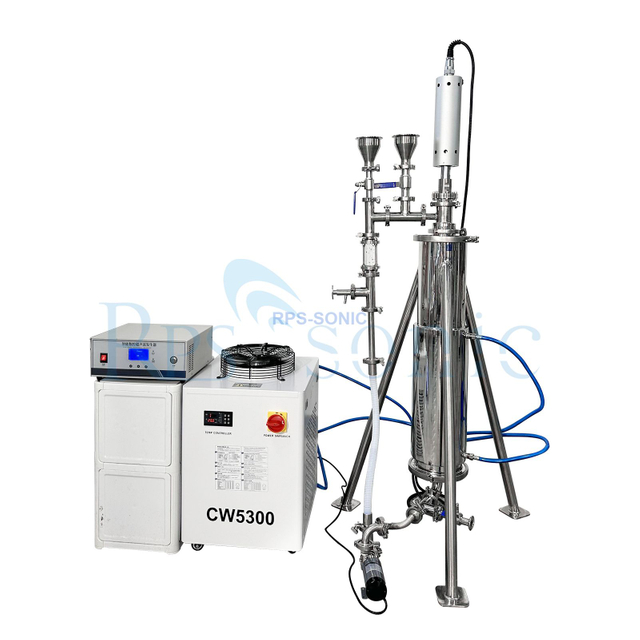
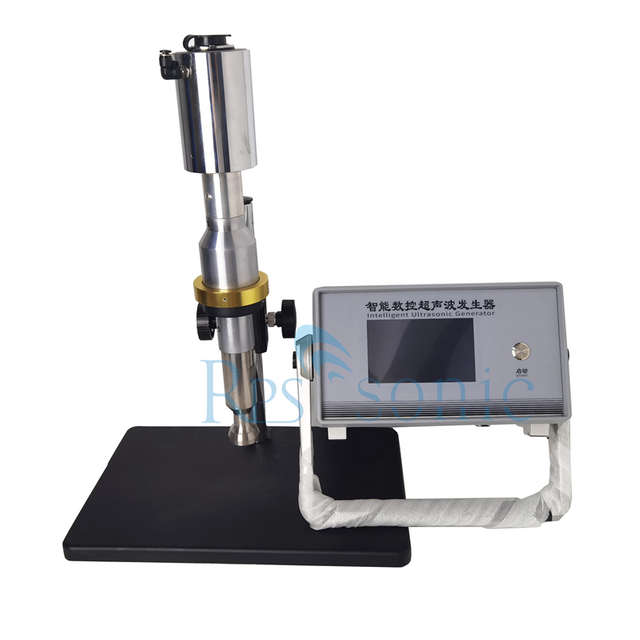
Modern ultrasonic descaling systems mainly consist of three parts:
Ultrasonic Generator: Converts power frequency electrical energy into high-frequency electrical signals (typically 15-40kHz), with power ranging from tens of watts to kilowatts.
Transducer Device: Converts the electrical signal into mechanical vibration, which acts directly on the pipe or container wall through coupling. Various installation methods are available, including clamp-on, built-in, and immersion types.
Control System: Intelligently adjusts ultrasonic parameters (frequency, power, duty cycle) to adapt to different operating conditions and scale characteristics.
Industrial applications demonstrate that this system is suitable for:
Heat exchanger and condenser piping
Industrial circulating water systems
Boiler feedwater piping
Oil transportation pipelines
Food and pharmaceutical process piping
Practical application effects and data verification
Multiple industrial case studies demonstrate the significant benefits of ultrasonic descaling technology:
**Application in a power plant condenser:**
Six months after installation of the ultrasonic system, the terminal temperature difference decreased by 3.5℃
Vacuum level increased by 2%, correspondingly reducing coal consumption for power generation by 1.2%
Annual savings in chemical cleaning costs were approximately 150,000 RMB.
**Application in a chemical plant heat exchange network:**
Heat transfer coefficient increased by 25-40%
System pressure drop decreased by 30%
Annual comprehensive energy-saving benefits reached 2-3 times the equipment investment cost.
**Food processing plant pasteurization system:** Completely eliminates biofilm formation. Improves product microbial stability. Reduces cleaning water consumption by 40%.
Technical Limitations and Scope of Application
While ultrasonic descaling technology offers significant advantages, its application is subject to the following limitations:
* Media characteristics: Limited effectiveness in gaseous or vacuum environments; insufficient penetration depth for high-viscosity fluids.
* Distance attenuation: Ultrasonic intensity rapidly decreases with propagation distance; large containers require multiple placement points.
* Material compatibility: Some materials (such as rubber linings) strongly absorb ultrasonic waves.
* Initial investment: Higher initial cost compared to traditional methods; recovery through energy savings is necessary.
* Most suitable scenarios include: water-based media systems; scale primarily composed of inorganic salts; and pipes made of metal with moderate wall thickness.
Conclusion: A New Paradigm for Green Industrial Maintenance
Ultrasonic descaling and scale prevention technology represents a fundamental shift in thinking—from "cleaning after scaling" to "preventing scaling," from "chemical intervention" to "physical control." It is not merely a cleaning technology, but a crucial component of industrial system energy efficiency management, equipment lifecycle maintenance, and sustainable production.
As global demands for industrial energy conservation and environmental protection continue to rise, this technology, which integrates high efficiency, environmental friendliness, and economy, is evolving from an auxiliary means into a standard configuration for industrial pipeline system maintenance. Driven by the dual goals of pursuing efficient production and sustainable development, ultrasonic descaling technology, with its unique physical mechanism and significant comprehensive benefits, is quietly driving a green revolution in industrial pipeline maintenance, injecting innovative vitality into traditional industrial sectors.