The Application of Ultrasonic Soldering Iron Machine
Views: 94 Author: Site Editor Publish Time: 2026-03-19 Origin: Site
The Application of Ultrasonic Soldering Iron Machine
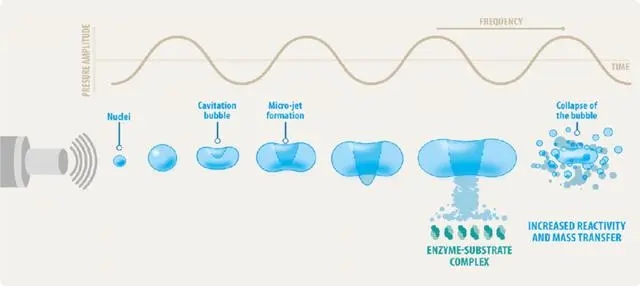
Ultrasonic soldering irons are advanced tools that combine traditional heating soldering with ultrasonic vibration. Their core advantage lies in utilizing the "cavitation effect" generated by ultrasound in molten solder to physically remove the oxide layer from the material and solder surface, thus completely eliminating dependence on chemical fluxes. This technology solves the problems of traditional soldering on dissimilar materials and heat-sensitive components, and is mainly applied in the following fields:
Precision Electronics and Microelectronics
application scenarios
detailed description
core advantage
MEMS sensors, silicon microphones welding
For micro-components with a solder joint diameter of less than 0.2mm, achieve precise soldering without pollution and with low heat loss.
Avoid chemical residue pollution, reduce welding temperature by 60%, and eliminate thermal stress damage.
Electronic component packaging and assembly
For lead connection and packaging of components such as LEDs, liquid crystals, crystal oscillators, and hybrid integrated circuits.
The solder joints have no air holes or voids, ensuring stable signal transmission and component reliability.
Welding of oxidizable materials (such as aluminum wires)
It is particularly suitable for welding aluminum wires, copper wires, etc. whose surfaces have already oxidized. There is no need to remove the oxide layer in advance.
Ultrasound is used for online removal of oxide films, simplifying the process and increasing the success rate of welding.
Photovoltaics and New Energy
application scenarios
detailed description
core advantage
Welding of electrodes for solar cell wafers
Directly weld the electrode wires onto the front or back contact surfaces of the crystalline silicon or thin-film solar cells.
Low-temperature and non-heat-sensitive fluxing process, which avoids thermal shock or chemical contamination to the brittle and thin battery cells.
Connection of different materials and special materials
application scenarios
detailed description
core advantage
Welding of Glass and Ceramic
Connect metals with non-metal materials such as glass and ceramics. For example, achieve vacuum sealing of glass tubes and fabricate electrodes on ceramic substrates.
By using "active solder" and ultrasonic energy, a strong chemical bond is formed, breaking through the limitations of traditional welding.
For use in laboratories or in specific industries, for welding superconducting materials, graphite, carbides or metal matrix composites that are difficult to handle by traditional methods.
Providing reliable connection solutions has expanded the possibilities of material application.
Automobile manufacturing and optics
application scenarios
detailed description
core advantage
Welding of heating lines on the rear window of the car
Weld metal contacts on the heating line of the printed silver paste on the rear window glass to ensure conductivity and connection strength.
Without damaging the surface of the glass, achieve direct and secure electrical connections.
Optical components and fiber optic sealing
The metallization treatment for the coating layer of optical glasses, as well as the precise sealing of optical fiber glass tubes and metal hoops.
The clean process ensures the performance of the optical components and the reliability of the sealing.
Other special applications
application scenarios
detailed description
core advantage
Glass ornaments and handicraft production
Directly welding metal parts onto glass artworks or ornaments to achieve novel designs and connection methods
Create a combination of glass and metal that cannot be achieved by traditional methods.