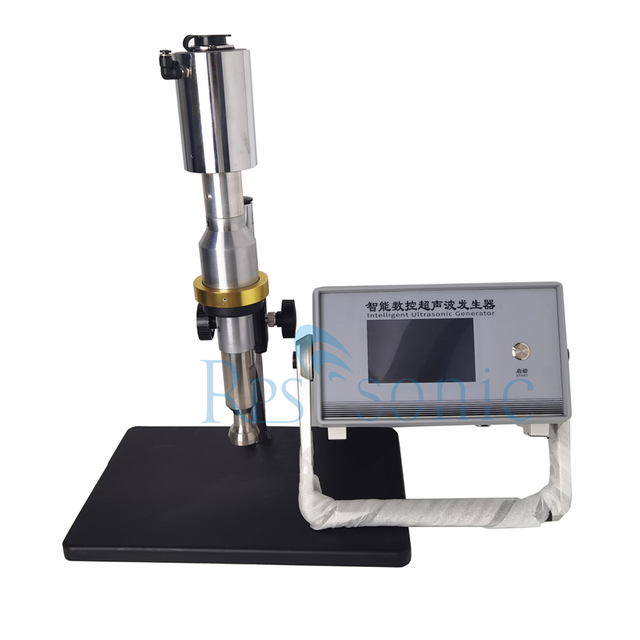
Continuous Ultrasonic Extraction Equipment for Humic Acid Recovery from Peat Slurry
1. Introduction: Unlocking the Value of Humic Acid from Peat
Peat is a natural organic material rich in humic substances, including humic acids and fulvic acids. These compounds are widely used in agricultural fertilizers, soil conditioners, plant growth products, and other industrial applications.
However, humic substances are naturally associated with complex organic structures and mineral components in peat. Conventional extraction methods often rely on alkaline solutions, mechanical stirring, and extended processing times to release these valuable components.
For manufacturers seeking higher production efficiency, continuous ultrasonic extraction offers an alternative approach.
By introducing high-power ultrasound into a flowing peat slurry, acoustic cavitation helps disrupt peat structures, improve liquid-solid contact, and accelerate the mass transfer of humic substances from solid particles into the alkaline extraction solution.
A customized continuous ultrasonic flow cell system can be integrated into an existing peat processing line, helping manufacturers move from traditional batch extraction toward more flexible continuous production.
2. How Does Ultrasonic Extraction Work for Humic Acid?
Ultrasonic extraction works through acoustic cavitation.
When high-intensity ultrasonic waves propagate through the liquid phase, microscopic bubbles form, grow, and collapse rapidly. This generates localized mechanical forces, microjets, turbulence, and intense shear effects.
When applied to peat slurry, these effects can:
Break down peat agglomerates and loosen compacted structures.
Improve contact between alkaline extraction solution and peat particles.
Promote solvent penetration into the organic material.
Facilitate the release of humic substances into the liquid phase.
Improve mass transfer during the extraction process.
Help maintain more uniform dispersion of peat particles.
In conventional alkaline extraction, NaOH or KOH is commonly used to dissolve humic substances from peat.
Ultrasound does not replace the chemical extraction reaction. Instead, it acts as a physical intensification technology that supports the alkaline extraction process.
Research published in Molecules in 2022 demonstrated that ultrasound-assisted alkaline extraction could improve the recovery of humic substances from peat compared with traditional alkaline extraction. The study also showed that excessive ultrasonic intensity and treatment time could negatively affect certain product fractions, highlighting the importance of process optimization.
3. Continuous Ultrasonic Extraction Process for Peat Slurry
For industrial production, we recommend a continuous-flow ultrasonic extraction configuration rather than relying exclusively on a conventional ultrasonic cleaning bath.
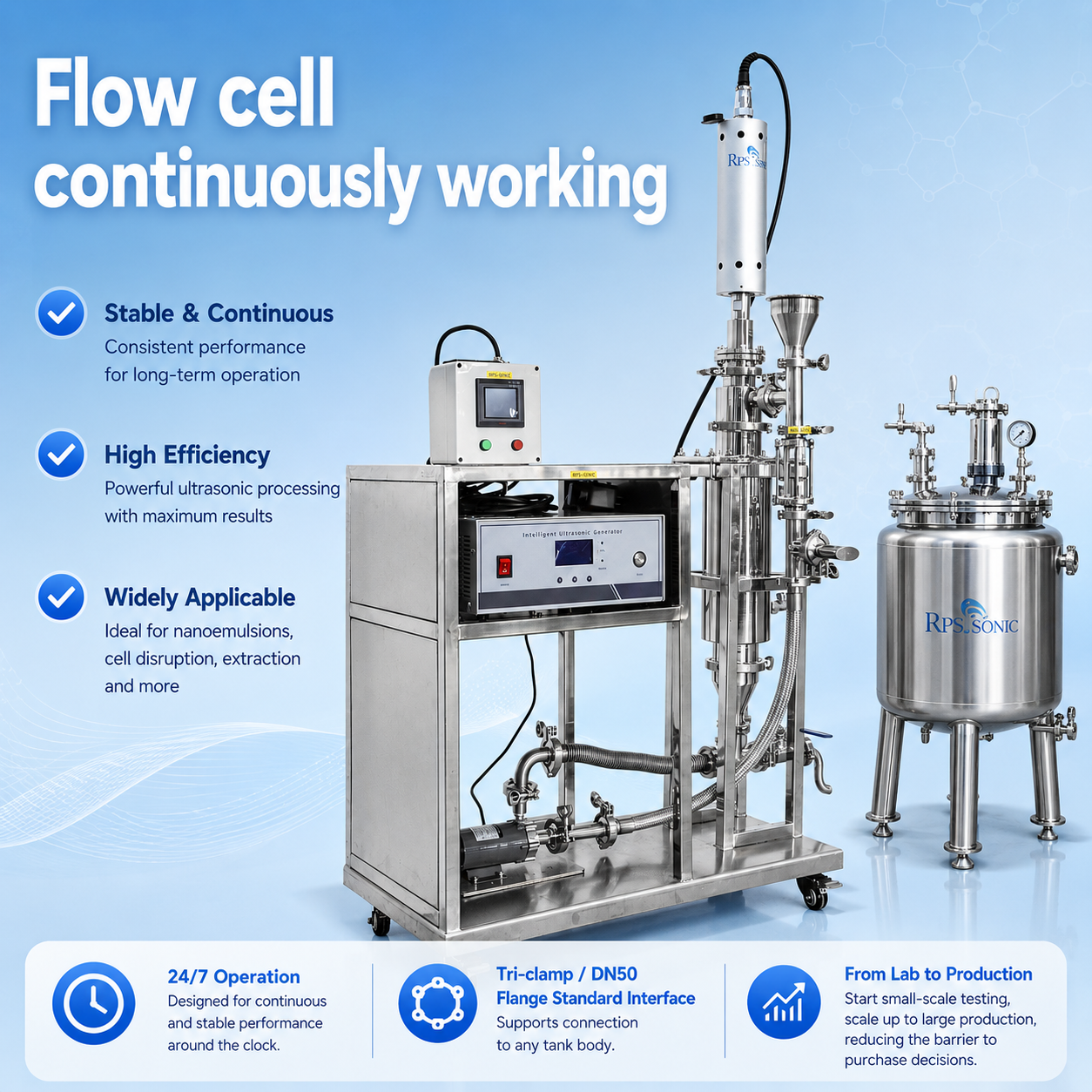
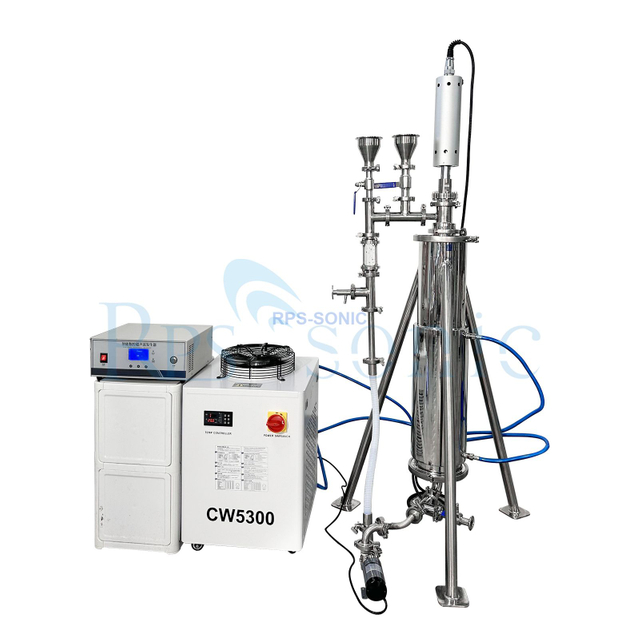
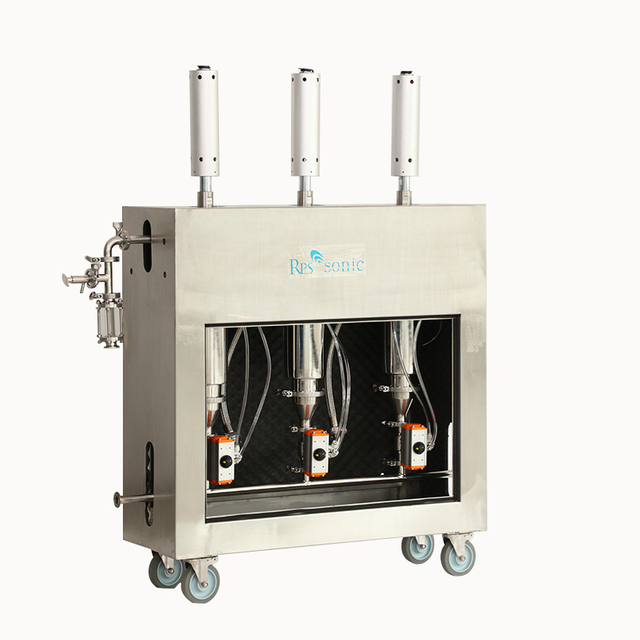
The system can consist of a feed tank, mixing system, slurry pump, multiple ultrasonic flow cells connected in series, and a collection or circulation tank.
The ultrasonic extraction stage can operate continuously, while downstream separation and precipitation can be configured as continuous or batch processes according to the required production capacity.
Important: Humic acid precipitation is a separate downstream chemical process. It should not normally take place inside the ultrasonic flow cell.
4. Customized 3000W Ultrasonic Flow Cell System
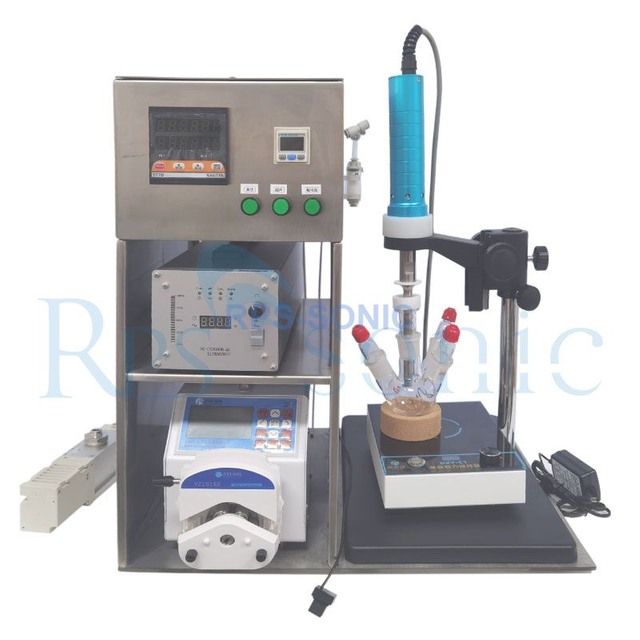
For continuous extraction of humic substances from peat slurry, a customized 3000W ultrasonic homogenizer flow cell system can be designed according to the material properties and required production capacity.
The system uses a high-power ultrasonic generator connected to an ultrasonic transducer and titanium alloy sonotrode. The sonotrode transfers ultrasonic energy directly into the flowing slurry inside the specially designed flow cell.
Key Advantages of Ultrasonic Extraction for Peat Processing
Improved Extraction Efficiency
Acoustic cavitation helps disrupt peat structures and improves the interaction between alkaline solution and organic material, potentially increasing humic substance recovery.
Continuous Production Capability
Inline treatment allows the peat slurry to pass through the ultrasonic reactor continuously, reducing dependence on separate batch treatment operations.
Enhanced Solid-Liquid Contact
Ultrasonic cavitation and mechanical agitation work together to improve slurry dispersion and mass transfer.
Modular and Scalable Design
Multiple ultrasonic flow cells can be arranged in series or parallel to accommodate different production capacities.
Adjustable Processing Parameters
Ultrasonic power, slurry flow rate, treatment stages, and temperature can be adjusted to optimize extraction conditions.
Important Considerations When Processing Peat Slurry
Peat slurry is different from ordinary liquid extraction materials. It contains suspended organic solids, fibers, and potentially mineral particles. These characteristics must be considered when designing the ultrasonic reactor.
1. Solid Content and Particle Size
High solid content can increase slurry viscosity and reduce flowability.
Before selecting the pump and ultrasonic flow cell, the peat should be characterized for:
Solid content (%).
Particle size distribution.
Fiber length.
Slurry viscosity.
Settling behavior.
Large fibers and coarse particles may require screening or preliminary crushing.
2. Slurry Pump Selection
The pump must be suitable for solid-liquid mixtures and continuous operation.
Depending on the viscosity, particle size, and solid content, progressive cavity pumps, suitable lobe pumps, or other slurry-compatible pumps may be considered.
The pump should provide stable flow without excessive blockage, abrasion, or pulsation.
3. Temperature Control
Ultrasonic energy is partly converted into heat.
Excessive temperature increases may affect the extraction process and the quality of certain humic substance fractions.
A temperature monitoring and cooling system is therefore recommended for industrial operation.
4. Material Compatibility
The extraction solution may contain NaOH or KOH, while downstream processing may involve acidic solutions.
SS316L can be considered for wetted components, but material selection must be verified against the actual chemical concentration, temperature, and chloride content.
Seals and gaskets should also be selected according to chemical compatibility, with PTFE-based materials being one possible option.
5. Avoiding Excessive Ultrasonic Treatment
Higher ultrasonic power does not necessarily mean higher extraction efficiency.
The 2022 peat extraction study found that prolonged treatment combined with high ultrasonic intensity could reduce the recovery of certain desired fractions.
Therefore, the optimal power density and treatment time should be established through pilot testing rather than simply maximizing ultrasonic power.