Views: 82 Author: Site Editor Publish Time: 2026-07-16 Origin: Site
Can Ultrasonic Technology Refine Metal Grains?
Ultrasonic technology can indeed effectively refine metal grains.
This is a highly efficient and clean physical grain refinement technique that significantly improves the microstructure of metals during solidification or processing by applying high-frequency vibrations, thereby enhancing the material's mechanical properties.
Core Principle: Two Key Effects
Ultrasonic grain refinement is primarily achieved through the following two core physical effects:
Cavitation Effect: When ultrasound propagates in liquid metal, it generates countless tiny bubbles (cavitation bubbles). These bubbles rapidly grow, oscillate, and eventually collapse under the influence of sound waves. The moment the bubbles collapse, high temperatures of up to 10⁴K and shock waves of 10⁴MPa are generated at the microscopic scale.
This extreme energy will:
Break up growing coarse dendrites.
Increase nucleation sites: The shock waves activate tiny impurity particles in the melt, making them effective crystallization nuclei; simultaneously, the localized supercooling generated when cavitation bubbles collapse also promotes the formation of numerous crystal nuclei.
Audioflow Effect: When ultrasound propagates in the melt, it forms a stable acoustic flow (i.e., fluid jetting and circulation). This acoustic flow effect offers several benefits: Homogenization: The acoustic flow velocity can reach 10 to 1000 times the thermal convection velocity of the melt, powerfully stirring the melt and making the temperature and composition fields more uniform.
Nucleate Dispersion: Fine grains broken up by the cavitation effect are uniformly dispersed throughout the melt.
Promoted Nucleation: The acoustic flow cleanses the particle surface, increasing nucleation work.
Fatigue Fracture: Recent research shows that even under low-intensity ultrasound without cavitation, the acoustic flow effect itself can generate approximately 3000 high-frequency impacts on dendrites during solidification, causing fatigue fracture and thus refining the grains.
Ultrasonic grain refinement technology has wide applications, primarily covering the following fields:
Casting: Ultrasonic treatment before pouring molten metal or during solidification is the most widespread application.
Additive Manufacturing (3D Printing): In laser or electron beam additive manufacturing, ultrasonic assistance can significantly refine the grains of the deposited layer, improving mechanical properties.
Welding: Applying ultrasonic vibration during welding can refine the grains in the weld zone, improving joint quality.
Electrodeposition: In electroplating or electroforming processes, ultrasonic fields can be used to refine the grains of the deposited layer, for example, in the preparation of fine-grained copper foil.
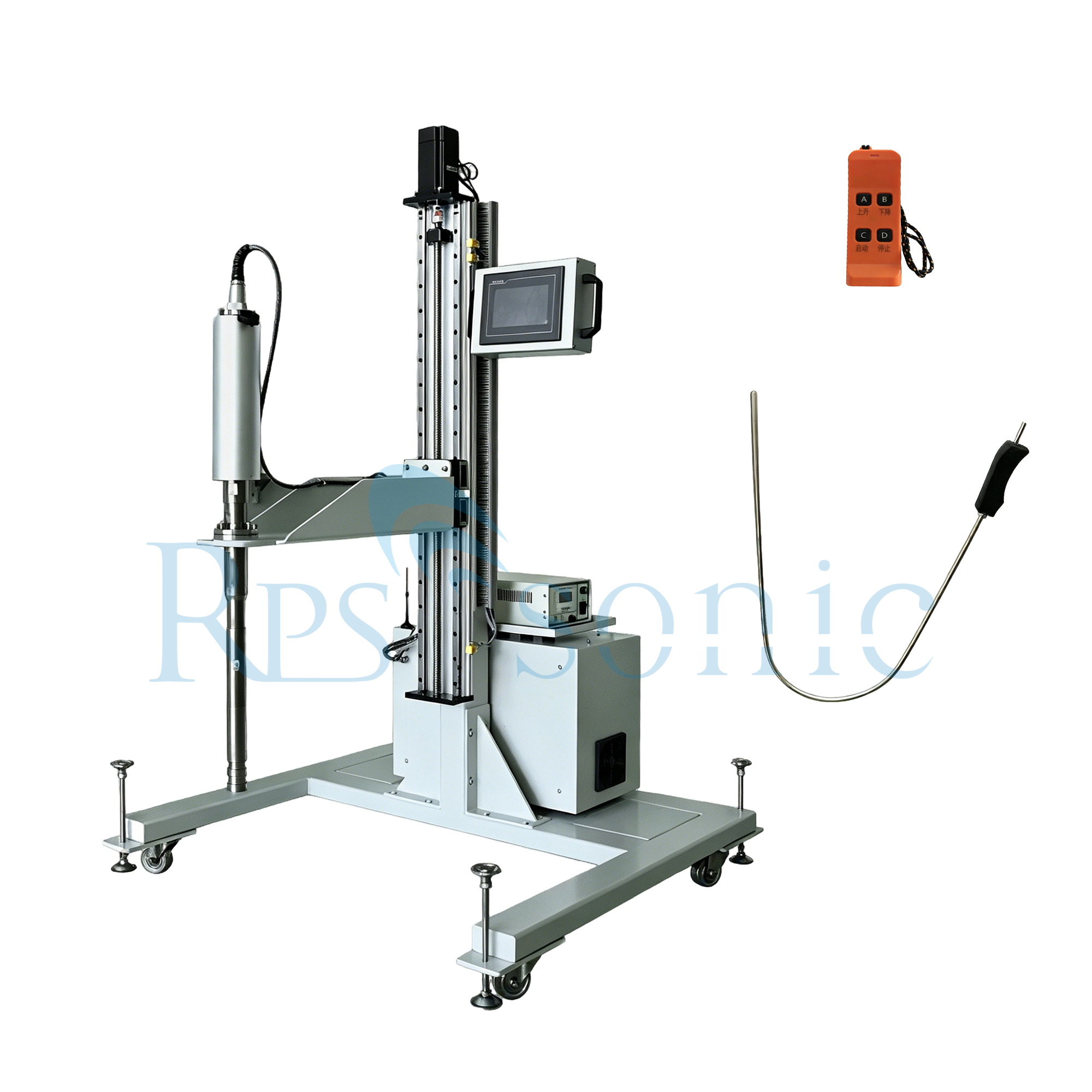
Surface Treatment: Techniques such as ultrasonic rolling use high-frequency mechanical vibration to induce severe plastic deformation on the material surface, achieving nano-grain refinement of the surface layer.
Summary: In conclusion, ultrasonic technology, through the synergistic effect of cavitation and acoustic flow, can efficiently break dendrites, increase nucleation sites, and homogenize the melt, thereby significantly refining metal grains. This technology has a wide range of applications, is effective for various metals and alloys, and has become a key process for improving the properties of metallic materials.
Parameter
influence
reference
Power
Determine the accuracy and processing depth
The power ranges from 200W to over 2500W. For example, for 7050 aluminum alloy, the refinement effect is better at 200W, and the degassing efficiency is higher at 240W.
Frefuency
Affect the intensity of cavitation effect
Generally, the best results are achieved within the low-frequency range of 17-22 kHz, especially for the low-frequency and high-intensity ultrasonic waves in the 15-20 kHz range.
Process time
There exists an optimal value.
Too short a time will not achieve good results, while too long a time may lead to grain coarsening or a rebound in porosity. For example, the 7050 alloy works best when treated for 90 seconds.
Melt temperature
Affecting melt viscosity, hydrogen solubility and cavitation intensity
There is an optimal temperature range, and an appropriate medium temperature is conducive to improving the processing effect.
Melt volume
The power must be matched to the volume of the melt.
For large-scale molten materials, multiple probes or higher power may be required, or even non-contact ultrasonic technology may be employed to ensure the processing outcome.
Horn size / shape
Affecting the distribution of the ultrasonic field
Tools with smaller end areas (such as Φ10mm) have a better refinement effect.