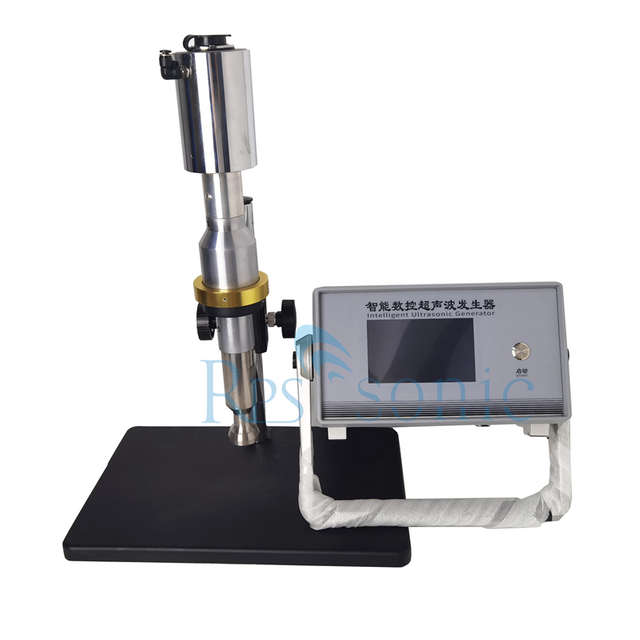
Application of Ultrasonic Homogenizers in The Seaweed Oil Extraction Industry
Application of ultrasonic homogenizing equipment in the herbal extraction industry
The application of ultrasonic homogenizing equipment in the seaweed oil extraction industry hinges on addressing the industry's pain points: the robust cell walls of microalgae, the low efficiency of traditional extraction methods, and the damage to active ingredients. Utilizing the "cavitation effect" to efficiently break down cell walls, it has become one of the key technologies in this field.
Core Technology Principle: Cavitation Effect Cell Wall Breaking
Seaweed oil, especially oil derived from microalgae, is widely recognized as a high-quality raw material for producing biodiesel and functional foods. However, the complex and tough structure of microalgae cell walls is a major barrier to oil extraction.
The core of ultrasonic homogenizing technology lies in its powerful physical forces:
Cavitation Effect: High-intensity ultrasound generates high-frequency compression and stretching in a liquid, forming countless tiny bubbles. These bubbles, upon bursting, release powerful shock waves and microjets.
Efficient Cell Wall Breaking: These shock waves effectively break down the cell walls of microalgae, releasing the oil within the cells, or at least loosening the cell walls to facilitate subsequent solvent extraction.
Key Advantages: Compared to traditional methods, ultrasonic homogenization technology offers significant advantages in extracting seaweed oil:
High Extraction Rate: This is its most crucial advantage. Comparative studies show that ultrasonic-assisted extraction can achieve an oil yield of up to 34.30% for *Chlorella vulgaris*, twice that of Soxhlet extraction. Another study indicates that ultrasonic-assisted cell disruption can achieve an oil yield of 26.19%. Using specialized equipment, the oil yield for *Microchlorophyllariae* can even reach 23.07%.
High Extraction Efficiency and Short Extraction Time: Ultrasonic waves can instantly disrupt cell walls, significantly shortening the total extraction time. Optimized extraction parameters typically include 20 minutes of ultrasonic treatment time and an extraction temperature of 50°C, and the extraction process can be completed within 180 minutes.
Protection of Heat-Sensitive Components: The extraction process is conducted at a low temperature of 25-50°C, which is crucial for protecting heat-sensitive polyunsaturated fatty acids (such as EPA and DHA) in seaweed oil.
Economical and Environmentally Friendly: Ultrasonic technology can significantly reduce the amount of organic solvents (such as n-hexane), lowering costs and reducing environmental pollution. Simultaneously, it is often combined with technologies such as supercritical fluid extraction to further save energy by reducing the system's required pressure and temperature.
Improving Oil Quality: The extracted algal oil has a high C18 fatty acid content (approximately 60%), making it ideal for biodiesel production. Oils extracted from specific algal species have low free fatty acid (FFA) content (e.g., 1.79%), allowing for direct use in biodiesel production.
Typical Applications and Process Paths: Ultrasonic homogenization technology is flexibly applied in algal oil extraction, primarily in the following modes:
Ultrasound-Assisted Solvent Extraction: The most common mode. Microalgae are mixed with solvents (such as n-hexane or ethanol) and extracted under ultrasonic waves. Studies show that using a mixed solvent of chloroform and isopropanol (volume ratio 3:3) can achieve a bio-oil yield of 12.3% from Chlorella.
Pretreatment-Enhanced Extraction: The algal solution is pretreated with ultrasound to disrupt cell walls before subsequent solvent extraction.
Synergistic Extraction Process: Ultrasound can be combined with other technologies to achieve synergistic effects. For example, combined ultrasound-enzymatic hydrolysis or ultrasound-enhanced supercritical fluid extraction has been shown to significantly improve the extraction rates of EPA and DHA (by 15.09% and 15.96%, respectively).
A typical process flow is as follows:
Algal solution preparation: Cultivate and harvest microalgae to prepare an algal solution of a certain concentration.
Mixing: Mix the algal solution with the extraction solvent at a certain ratio (e.g., 3:1).
Ultrasonic treatment: Extraction is carried out in an ultrasonic homogenizer. Key parameters include power, time, temperature, and frequency.
Solid-liquid separation: Separate the extract and algal residue by methods such as centrifugation.
Purification and concentration: Evaporate and dry the extract to obtain the final algal oil product.
Equipment Type and Selection Considerations
Choosing the appropriate equipment is crucial for successful application.
Equipment Type:
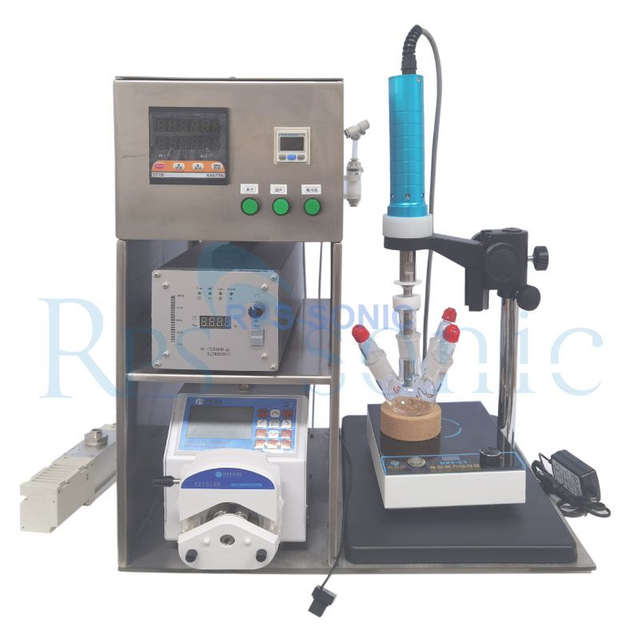
Experimental grade: Such as the RPS-SON020 ultrasonic homogenizer, used for process parameter research.
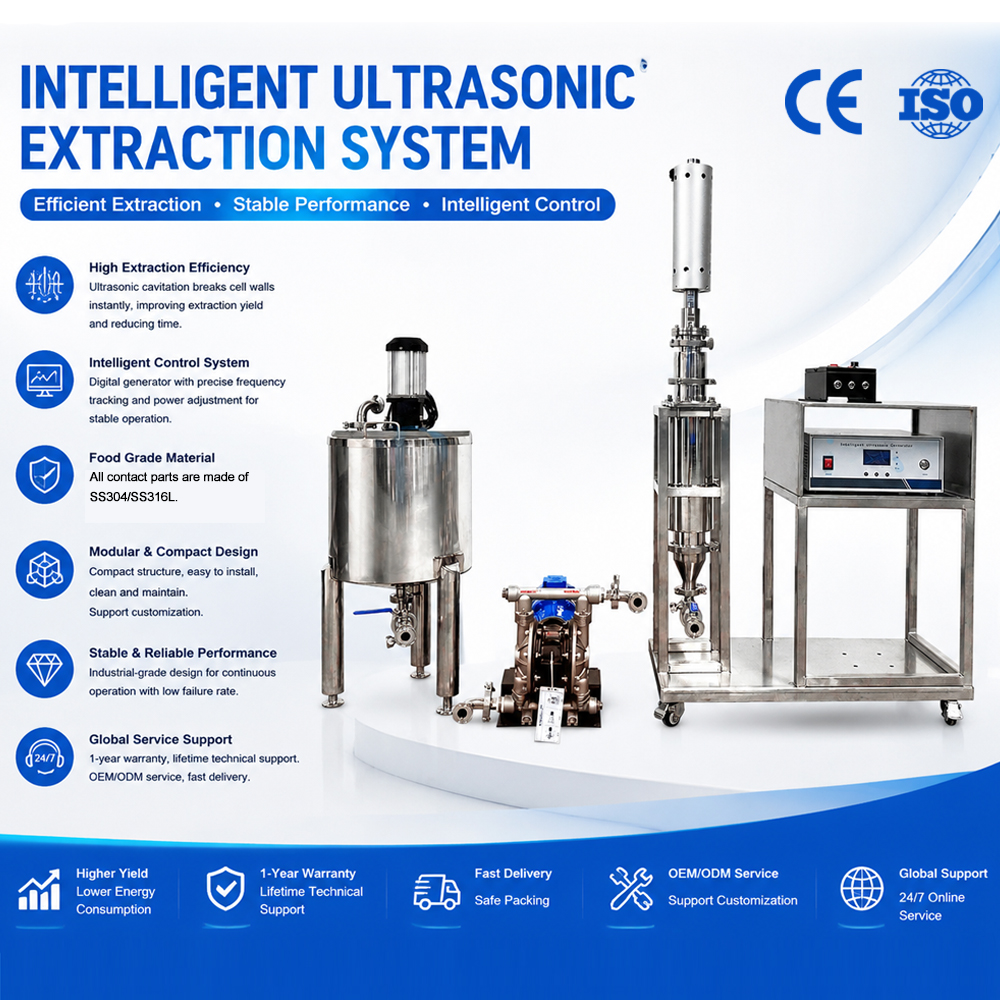
Specialized Equipment: Such as the RPS-SONO20-FC, which integrates a 20kHz ultrasonic transducer, heating, and automated control panel, optimized for microalgae oil extraction.
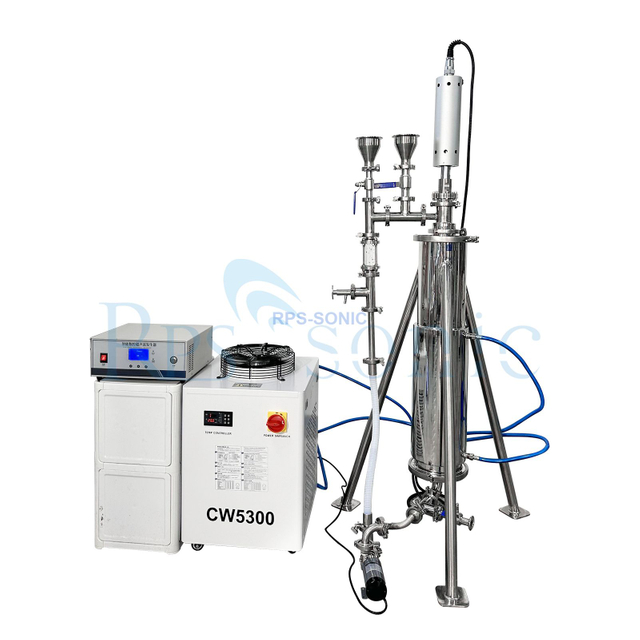
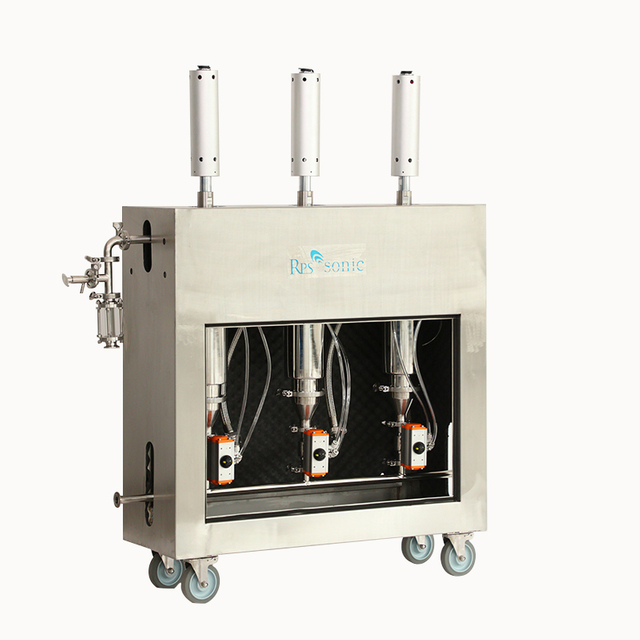
Industrial Grade: Designed for large-scale production, offering greater processing capacity and integration into continuous production lines.
Key Selection Parameters:
Ultrasonic Frequency: Affects cavitation efficiency and energy consumption. Studies show that horn-shaped transducers provide a more uniform sound field and better fragmentation effect than conical transducers in industrial applications.
Ultrasonic Power: Determines processing capacity and cell disruption efficiency. For example, studies have used different power levels such as 500W, 1000W, 2000W, and even 3000W.
Processing Capacity: Selected based on production scale, from 1 liter in the laboratory to larger volumes in industrial applications.
Temperature Control System: Precise temperature control is crucial for protecting heat-sensitive components.
Automation Level: Modern equipment supports parametric programming and fully automated control, suitable for industrial production.
Summary and Outlook
In conclusion, ultrasonic homogenizers, through their powerful cavitation effect, provide a highly efficient, green, and high-quality solution for seaweed oil extraction. They not only significantly improve oil extraction rates and efficiency but also protect valuable polyunsaturated fatty acids at low temperatures, ensuring the quality of the final product.
With the continued growth in global demand for renewable biofuels and high-value-added functional oils, ultrasonic extraction technology, with its significant advantages, will play an increasingly important role in the seaweed oil industry. In the future, with reduced equipment costs and further process optimization, this technology is expected to become standard equipment in the seaweed biorefining field, driving the industry towards greater efficiency and sustainability.