Application of Ultrasonic Bubble Removal for Battery Slurry
Views: 91 Author: Site Editor Publish Time: 2026-04-28 Origin: Site
Application of Ultrasonic bubble Removal for Battery slurry
In lithium-ion battery manufacturing, ultrasonic technology serves as an advanced solution for addressing the issue of bubbles within electrode slurries. By harnessing the "cavitation effect" of high-frequency sound waves, it efficiently eliminates microscopic bubbles from the slurry, establishing itself as a pivotal technology for enhancing both battery performance and consistency.
The core principle of ultrasonic degassing lies in the "acoustic cavitation effect":
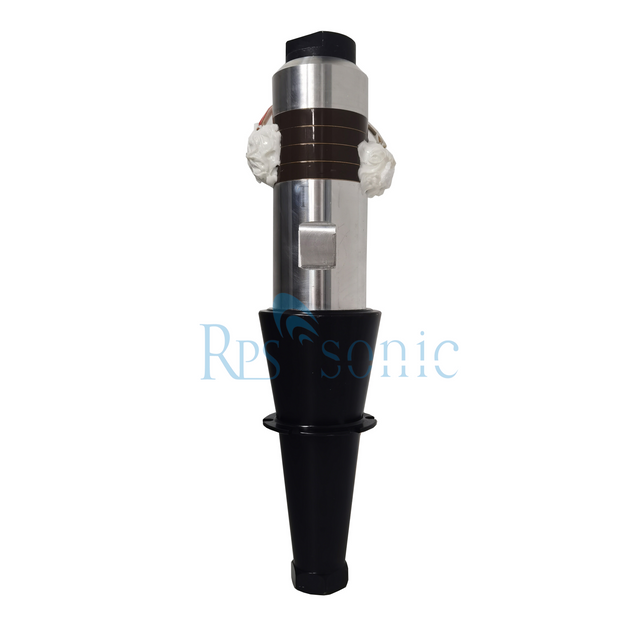
Process Description: A transducer within the equipment converts electrical energy into high-frequency (typically 20 kHz–40 kHz) mechanical vibrations, generating alternating high-pressure and low-pressure sound waves within the slurry. During the low-pressure (negative pressure) phase, the slurry is stretched, giving rise to microscopic voids (cavitation bubbles); conversely, during the high-pressure phase, these bubbles are instantaneously compressed and undergo violent collapse, releasing immense energy.
Mechanism of Action: The high temperatures and shockwaves generated during bubble collapse either directly shatter microscopic bubbles or, through induced turbulence, facilitate their collision and coalescence into larger bubbles. These larger bubbles then rapidly rise to the slurry surface due to buoyancy and rupture, thereby expelling the entrapped gas.
Compared to traditional degassing methods, ultrasonic technology offers distinct advantages:
Efficient Removal of Microscopic Bubbles: It effectively eliminates stubborn micro-bubbles smaller than 10 microns, as well as micron- and sub-micron-scale bubbles that are difficult to remove via vacuum degassing.
Improved Electrode Coating and Yield: By preventing defects such as pinholes and exposed foil, it ensures the electrode sheets remain flat and smooth; this can boost the overall cell yield by up to 12%, thereby enhancing safety.
Enhanced Battery Performance: It reduces internal battery resistance, improves the electrical conductivity of the electrode sheets, and optimizes current distribution to extend cycle life, while also boosting capacity and consistency.
Eco-friendly Process: As a purely physical process, it requires no chemical defoaming agents, thereby avoiding the introduction of impurities or alterations to the slurry's intrinsic properties.
Reduced Overall Costs: The equipment features low energy consumption and requires minimal maintenance, leading to significant long-term reductions in operational costs.
To accommodate diverse production line configurations, ultrasonic degassing equipment is primarily available in the following forms:
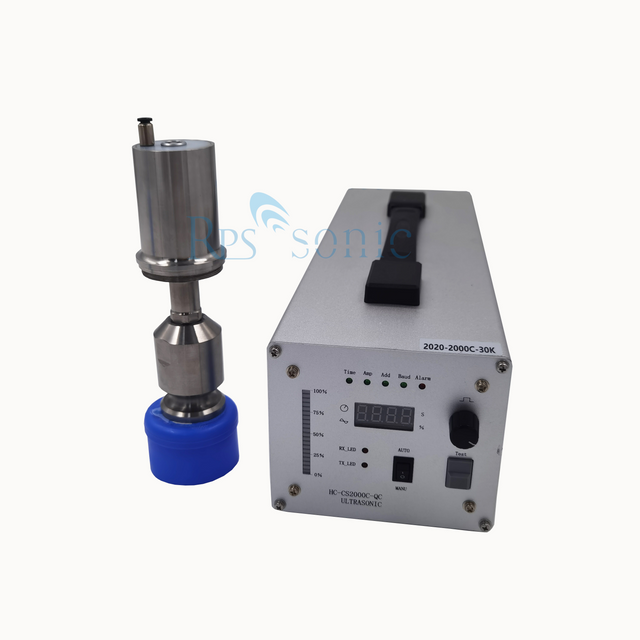
Pipeline/In-line Systems: These offer flexible layout options and "plug-and-play" integration into existing piping networks, enabling continuous, 24-hour degassing operations. They can also be utilized to provide constant degassing within the slurry's online circulation loop. Tank-based/Agitation-based Systems: Processing takes place within a dedicated tank; these systems can be configured with integrated agitation capabilities or utilized solely for batch defoaming without agitation. Integrated Kneading Systems: Multiple ultrasonic generators are mounted onto traditional kneading equipment to provide extensive coverage of the slurry, thereby simultaneously facilitating both mixing and degassing.
Future Development Trends: Intelligence and Integration
Ultrasonic degassing technology is evolving toward greater intelligence and integration:
Process Intelligence: By incorporating sensors and AI algorithms, the system adjusts ultrasonic power in real-time based on slurry characteristics and integrates with the production line's MES to enable closed-loop management.
Equipment Integration: The technology is being combined with vacuum systems and filtration equipment—or developed into hybrid ultrasonic-centrifugal defoaming systems—to achieve synergistic effects where the combined result is greater than the sum of its parts.
Functional Integration: The technology leverages the "secondary effects" of degassing—such as the simultaneous breakdown of agglomerates—to achieve a unified process that combines both degassing and dispersion.
Conclusion
Ultrasonic degassing technology for battery slurries represents a mature and highly efficient solution. It has emerged as a critical component for enhancing battery performance, ensuring production yields, and guaranteeing safety. Furthermore, its application scope has expanded beyond simple degassing to encompass comprehensive, intelligent solutions covering the entire workflow: "Dispersion–Degassing–Inspection."