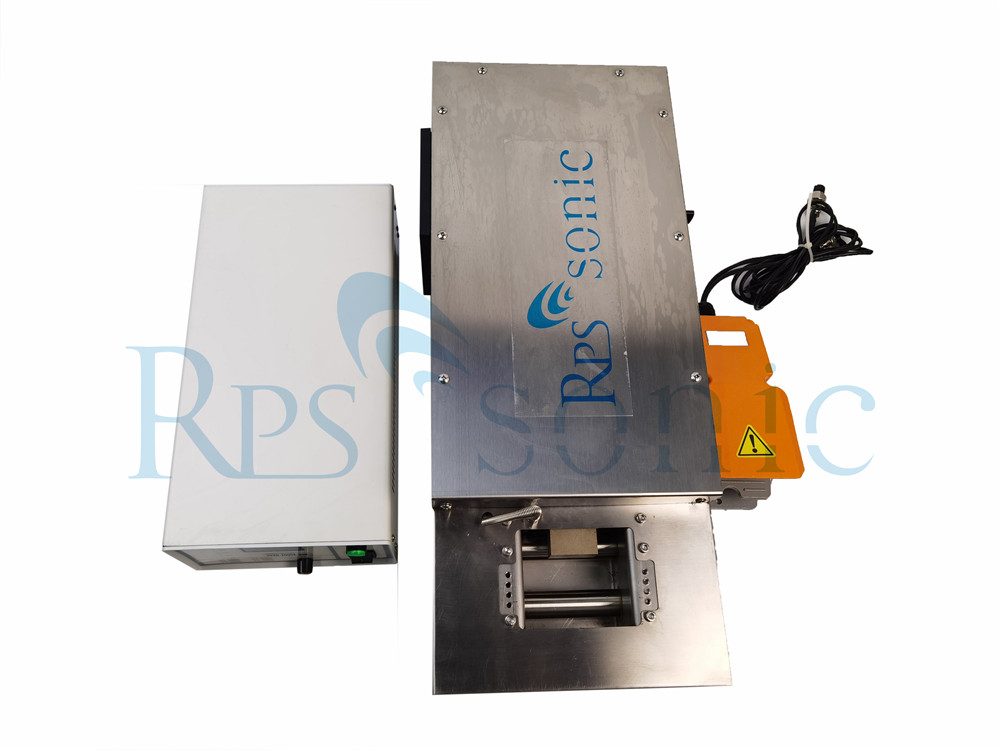
The Application of Ultrasonic Tinning Technology
Ultrasonic tinning is a welding process based on physical principles; it utilizes high-frequency vibrations to generate a powerful cleaning effect within the molten solder, thereby enabling high-quality welding without the need for chemical flux. Its applications have expanded from traditional high-end sectors—such as aerospace and electronics—into consumer manufacturing industries like new energy vehicles, photovoltaics, and home appliances, serving as a key process for achieving high-reliability connections between dissimilar materials.
Working Principle
The core of this technology is physical cleaning rather than chemical reaction. The process can be summarized in two steps:
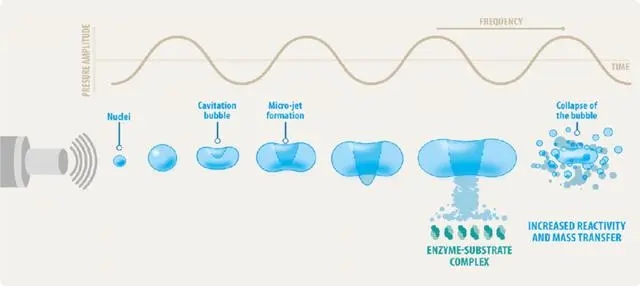
**Cavitation and Stripping:** The metal components to be welded are immersed in molten tin, and high-frequency ultrasonic waves (typically 20 kHz–40 kHz) are applied to the liquid tin. These vibrations generate countless microscopic bubbles (cavitation bubbles) within the molten tin; the powerful shockwaves and micro-jets released when these bubbles collapse effectively shatter and strip away the oxide film from the metal surface.
**Wetting and Bonding:** Once the oxide layer is removed, the clean metal substrate is exposed, allowing the molten tin to wet the surface smoothly and adhere firmly, ultimately forming a dense, uniform tin layer or welded joint.
Five Key Application Areas
Ultrasonic tinning technology is widely applied across a broad spectrum of industries—ranging from cutting-edge sectors with stringent reliability requirements to industries vital to daily life, such as new energy, electronics/telecommunications, and home appliances.
1. Aerospace and Defense
This was one of the earliest application areas for ultrasonic tinning. It is valued for delivering near-perfect welding quality and eliminating the potential risks associated with flux residue.
Cable Processing: Processing aerospace cable terminations is a reliable method for ensuring flawless signal transmission in aircraft and satellites.
Specialized Materials:Welding components that demand extreme reliability, such as military-grade electronics and specialized sensors.
2. New Energy Vehicles and Power Industry**
This technology effectively resolves the industry challenge of "copper-aluminum welding," preventing electrochemical corrosion and ensuring stable electrical connections. Furthermore, its flux-free nature eliminates the risk of chemical damage to sensitive electronic components. Battery Connections: Processing power battery tabs and busbars to reduce contact resistance, thereby enhancing driving range and safety.
High-Voltage Wiring Harnesses: Tin-plating terminals for sensor harnesses and charging station high-voltage harnesses to ensure long-term durability.
Power Fittings: Tin-coating the surfaces of aluminum busbars, transformer windings, and power fittings to improve electrical conductivity.
3. Electronics Manufacturing and Semiconductors
This technology meets high-density, high-precision packaging requirements, offering significant advantages, particularly when handling heat-sensitive components.
Power Devices: Tin-plating the leads of power devices such as IGBTs and MOSFETs to ensure proper electrical conduction and heat dissipation.
Ceramic/Glass Packaging: Used for flux-free soldering of chips onto ceramic or glass substrates, or for creating electrode connections for optoelectronic LEDs and LCD glass.
4. New Energy (Photovoltaic/Solar Thermal)
This technology is key to achieving reliable glass-to-metal connections, used in the manufacture of solar panels, solar collectors, and more.
Electrode Welding: Creating metal electrodes directly on the glass substrates of solar panels, thereby simplifying the production process.
Dissimilar Material Joining: Soldering dissimilar materials—such as glass-to-metal or ceramic-to-metal—while ensuring hermetic sealing and electrical conductivity.
5. Other Industrial and Consumer Applications
It also plays a vital role in everyday industrial production and scientific research.
Specialty Cables: Processing enameled wire by performing "insulation stripping and tin-plating" in a single step, resulting in extremely high efficiency.
Home Appliances and Telecommunications: Used for soldering relays, PCB pins, RF cable connectors, and more.
Scientific Research and New Materials: Used in laboratory settings to solder special materials—such as titanium, sapphire, and superconductors—for new material research.
Four Core Advantages
1. Eco-friendly: Completely eliminates the need for flux, preventing pollution from acidic gases, chemical residues, and wastewater at the source; it is a clean production process.
2. High Quality and Reliability: Fundamentally eliminates issues such as corrosion from flux residue, cold solder joints, and porosity; particularly suitable for applications requiring extreme airtightness (e.g., vacuum sealing).
3. Cost Reduction and Efficiency: Eliminates the need for flux, simplifies production workflows, and saves on labor and material costs. More importantly, it makes the "aluminum-for-copper" substitution a reality, allowing for a reduction in material costs of approximately 80% while maintaining performance.
4. High compatibility: In addition to conventional metals, it can successfully weld materials that are difficult to process using traditional methods, such as aluminum, ceramics, glass, titanium, stainless steel, and superconductors.
Analysis of Limitations
While ultrasonic tinning technology offers significant advantages, it also has certain limitations that must be considered in practical applications:
Primarily point-to-point welding: It is mainly suitable for localized processing—such as electronic component leads and wire harness terminals—and is not ideal for applying a uniform tin coating over large, flat surfaces.
High equipment costs: Compared to traditional manual soldering irons, ultrasonic tinning equipment entails higher initial investment and maintenance costs.
Requires professional operation: To achieve optimal results, operators must adjust parameters such as frequency, power, and immersion time based on the specific workpiece and material, creating a certain technical barrier.
High cleanliness requirements: The process outcome is significantly influenced by the initial cleanliness of the workpiece surface; heavily contaminated parts still require pre-treatment.
Limitations with specific materials: Despite its wide range of applications, performance may still be limited when dealing with certain special coatings or alloys, requiring case-specific verification.