Application of ultrasonic soldering technology in vacuum glass manufacturing
Vacuum glass, hailed as the "king of transparent insulation materials," has become a key material in building energy conservation, high-end home appliances, and precision instruments due to its superior heat insulation, sound insulation, and anti-condensation properties. However, the construction and gas-tight sealing of the "vacuum cavity," the core of vacuum glass manufacturing, places extremely stringent demands on its manufacturing process, especially the reliability of the edge metal seals. Traditional hot-melt or flame welding processes often face problems such as oxidation, incomplete soldering, and thermal stress concentration, becoming the "Achilles' heel" restricting the performance and lifespan of vacuum glass. Now, a technology originating from precision electronics manufacturing—ultrasonic soldering iron tin plating technology—is quietly breaking through this bottleneck, bringing a silent but profound technological revolution to the vacuum glass industry.
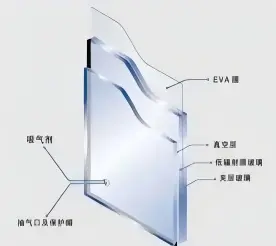
The Technological Challenges of Vacuum Glass Sealing
A typical vacuum glass structure involves creating a vacuum cavity less than 0.3 mm thick between two panes of glass, achieving a permanent gas-tight seal using a molten metal alloy (such as a lead-tin alloy or a copper alloy). The ultimate goal of this process is to achieve "zero leakage, high strength, and low heat loss." However, traditional welding processes face three core challenges:
Oxidation Barrier: During high-temperature welding, an oxide layer easily forms on the metal surface, hindering solder flow and wetting, leading to discontinuous weld joints and micropores, creating a potential for chronic leakage later.
Heat Damage Risk: Glass is extremely sensitive to localized thermal shock. The enormous thermal stress generated by traditional high-temperature welding can cause microcracks or structural deformation in the glass, affecting its strength and optical properties.
Difficulty in Precision Control: Weld joints are typically only millimeter wide, requiring precise solder spreading. Traditional methods struggle to find a perfect balance between oxidation resistance and precise heat control.
The Technological Challenges of Vacuum Glass Sealing
A typical vacuum glass structure involves creating a vacuum cavity less than 0.3 mm thick between two panes of glass, achieving a permanent gas-tight seal using a molten metal alloy (such as a lead-tin alloy or a copper alloy). The ultimate goal of this process is to achieve "zero leakage, high strength, and low heat loss." However, traditional welding processes face three core challenges:
Oxidation Barrier: During high-temperature welding, an oxide layer easily forms on the metal surface, hindering solder flow and wetting, leading to discontinuous weld joints and micropores, creating a potential for chronic leakage later.
Heat Damage Risk: Glass is extremely sensitive to localized thermal shock. The enormous thermal stress generated by traditional high-temperature welding can cause microcracks or structural deformation in the glass, affecting its strength and optical properties.
Difficulty in Precision Control: Weld joints are typically only millimeter wide, requiring precise solder spreading. Traditional methods struggle to find a perfect balance between oxidation resistance and precise heat control.
The Technical Principle of Ultrasonic Soldering Irons
An ultrasonic soldering iron is a welding device that integrates a heating system and an ultrasonic vibration system. Its core technological principle lies in the cavitation effect and mechanical friction effect of ultrasound.
During operation, the ultrasonic generator outputs high-frequency sound waves (typically 20kHz–60kHz), which are transmitted to the soldering head via a transducer. Numerous tiny vacuum bubbles are continuously generated within the molten solder (such as molten tin). These bubbles form and violently burst instantaneously, releasing powerful shock waves. This "cavitation effect" plays three key roles:
Physical Cleaning: The shock waves act like countless microscopic "cleaning brushes," physically stripping away and removing all contaminants and oxide films from the glass surface.
Mechanical Locking: The powerful shock waves force the molten solder into the tiny pores of the glass surface, forming a strong mechanical locking effect.
Exhausting and Densifying: The ultrasonic vibrations expel bubbles from the molten solder, ensuring a dense, non-porous coating.
For materials like glass and ceramics, which are inherently oxides, physical cleaning alone is insufficient. In these cases, active solders containing oxygen-loving elements such as titanium and zirconium are used. While the ultrasonic cavitation effect cleans the surface, the instantaneous high temperature and pressure greatly promote the chemical reaction between these active elements and the oxygen on the glass surface, forming strong chemical bonds. Through the combined effects of physical cleaning and chemical bonding, the solder is perfectly wetted and firmly adhered to the clean glass surface.
Core Technological Advantages
No Flux Required, Environmentally Friendly
Traditional methods cannot directly tin-plate glass, often requiring complex metallization pretreatment or the use of highly corrosive fluxes. Ultrasonic soldering irons, relying on ultrasonic cavitation, eliminate the need for chemical flux throughout the process, leaving no residual pollution. They completely eliminate corrosive flux, harmful fumes, and chemical residues, and remove complex cleaning procedures. This is especially important in vacuum glass manufacturing—residual flux can contaminate packaging equipment and affect the vacuum level of the final product.
Low-Temperature Processing, Protecting the Substrate
Because ultrasound significantly improves the fluidity and wettability of the solder, welding can be completed at temperatures 30–100°C lower than traditional methods, greatly reducing the risk of glass breakage due to thermal shock. The equipment is equipped with a closed-loop temperature control system, stably controlling the solder head temperature at 180–220°C, with localized, targeted heating, effectively avoiding the glass thermal deformation and cracking problems caused by traditional high-temperature processes.
Dense and Uniform Plating, Excellent Airtightness
Tin layer thickness error can be controlled within the micron level, with no pores or leaks. In practical applications, this technology achieves tin layer uniformity of ±0.01mm, improves process efficiency by over 40%, and yields a high yield rate of 99.2%.
It is compatible with various glass substrates. A reasonable match between the 20–60kHz ultrasonic frequency and the 5–150W power range balances coating adhesion, processing precision, and glass substrate integrity. The 20–40kHz low-frequency model is suitable for thick tin layer coating and large-area glass frame sealing; the 50–60kHz high-frequency model is suitable for precision workpieces such as ITO conductive glass and optical lenses. This process is now widely used in vacuum energy-saving glass, optical components, display conductive glass, and fiber optic sealing.
Specific applications in vacuum glass manufacturing: On vacuum glass production lines, ultrasonic soldering technology primarily empowers two key processes.
Pre-tin plating: Preparing a metal layer bonded to the glass on the edge surface to be sealed. The relevant patented technologies explicitly employ an ultrasonic soldering iron device containing an ultrasonic generator. A wire feeder delivers the metal solder to the soldering iron tip. The mechanical vibration generated by the ultrasonic generator's transducer causes the soldering iron tip to vibrate radially, melting the solder wire under heat and bonding it to the metallized layer of the glass. Another approach uses an ultrasonic pressure welding device to rub the tempered glass side, ensuring a tight bond between the metal film and the tempered glass, thus better meeting vacuum requirements and achieving long-term vacuum stability.
Hermetically sealed connection: After pre-tinning, corresponding metal layers on the two glass plates are hermetically welded together, achieving an hermetically sealed connection at the glass edges. The dense, gapless solder joints formed by ultrasonic welding can even meet the sealing requirements of high-vacuum environments.
Conclusion: Ultrasonic soldering iron technology provides a precise, efficient, and environmentally friendly process route for the manufacture of vacuum glass. It fundamentally overcomes the bottlenecks of traditional welding processes, such as oxidation, heat damage, and difficulty in precision control. With its core advantages of requiring no flux, low-temperature processing, and producing a dense and uniform coating, it perfectly meets the stringent requirements of vacuum glass for "zero leakage, high strength, and low heat loss."
Against the backdrop of increasingly demanding performance requirements for vacuum glass in building energy conservation and high-end home appliances, ultrasonic soldering iron tin plating technology has been validated by some leading vacuum glass manufacturers and is gradually being rolled out to production lines. It provides an efficient, reliable, and environmentally friendly solution for vacuum glass and even the broader field of joining dissimilar materials.