Ultrasonic Atomization for Metal Powder Production: An Efficient Solution for Small-Batch Manufacturing and 3D Printing
1. Introduction
Metal powder plays a critical role in modern manufacturing, particularly in additive manufacturing (3D printing), powder metallurgy, advanced materials research, and specialized industrial applications. As demand for customized metal powders continues to grow, manufacturers and research institutions are looking for flexible, cost-effective methods to produce small quantities of high-quality powder.
Ultrasonic atomization offers a promising solution for small-batch metal powder production, especially in research and development, material experimentation, and applications requiring specialized powder compositions or limited production volumes.
Unlike conventional large-scale atomization processes, ultrasonic atomization can provide a more flexible approach to producing fine metal droplets that solidify into powder particles under suitable process conditions.
2. How Does Ultrasonic Atomization Work?
Ultrasonic atomization uses high-frequency mechanical vibrations to break a liquid into fine droplets. In metal powder production, the process requires molten metal to be atomized under carefully controlled conditions.
The general process involves the following steps:
Metal melting: The selected metal or alloy is heated until it reaches the required molten state.
Ultrasonic vibration: High-frequency vibration is applied through a suitable atomization system to destabilize the molten metal surface or liquid film.
Droplet formation: The molten metal separates into small droplets under the action of ultrasonic vibration and associated surface forces.
Solidification: The droplets cool and solidify under controlled conditions, forming metal powder particles.
Powder collection and classification: The resulting powder is collected, sieved, and characterized according to particle size, morphology, and application requirements.
The actual process configuration depends on the metal or alloy, melting temperature, melt delivery method, required particle size, and desired production capacity.
It is important to distinguish ultrasonic atomization from ultrasonic spray atomization of ordinary liquids. Molten metals require specialized high-temperature components, suitable sonotrodes or atomizing interfaces, controlled atmospheres where necessary, and appropriate safety measures.
3. Why Use Ultrasonic Atomization for Small-Batch Metal Powder Production?
3.1 Suitable for Research and Development
Researchers developing new alloys or advanced metal materials often need relatively small quantities of powder for experimental testing. Producing large quantities using conventional industrial equipment may be uneconomical during early-stage development.
Ultrasonic atomization provides a potential route for preparing limited powder batches for material evaluation, process development, and laboratory-scale studies.
3.2 Flexible Production for Customized Applications
Some industrial applications require specialized metal powders with specific compositions or processing characteristics. Examples include experimental alloys, customized materials, and powders developed for particular additive manufacturing projects.
A suitably designed ultrasonic atomization system may support flexible trials involving different materials and process parameters, subject to the system's temperature capability and material compatibility.
3.3 Support for Metal 3D Printing Development
Metal additive manufacturing relies on powders with controlled particle size distribution, morphology, flowability, and chemical composition.
For example, powder used in laser powder bed fusion (LPBF) often requires a carefully controlled particle size distribution and predominantly spherical particles. Ultrasonic atomization may be investigated as a powder-production route for selected materials and small-scale development projects.
However, the resulting powder must be tested against the requirements of the intended 3D printing process. Not every ultrasonic atomization system can directly produce powder that meets commercial additive manufacturing specifications.
3.4 Potential for Reduced Material Consumption During Trials
When working with expensive metals or experimental alloys, minimizing material consumption can be important.
Small-batch atomization may help researchers evaluate limited quantities of material before committing to larger production runs. Actual material savings depend on atomization yield, powder collection efficiency, equipment losses, and the quantity of usable powder produced.
4. Potential Applications
Ultrasonic atomization may be considered for the following applications, depending on the process design and validated powder quality:
Metal 3D printing research: Preparation of experimental powders for additive manufacturing trials.
Customized alloy development: Small-batch production of selected alloy compositions.
Advanced materials research: Powder preparation for laboratory investigations and material characterization.
Specialized industrial manufacturing: Development of powders for niche applications that do not require high-volume production.
University and research laboratories: Experimental studies involving metal powder formation and atomization parameters.
Potential materials must be evaluated individually. The feasibility of atomizing a specific metal depends on its melting point, surface tension, viscosity, oxidation behavior, and compatibility with the atomization system.
5. Key Technical Challenges
Although ultrasonic atomization offers potential benefits, producing metal powder is considerably more demanding than atomizing water or other low-temperature liquids.
Important engineering considerations include:
High-temperature resistance: The vibration transmission components and atomizing interface must withstand the required operating temperature and thermal cycling.
Material compatibility: The sonotrode and other components must not introduce unacceptable contamination into the molten metal.
Particle size distribution: Frequency, amplitude, melt flow, surface tension, and process conditions all influence droplet formation.
Powder morphology: Sphericity, satellites, internal porosity, and surface defects must be evaluated.
Oxidation control: Reactive metals may require inert-gas protection or a controlled atmosphere.
Production efficiency: Atomization rate, collection efficiency, usable powder yield, and equipment stability must be established experimentally.
Operator safety: Molten metal handling, hot surfaces, fine combustible metal powders, and reactive materials require suitable containment and protection systems.
·
These factors should be assessed before selecting an ultrasonic generator, transducer, sonotrode, or complete atomization system.
6. How to Select an Ultrasonic Atomization System
For a metal powder development project, equipment selection should begin with the required powder specifications rather than ultrasonic power alone.
Key parameters include:
Metal or alloy: Identify the exact composition and melting temperature.
Target particle size: Define the required size range and acceptable particle size distribution.
Powder morphology: Determine the required degree of sphericity and surface quality.
Production capacity: Specify the desired output in grams or kilograms per hour.
Operating atmosphere: Determine whether inert gas or other atmosphere controls are required.
Process configuration: Establish how the molten metal is delivered to the atomization zone and how droplets are cooled and collected.
Powder testing: Define acceptance criteria for particle size, morphology, chemical composition, oxygen content, and flowability where relevant.
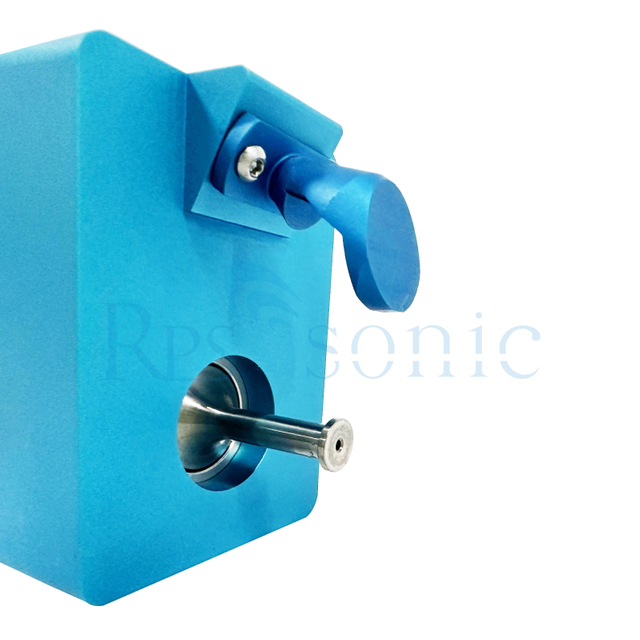
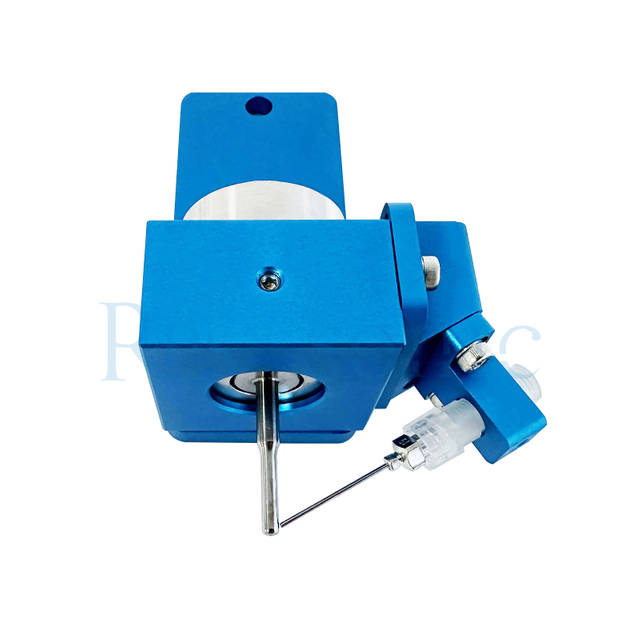
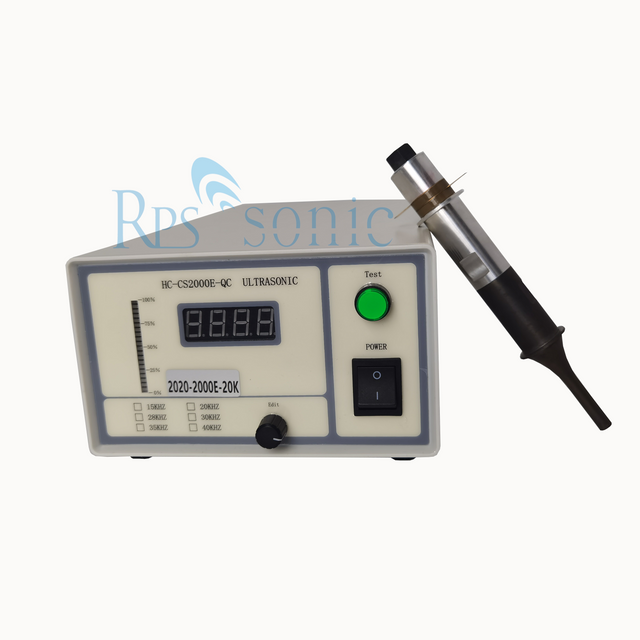
A complete system may require a compatible ultrasonic vibration assembly, a specialized high-temperature atomization interface, a melting unit, controlled-atmosphere equipment, a cooling and collection chamber, and powder classification equipment.
A standard liquid ultrasonic atomizer should not be assumed suitable for direct contact with molten metal without specific engineering validation.
7. Conclusion
Ultrasonic atomization is an interesting technology for exploring alternative approaches to metal powder production, particularly in small-batch research, customized material development, and experimental metal additive manufacturing.
Its potential value lies in process flexibility and the possibility of producing limited quantities of specialized powder for targeted applications. Nevertheless, practical performance depends on the metal being processed, the atomization mechanism, system design, and the quality requirements of the final powder.
For manufacturers, universities, and research institutions, the next step is to validate the process using the intended material and establish measurable targets for particle size, morphology, production rate, and powder quality.
Looking for a customized ultrasonic atomization solution for metal powder research or small-batch production? Define your target alloy, particle size, required output, and operating temperature to determine whether an ultrasonic-based approach is technically feasible for your application.
 English